









Register

Search Results for: piper

Industry News

Pre-Production Airplane Deposits: Must Buyers Risk Them?

Somehow, encoded into the very DNA of many would-be aircraft owners is an utter inability to apply normal standards and cautions when it comes to making money decisions about airplanes. Its undeniable that some airplane people go woozy and weak in the knees when a new aircraft purchase is afoot. Example? One entrepreneur contemplating launching a new jet was confronted by an investor who insisted on writing a six-figure check to be first in line for the new airplane. Never mind that not so much as a cocktail napkin sketch existed of the new airplane-he just wanted to be first in line if the project came to fruition. We cant venture a guess if this is blind faith or unbridled enthusiasm run amuck, but it supports an established trend in the airplane business that lives on to this day: Owners who want a new airplane are often asked to invest in it by writing large deposit checks which, in fact, make them both investors and customers whether they like it or not. The practice is so common that it has become the unquestioned way of doing business. We don’t have a score card on this, but owners have lost bundles of money on position-holder deals and Eclipse Aviations troubles with its EA500 jet have left an unknown number of position holders waiting for refunds. Given this development, does it make sense to continue this practice? Isnt there a better way? What should owners do to protect themselves against companies that don’t deliver on the deposits?
Read More »
Used Aircraft Guide

Used Aircraft Guide: Cessna 120/140

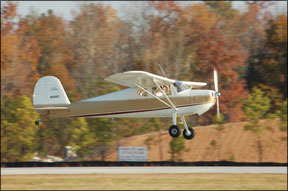
The U.S. military trained thousands of pilots during WWII, pilots many aircraft manufacturers naturally assumed would continue flying once they returned home. But the hoped-for “an airplane in every garage” buying boom was never able to sustain itself, even if huge numbers of new airplanes were manufactured. Piper was building Cubs and, soon, Cruisers and Pacers pretty much as fast as it could. With a few exceptions-Beechs Bonanza, for example-most offerings were taildraggers. The first of Cessnas to be built in volume was the diminutive Cessna 120, followed in short order by a fancier model called the 140. At the time, the Cessna 120/140s were perfectly serviceable and practical two-place airplanes. They were reasonably priced to buy and economical to own. Although some had fabric wings, they were made mostly of metal, avoiding the periodic need for recovering. The good news is the qualities making them popular in the late 1940s are still present. Today, what little they give up to Pipers Cubs in panache, they more than make up for in reduced acquisition costs and arguably more-forgiving handling qualities.The 120s model history is rather short, since it was produced only for four years, from 1946 to 1950. Since Cessna had the training market firmly in its sights, the 120 sold for a mere $3245. That amount is equivalent to slightly more than $34,000 in 2007 dollars. Try to find a new, FAA-certificated, all-metal trainer for that kind of money today. Cessna made the 120 about as simple as airplanes get, with side-by-side seating, yokes rather than sticks, no flaps and no rear window. Standard equipment did not include an electrical system, although a generator was available as an option. Whether they left the factory with one or not, most 120s have an electrical system these days.

Read More »
Avionics

Letters: 10/08

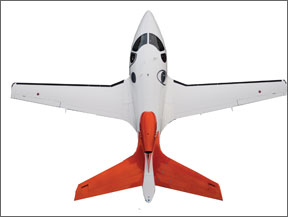
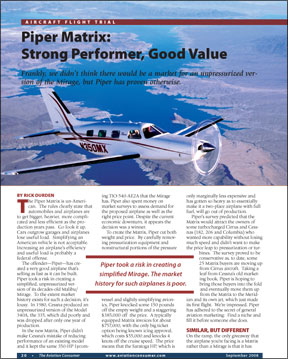
I am very surprised that the Piper Matrix is selling so well. I suppose glitz, fancy new paint and a glass panel supersede the pragmatic need for a very important element: pressurization. The Malibu is relatively slow below 10,000 feet; the wing with its high aspect ratio being designed to shine in the upper teens and flight levels. Piper should have compelled Lycoming to reconfigure its Matrix engine for LOP operations. In my TCM Malibu, I burn 6 GPH less for comparable speed (205 knots) than a Lycoming Mirage. I strongly suspect that Matrix owners, after a year or two of wistfully watching Malibu/Mirages climb above them into on-top blue skies while they bump along in the clouds sucking on the oxygen tube, may come to rue the day they rejected pressurization. Six thousand hours, including 4000 hours in a pressurized Malibu, have told me that I would rather give up flying than go back to a non-pressurized airplane.

Read More »
Commentary

Letters: 09/08

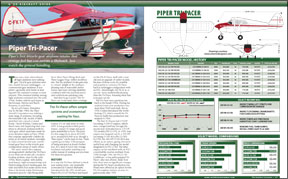
I appreciated very much your report on the Tri-Pacer. It really took me back to when I did my flight training in my flying clubs Tri-Pacer in 1969 at an hourly rate of $8 wet. I will never forget the thrill of my first flight in the “milkstool,” with its amazing performance, stability and sink rate compared to the 150. It was a nice flying airplane, faster than the 172 and good for short hops with a load of three or four folks. You forgot to mention its signature, airliner-like trim crank which was mounted on the ceiling over the power quadrant…way cool!

Read More »
Maintenance

Prop Overhauls: Its All Your Fault

Unless youre among the small but increasing number of aircraft owners lucky enough to own a jet, your airplane has at least one propeller and sooner or later, it will need an overhaul. The cynical joke among some mechanics and owners is no known prop shop ever saw a propeller that didnt need an overhaul. While that may be too harsh, even cheapskate owners are finding that there are too many substandard props out there that are signed off as airworthy but are, in fact, marginally airworthy. No small number of them are absolute junk. Why? Corrosion, mainly, and lack of maintenance by owners who just don’t understand what kind of care propellers typically need and whose ignorance costs them money. In fact, according to the pros, treating your propeller like the critical component it is and lending it a little TLC every now and then can go a long way toward preventing costly maintenance. And when your well-cared-for prop does go into the shop, you may have more options than just getting it overhauled.

Read More »
Uncategorized

Eclipse 500: Still a Work in Progress

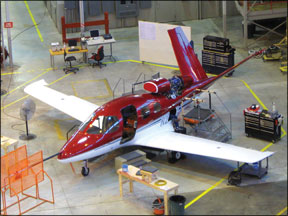
Vern Rayburn announced at Oshkosh in 1998 that a new little airplane would change all the rules about flying and, especially, about building airplanes. The Eclipse 500 was to define a new class called the VLJ or very light jet. It was to be fuel efficient, fast and would embrace the latest technologies so it could be built inexpensively. It would also be easier and cheaper to fly than a light twin. A full decade and a billion-plus in developmental dollars later, the Eclipse 500 is trickling if not pouring off the production line in Albuquerque; about 200 have been built. The overarching question is: Does the Eclipse really change the rules? And if it doesnt, why not? Further, whats the thing like to fly? Is the cutting-edge glass cockpit really as advanced as Eclipse said it would be? Answering these questions isn’t easy. Eclipse has steadfastly refused to offer press demonstrations of the airplane and some owners just wont talk about their impressions of the airplane, giving the inquisitive person the notion that somethings not quite right here. For this report, a cooperative owner allowed us a brief turn at the controls of an Eclipse 500 so we could find out for ourselves.

Read More »
Uncategorized

Eclipse Owner Views: Warts, Yes, But Still Sweet

Further straining any attempt to nail down an evaluation of the Eclipse is the companys rubbery delivery promises. It has slipped schedules so many times, made volume predictions that havent materialized and, in our view, delivered an airplane short enough of its original promise that its tempting to focus solely on these shortcomings rather than the airplane itself. Eclipse has been masterful in promoting itself but, in our opinion, reluctant to let the aviation press see what the airplane will really do. Curiously, some owners are nearly as secretive. With Eclipse refusing press demos, we asked several owners for test rides. Only one agreed, because he loves the airplane and wanted to show that it could strut its stuff. Other owners agreed to speak to us but only if we promised not to use their names. Why such worries? One owner said he was worried that Eclipse wouldnt deliver on promised upgrades if he beefed about the airplane in public; another said he just didnt want the hassle, but would answer all of our questions. One fleet operator did speak to us on the record.

Read More »
Editorial

First Word: 07/08

Like most aircraft manufacturers trying to build a community of customers, Eclipse Aviation sponsored an open house/homecoming event for Eclipse owners in May. The company used the event-cleverly called E-rrival-as a backdrop to announce that its officially taking orders for the Eclipse 400 single-engine concept jet that made for some interesting buzz at Oshkosh in 2007. At the same time, Eclipse CEO Vern Raburn wrote position holders still awaiting their Eclipse 500 twinjets that the company was again raising the price of the airplane. And the escalation was hardly nickels and dimes. Raburn told buyers-in-waiting that the 500s new price would be $2.15 million, up a whopping $450,000 or 25 percent over the last quoted price. Hard to believe that when this airplane was announced, it carried a price tag of $837,000-less than the cost of a Piper Mirage at the time. Of course, everyone knows how the game is played. Prospective owners buy early positions, help fund the development of the airplane and even if they don’t accept it in so many words, they assume substantial risk. Buyers also know-or at least should know-that come-on prices will escalate. The risk is how much.

Read More »
Avionics

Cirrus Perspective: Integration Gets Serious

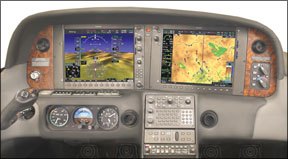
Ever fond of making the simple complex and the complex more complex, the FAA had to come up with an acronym to describe whats otherwise known as progress. TAA or technically advanced aircraft is the umbrella term applied to an airplane with glass displays, but really, it means anything with a moving map, a GPS navigator and an autopilot. Excuse us, but if a 30-year-old Cherokee with a Garmin GNS430 and a creaky AutoControl is a technically advanced aircraft, a 1963 Dodge Dart is a concept car. To us, technically advanced means that the technology belongs in the airframe and is integrated into its operation. Cirrus pioneered this idea and with its latest product, called the Cirrus Perspective, it has given birth to what anyone in industry should recognize as a true TAA. The Perspective is both subtle and seismic. Bottom line, its just a new options package for the established and highly successful SR22, although the airframe itself has some upgrades. The seismic shift is that the Perspective has a new version of the Garmin G1000 EFIS rather than the Avidyne Entegra which has been standard in the Cirrus since 2002.

Read More »
Aircraft Stepups

Aftermarket AC: New, Lighter Options

A few minutes of roasting in the summer sun on a hot ramp will leave most any pilot wishing for air conditioning. Unfortunately, three problems stand in the way: weight, power and cost. Light aircraft AC systems have been around for some time, but recent advances in technology are making the project more reasonable. You can add AC to almost any aircraft you want via several STCs or by field approval. Expect to lose between 40 and 90 pounds of useful load and send the aircraft to the shop for north of 100 hours. But it will give a new meaning to being cool on the ramp. The trouble with AC is that compressing the refrigerant takes serious power, either directly from the engine via a driveshaft and clutch or via an electrically-powered compressor. The engine-driven option is usually used for small aircraft. They work passably on the ground at a high idle, but don’t really pack a punch until the aircraft is flying and the engine is turning faster. The compressor must fit somewhere under the cowl but you don’t need a high-output alternator.

Read More »
Used Aircraft Guide

Used Aircraft Guide: Meyers 200

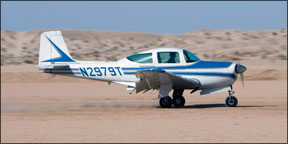
There’s something about the Meyers 200 that doesnt look like a 40-year-old factory airplane. Its bubble canopy and gently-tapered wings are reminiscent of modern, composite airplanes. Sweep the tail and clean up the cowling a bit, youd start thinking Lancair had an all-metal retractable. Alas, the Meyers is a product of the late 1950s, with aluminum shells over massive tubular frames and heavy, hydraulic systems. The good news is its construction gives the airframe enormous strength. Meyers devotees note that the airplanes center section required no beef-up when the 200 was transformed into a 300-knot turboprop (more, below). The Meyers can also keep up with just about anything in its class, even many of the current composite-construction speedsters. The only real drawback is a low useful load. Meyers owners find the airplanes real beauty is in its quality. With few applicable ADs and almost no service-difficulty history, owners of this rare airplane are ecstatic about it.

Read More »
Aircraft

Turboprop Singles: No One-Size Solution

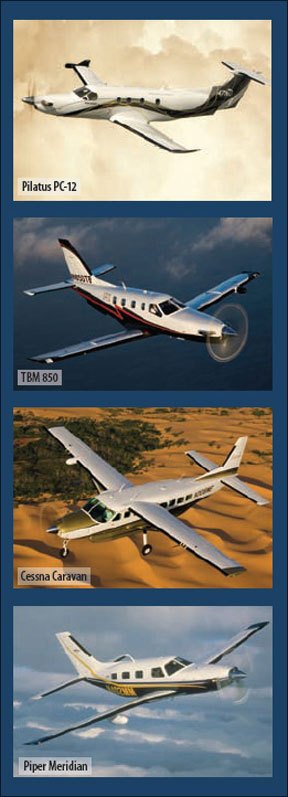
EADS-Socata, Piper, Pilatus and Cessna have been building single-engine turboprops for several years now, and their assembly lines appear at or near capacity as there are healthy waiting lists for new airplanes. Pilatus and Cessna originally built their airplanes for cargo, bush and military operators but found, to their delight, that owner-pilots got in line to buy. On the surface, these four airplanes are quite different. Despite all being powered by a version of the PT6, cruise speeds and cabin sizes differ noticeably, as does the ability to carry a load. Yet the series seems to attract a certain kind of buyer: one who wants the reliability of a turbine, doesnt want the hassle and expense of a type rating and more than one engine; who desires an airplane that can go in any weather the pilot is personally capable of handling, and will either go fast or carry a big load. (We recognize that there are a few other single-engine turboprops, such as the new Quest Kodiak and the PC-6 Turbo Porter, but we are limiting our comparison to airplanes currently built in bulk for the owner-flown market.)

Read More »