









Modifications

American Champion: State of the Art Classics

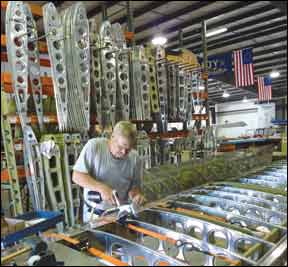
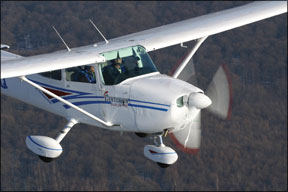
For as bad as the aviation boom-bust cycle is for companies that make airplanes, it’s just as bad for the people who buy them. The euphoria that goes with pocketing the keys to a brand new airplane has to be tempered by the reality that the company that built it maybe teetering toward bankruptcy. Is there a better business plan, one that envisions modest production and flexible size and that can survive the test of the worst economic downturns? There are at least a couple of examples that suggest this can work. The family-owned Maule Air is one, shipping 30 or 40 airplanes a year to Cessna’s 500, but lately a lot less.

Read More »

Lock and Key Navajo: Updated Classic

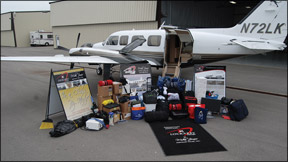
For anyone who needs to haul a lot of stuff and fly fast while doing it, the choices are limited. Unless you have a million-dollar -plus turbine budget, legacy piston twins are the top contenders. And in that group, Pipers Navajo will survive to the short list and thats why it remains a brisk seller on the used market, despite the cratered economy. Aircraft dealer and modifier Mike Jones, a Navajo specialist, gets that and thus: the Lock and Key Navajo. This mod treads ground thats been broken before, which is essentially to pick a reliable, robust airframe and remanufacture it to new standards, tossing in some state-of-the-art technology where appropriate.

Read More »

Buying Used Glass: Beware the Pitfalls

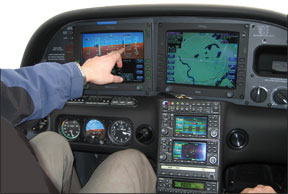
Last month we looked at buys on late-model, four-seat singles (“Late-Model Cruisers: Cessna, Cirrus Are Tops,” Aviation Consumer March 2009) and were shocked at how many good deals there were on used aircraft with glass cockpits. How about a 1300-hour 2005 Cessna 172SP with a G1000 and autopilot for $157,000? We found similarly-equipped 2005 and 2004 Diamond DA40s with about 1000 hours on them for $165,000 and $159,000, respectively. Tipping the scales a bit further was a well-kept 2003 Cirrus SR22 with 1251 hours, TKS de-ice, Skywatch, Stormscope, XM-weather, digital charts, TAWS and the latest revision of the PFD software for $210,000. Looking up the food chain to Mooneys, Columbias, Barons and the like, the deals are less dramatic, but they are still huge discounts from the new prices for relatively low-time aircraft. A good example is the 165-hour 2006 Mooney Ovation 2 with a G1000, known ice and most every option for $350,000. With the economy pulling the rug out from more and more people, repossessed aircraft are hitting the market as well. Were even seeing still-new 2007 models that have been wallflowers waiting for an owner with their sticker price sinking lower and lower.

Read More »

Replacement Glass: Proactive Upgrades

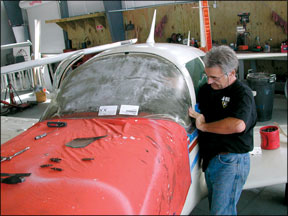
We read in a blog the other day that discarded plastic bags in a landfill are thought to last 500 years before degrading. With that useless bit of trivia in mind, we would be thrilled if an aircraft windshield-also plastic, mind you-would last a tenth as long. Actually, they probably do last that long, its just that you cant see out of them any longer. For that reason, there’s a lively business in the aircraft replacement glass market. We call it “glass,” by the way, as a term of art. Apart from a few exceptions on larger aircraft with heated windshields, all of the windows in light airplanes are made of plastic, specifically cast acrylic commonly called by the trade name Plexiglas, although not all manufacturers of aircraft windows use Plexiglas. In fact, a material called Spartech (formerly Polycast) seems to be the favored product.

Read More »

Need More Gas?

For moderate cost, tip tanks offer transformational range and flexibility. Some even come with payload increases.

Read More »

Shade to Go

Next time youre droning along on a cross country on a hot day, feel around the edges of the bezels on your avionics faceplates. In most airplanes, even ones with avionics cooling fans, theyll be hot-not warm-to the touch.

But trust us, theyre probably a lot cooler in operation than they are merely baking in the hot sun on a summer day when the airplane is on the ramp with no cockpit cover or sun screens.

We were recently astonished to learn that interior cockpit temperatures approach 200 degrees on a bright Florida day and that cant be good for the avionics, not to mention the upholstery and all the sundry stuff stored in the average airplane.

Yet as cheap as covers and sun scre…

Read More »