









Industry News

FAAs Delayed New Regs: Bureaucratic Paralysis

For the better part of the last decade, the aviation industry has been talking about a revised version of FAR 23 that would streamline and simplify aircraft certification, theoretically slowing the sharp rise in the cost of new aircraft. Yet two years after the Congress passed legislation requiring the FAA to complete the Part 23 revision by 2015, the FAA says it wont meet the deadline. Even the Europeans are baffled by this delay; industry sources say Europe is far ahead of the U.S. in implementing these changes.

Read More »

Field Certs Need Fixing, Too

Since many aftermarket products are certified under AML STC (thats blanket approval for a large number of aircraft models), the demand for FAA field approvals has lessened over recent years, but the process is complex. Field approvals require sizable amounts of paperwork and coordination on the part of the installer, while the aircraft owner absorbs the cost and downtime. Shops we talked with are frustrated with the process.

Read More »

Diesel Conversion: Whats Involved?

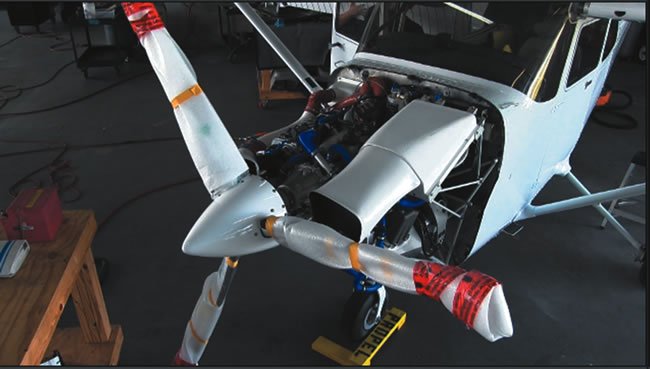
Last fall in a press release that few noticed, Continental Motors announced that a big flight school in Spain was converting 16 Skyhawks from Lycoming O-320s to Continentals CD-135 diesel engines. It escaped much notice because diesel conversions are thought to be a European thing unlikely to gain much traction in the U.S.A Miami-based company called Africair wants to challenge that assumption by buying up recent-model Cessna 172s and transplanting them with Continental CD-135 or…

Read More »

Buy A Diesel? You Go First First

For small flight schools, even those with a dozen airplanes, the cost of airframes is a big economic driver. But for the mega schools like Embry Riddle and the University of North Dakota, price isn’t a deal breaker. Maintenance cost and dispatch reliability loom large because the schools fly thousands of hours.

Read More »

Biometric Avionics: Not There Yet

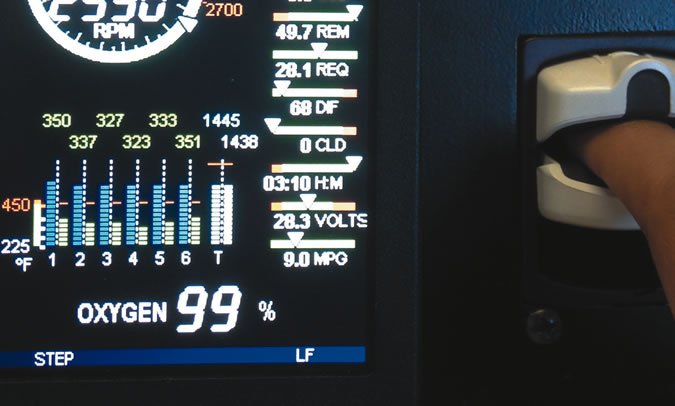
On the heels of the suspected decompression and hypoxia-related TBM900 crash that took the life of Larry Glazer, the president of the TBM Owners and Pilots Association, and his wife Jane Glazer, a non-pilot physician asked if there are onboard systems that monitor the health of a pilot’s body during flight. That got me thinking. With all of the available avionics integration, why not include body health monitoring in the interface? You know, important stuff like blood pressure, heart rate, pulse and of course oxygen saturation levels.

Read More »

Letters: November 2014

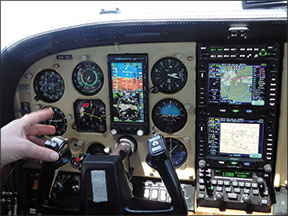
I have a single-screen Aspen Avionics EFD1000Pro installed in my Piper Arrow since July of 2012 and it is amazing. Unfortunately, I learned that if the system loses pitot input (if it’s clogged, for example), you completely lose most all critical data, even non-pitot-sourced data. This results in a black screen with two red Xs covering the upper and lower halves. This means no attitude, airspeed, altitude, heading, HSI or GPS overlay from an external navigator, like a Garmin GNS530 or 430.

Read More »

Composite Complexities

A non-pilot recently asked me if 14 years since new was old for a Cirrus. I didn’t have to pause when answering that it certainly is not. But after thinking about it for a while, it occurred to me that while the modern composite design of a Cirrus—or Diamond or Columbia—may still seem new even after 14 years, the earlier models in the fleet are indeed aging. When these mass-production composites came to market, there was much speculation on how the airframes would hold up and how difficult they would be to service when they break. Owners of earlier models are now finding out.

Read More »

Letters: October 2014

Thanks for your coverage of angle of attack systems for general aviation aircraft in the September 2014 issue of Aviation Consumer. The MMOPA (Malibu-Mirage Owners and Pilots Association) has taken the position that this technology is an important enhancement to safety and we applaud the FAA for working to streamline the installation approval process as a minor alteration in many aircraft.

Read More »

Angle of Attack Systems: A Growing Market

For years the FAA snubbed its nose at angle of attack system retrofits for certified light aircraft. A handful of owners got lucky when the shop was able to sneak field approval paperwork through the FSDO, while others ran into a regulatory roadblock when field inspectors deemed AOA retrofits too major of a modification to approve. The expensive and time-consuming chase for additional supporting data often put an end to the project. That’s changing.

Read More »

Should shops take on a training role?

A recent spirited discussion with Frank Bowlin, my counterpart at sister publication IFR magazine, got me thinking about the largely ignored aftermarket avionics training market. Bowlin pointed out that a sizable part of the critical training market is underserved, and we missed an opportunity to expose this industry failure in the glass cockpit training article in the June 2014 issue of Aviation Consumer.

Read More »

Letters: August 2014

I read the LED lighting upgrade article in your July 2014 issue and thought the following would be of interest. LED lighting is superb. Once you have LED landing lights, you will never be satisfied with incandescent bulbs. Conspicuousness is improved. You need not turn any lights off due to much lower current drain, and LEDs will likely last longer than you can ever fly your airplane.

Read More »

Letters: July 2014

In 2010 we had our Cessna twin painted. I started with the Aviation Consumer paint shop survey from November 2006. Then I followed up with other magazine articles and looked at airplanes on airport ramps over several years. I thought that I did everything right.

Read More »