










Which Garmin Retrofit: G500 or G600?
When Garmin’s capable G600 retrofit PFD system came to market somewhere around 2008, it wasn’t the brisk seller many shops hoped for. Its sticker price closing in on $30,000 was part of the problem.


When Garmin’s capable G600 retrofit PFD system came to market somewhere around 2008, it wasn’t the brisk seller many shops hoped for. Its sticker price closing in on $30,000 was part of the problem.
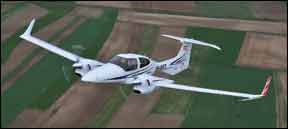
I think you have a typo in your article on the Diamond DA42 VI in the May 2012 issue in describing the performance of the current DA42 NG. In one part of the article, you said that the NG model at 8.3 gallons per side (about 90 percent power) could only do 167 knots. It was capable of speeds as high as 184 knots at 14,000 feet—the highest altitude 90 percent power was available from the Austros in the NG.
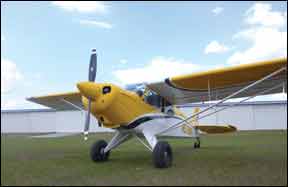
When we speak to companies that build new utility airplanes—CubCrafters, Champion, Maule, Aviat and the like—we’re often told that buyers tart the things up with every feature imaginable suitable for jaunts into the bush. But do the owners really fly into remote mountain strips and river sandbars? Some do, but they’re just as likely to hangar the things in Houston or Kansas City and use them as fun flyers. We’re sure that comprises at least half of the market for the Aviat Husky A-1C, which comes as close to a new hardcore taildragging bush airplane as we can imagine.

It’s one of those aircraft truisms that performance requires compromise. Controllability at low speed means compromising the wing that enjoys high-speed cruise. That’s what makes vortex generators (VGs) seem too good to be true: They claim lower stall speeds in singles and twins without a penalty in cruise speed. Sometimes they bump up the gross weight. For twins, they reduce minimum controllable airspeed (Vmc). This is speed below which controlled flight becomes impossible with the critical engine failed and the other engine at full power. Below Vmc, there isn’t enough rudder and aileron authority to counter the natural yaw and roll of the asymmetrical thrust. Translation: The airplane rolls over and crashes.
When you put a sharp pencil to the concept, diesel engines should be a slam dunk against gasoline engines. Their fuel specifics are terrific, they have lots of torque and, potentially, they have long overhaul cycles. Modern ECU-based diesels have headroom on both performance and economy, so it’s realistic to expect improvements in both. Yet, the market sort of stumbles along, even with avgas at $6-plus and looking increasingly threatened with extinction in Europe, if not in the U.S. If you add up recent production figures, gasoline aircraft engines continue to outsell diesel options by a wide margin. While it’s true that the diesels from Diamond are making inroads, it’s also true that Diamond is the only major OEM with a serious diesel program.
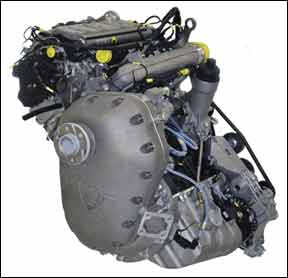
If new aircraft manufacturing ventures require a degree of faith to succeed, Austro Engine GmbH, grafted on to the side of the Diamond Aircraft factory in Wiener Neustadt, Austria must be the industrial equivalent of the Vatican. It’s not that Austro has no chance of success—the reverse may very we’ll be true—but that it’s investing heavily for a future that many in the industry can’t yet draw into sharp focus. The uncertain future of avgas—it seems to be all but dead in Europe and approaching life support in the U.S.—should make diesel engines a natural for strong growth. But with aircraft sales in the tank, that growth has failed to materialize. Gasoline powerplants still outsell diesels by a wide margin and some diesel projects—DeltaHawk, for instance, and Thielert’s slow-as-50-weight-oil life extension efforts, have a forever-over-the-horizon quality. The exception is Austro.
If new aircraft manufacturing ventures require a degree of faith to succeed, Austro Engine GmbH, grafted on to the side of the Diamond Aircraft factory in Wiener Neustadt, Austria must be the industrial equivalent of the Vatican. It’s not that Austro has no chance of success—the reverse may very we’ll be true—but that it’s investing heavily for a future that many in the industry can’t yet draw into sharp focus. The uncertain future of avgas—it seems to be all but dead in Europe and approaching life support in the U.S.—should make diesel engines a natural for strong growth. But with aircraft sales in the tank, that growth has failed to materialize. Gasoline powerplants still outsell diesels by a wide margin and some diesel projects—DeltaHawk, for instance, and Thielert’s slow-as-50-weight-oil life extension efforts, have a forever-over-the-horizon quality. The exception is Austro.
Your article on lightning detectors (see Aviation Consumer, April 2012) underplays how good Insight’s Strike Finder is and how good a value it is. I cut ‘em closer than recommended, but my Strike Finder never steers me wrong. Your article suggests that downloaded radar images can be 30 minutes old. With most storms going through a 20- to 40-minute cycles from birth to death, I consider this worthless. I’ve been trusting my life to Strike Finders since about 1990 for nine years and then a new one in 2002 (with internal gyro stabilizing and the super-bright display) when I got my Arrow. They never steer me wrong and I’ve never had the slightest problem with either of them.

With its 912-series engines, Rotax owns the light sport propulsion market. But even though the 912s are technologically more advanced than the typical Lycoming or Continental engine, buyers have been wondering when Rotax would get around to fuel injection and electronic ignition. In early March, it did just that. At the company’s Gunskirchen, Austria, factory, it rolled out the new 912 iS, an “eco” engine with improved fuel economy, electronic fuel injection and a sophisticated, dual-channel ECU architecture with all the features you’d expect a modern aircraft engine based on automotive technology to have.

When Diamond’s voluble CEO Christian Dries first flew the prototype diesel-powered twin that eventually became the DA42 in 2002, he said something he would later regret. The airplane would cruise at 200 knots on 10 to 12 GPH. The reality, of course, proved rather less. The DA42 was a strong seller, but a 200-knot cruiser it wasn’t. More like about 155 knots on real-world power settings, although the economy was certainly impressive. A decade later, Dries and Diamond are at it again and this time, to quote another famous CEO, they think they’ve got the goods. The soon-to-be-introduced DA42 V1 includes a long menu of aerodynamic improvements that seem to substantially improve the aircraft’s climb rate, cruise speed and engine-out performance.
When Diamond’s voluble CEO Christian Dries first flew the prototype diesel-powered twin that eventually became the DA42 in 2002, he said something he would later regret. The airplane would cruise at 200 knots on 10 to 12 GPH. The reality, of course, proved rather less. The DA42 was a strong seller, but a 200-knot cruiser it wasn’t. More like about 155 knots on real-world power settings, although the economy was certainly impressive. A decade later, Dries and Diamond are at it again and this time, to quote another famous CEO, they think they’ve got the goods. The soon-to-be-introduced DA42 V1 includes a long menu of aerodynamic improvements that seem to substantially improve the aircraft’s climb rate, cruise speed and engine-out performance.
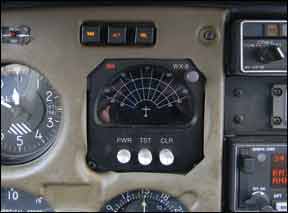
Back in the day if your aircraft sported a Ryan Stormscope, you might lead the way around buildups just like the heavy iron did with ship radar. Today, many owners are yanking old Stormscopes and StrikeFinders from the panel in favor of datalink radar. After all, your trusty portable GPS saddled up with satellite weather tells you everything you need to know about storms. This argument is highly debatable, and that’s why there’s still a market for traditional lightning detection gear. The good news is that the used market is littered with models of all vintages to choose from. There’s also the high-end Avidyne TWX670 and proven WX500 Stormscope, both of which are compatible with many existing displays.