









Register

Safety

G1000 SIM Training: Reality Check

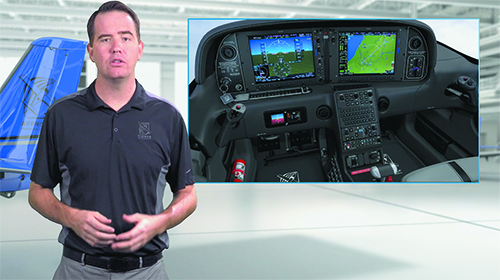
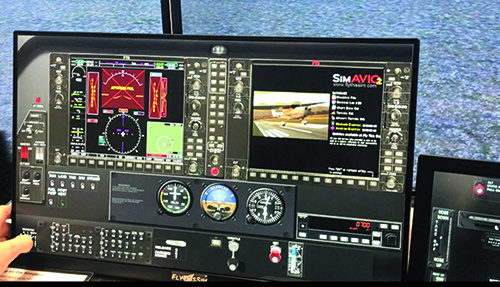
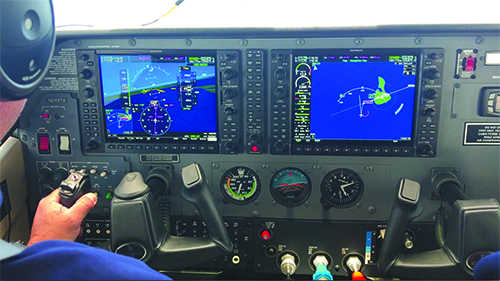
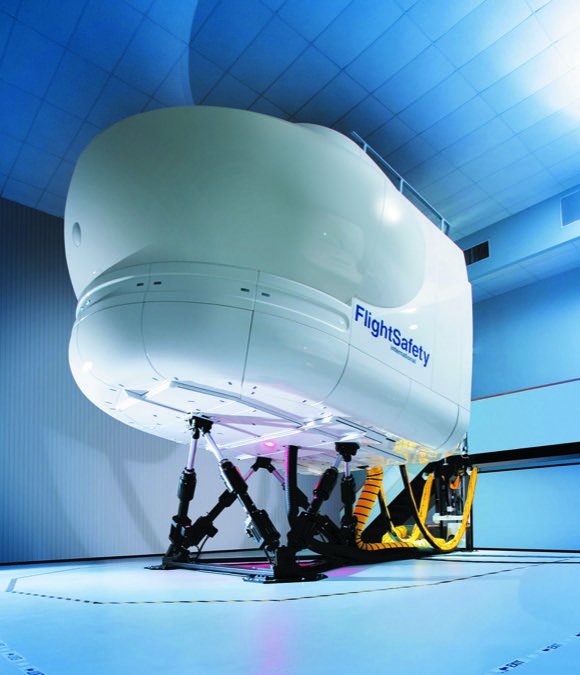
While I’ve flown G1000-equipped aircraft, I’m fairly sure the amount of time I’ve spent in G1000-equipped simulators far outstrips the time I’ve spent in the air with the system at this point. My first introduction to the G1000 was in a Cessna 172-configured sim. Being the somewhat obsessive student I was, I studied the then-new […]

Read More »

G1000 e-Study Aids: Jepp, FlightSafety Tops

In the July 2019 Aviation Consumer I rounded up the top electronic study courses for earning the private pilot certificate. But since some of the initial or advanced training might be accomplished in a Garmin G1000-equipped airplane, for this article I went on the hunt for the top electronic supplemental study aids to ease the […]

Read More »

Your Flight Review: Inexpensive Prep Tips

The only downside to not getting the FR endorsement on the first time you fly with a CFI is that if your 24 months has expired since your last FR, you can’t fly as PIC (that includes solo) until you get a new endorsement. Um, that’s also a very good reason for not putting your FR off until the last moment as the realities of aviation karma include delivering lousy weather for the one day you have available for the FR flight before it expires.

Read More »

ICAO Flight Plan Codes: Required For IFR, VFR

Specifically, on the form there’s Item 10 Equipment and Item 18 Other Information. Item 10 has two parts: avionics and surveillance capability. What makes the codes confusing is that unlike the older domestic flight plan form that used installed equipment, the ICAO flight plan goes a step further. The codes not only could refer to installed equipment (e.g., “D” for DME), but also capability (“B” for LPV) and approvals (“W” for RVSM Approved-reduced vertical separation minima, above FL290) and at times, combinations such as “Y” for VHF with 8.33 kHz channel spacing capability. Got that?

Read More »

The ATP Rating: Expensive Training

It’s aviation’s Everest: the highest rating, the toughest to obtain and necessary to have to fly in the Part 121 airline world, and even in some portions of the Part 135 air taxi world. In reality, if you want to fly for a living, the chances are almost unity that you’ll need to hold an Airline Transport Pilot (ATP) rating to do so. Even in the corporate world, operating under Part 91, insurers want the pilots who haul mega-buck executives around to hold aviation’s Ph.D.

Read More »

Cirrus at 25: A Safer Airplane?

A quarter century later, it’s fair to ask: Well, was it? The easy answer is yes, it was and is. But with a host of safety features such as crashworthy seats, energy absorbing structure, cabin flail space and the first-ever certificated airplane ballistic recovery parachute, Cirrus also implied that its new airplane would be safer, without actually saying the safest ever. So, how about that? Has it delivered on those claims? Answering that is not as simple as crunching the GAMA numbers to enumerate Cirrus’ inarguable dominant market share. But with a quarter century of accident data to review, it’s reasonable to take a stab at it.

Read More »

TSO Certifications:Here To Stay, For Now

Digging deeply into the installation data for Garmin’s new GTR200B comm radio got us thinking about the requirement of TSO certification. With autopilots and primary EFIS systems being approved without a TSO, but instead via AML-STC (approved model list supplemental type certificate), are the days of TSO approval coming to an end? Garmin-a company that cranks out a lot of them in short order-says no. You don’t have to dive far into the regulations to see why.

Read More »

Airframe Vibration: Look Beyond the Prop

Although we’re primarily concerned with airframe vibration for this article, it’s worth a few words on engine mounts, or engine isolators, as they’re more appropriately called. We covered them in detail in the January 2015 Aviation Consumer. These elastomer donut-like components that live between the airframe and the engine serve the important purpose of dampening the rigid airframe from the hammering vibration of the engine and propeller. Engine vibes can certainly do damage, including cracking major structural components, loosening rivets, fatiguing metal and damaging instruments, to name a few issues. Steve Gruenberg, a professional vibration analyst, told us to “Think of airframe vibration as multiple impacts-as in taking a hammer to the structure.”

Read More »

Mayo Clinic Medicals: Preventive Focus

Dr. Clayton Cowl, chair of the Preventive, Occupational and Aerospace Medicine division, told us the department sees roughly 1800 patients per year, some with the most complex medical certification cases that you can imagine. According to Cowl, in all but a dozen or so cases spread out over 20 years the clinic was able to return those pilots to the flight line. As for the patients that the clinic couldn’t get certified, they simply shouldn’t be flying anyway, Cowl told us.

Read More »

VFR Refresher Courses:Sporty’s Rusty Pilot Tops

Course content is broken into nine sections, each of which begins with an audiovisual presentation. The presentations-slides with a voice-over-provide an overview of the section topic and generally run between 5 and 15 minutes. There is a note-taking function available during the presentations. Each presentation is followed by a 10-question true/false study quiz, which serves as a pretty good indicator of how much studying you need to be doing on the topic. Answers are reviewed after completion with explanations presented below the questions. Section reviews emphasize terminology, which might be quite useful for a pilot who has been away from the industry for a while, but less so for someone still comfortable with pilot lingo.

Read More »

Garmin GMA345:Slide-and-Fly Audio Panel

This is a worth a few words, as we often get questions about stereo interfaces with monaural headsets. Using a monaural headset in a stereo jack shorts the right headset channel output to ground. It doesn’t damage the audio panel or the headsets, but plug in with a monaural headset and you’ll hear the left channel in both ears. If a monaural headset is used at one of the passenger positions, any other passenger using a stereo headset hears audio in the left ear only. Ask your installer about your setup.

Read More »

Private Pilot Training:Accelerate It?

Our, admittedly arbitrary, definition of “accelerated private pilot course” is one that is completed within a month. We surveyed a number of flight schools that offer such courses and spoke with some pilots who had completed one. Our conclusion is that, for a person who has the time, money and self-discipline to eat, sleep and breathe flying 8-12 hours a day for two or three weeks, an accelerated course is a better way to obtain a private pilot certificate than flying intermittently over the course of a few months or a year and costs about the same.

Read More »