









Register

Search Results for: insurance

Uncategorized

Used Aircraft Guide: The Cessna 206

These days, a cursory glance around the mall parking lot reveals many customers prefer a vehicle pregnant with flexibility, the sport-utility vehicle (SUV). Extremely popular with growing families, soccer moms and businesspeople spending lots of time on the road, SUVs have all but eliminated the station wagon from the automobile marketplace simply by expanding a theme. That need for flexibility is also present when considering a personal airplane. Some airplanes are optimized for speed, with little flexibility in loading. Some arent, their designers preferring to carry people and things reliably over long distances or into small areas. Compromises can be made, but the results sometimes please few customers. Perhaps the poster-child exception is an airplane like the Cessna 206 Stationair, which carries the station-wagon theme to one of several conclusions. Its not fast, nor is it that slow, but it is stable, rugged, reliable, has six real seats and is remarkable for being able to carry a half-ton or so after the tanks are filled. You can put it on floats, turbocharge it, dump skydivers from it, and carry small packages or just your family. As one owner wrote us, “Cessna tried to market this airplane as an executive airplane. This is ridiculous. Everyone I know flies it as a utility airplane.”
Read More »
Used Aircraft Guide

Used Aircraft Guide: Piper Warrior

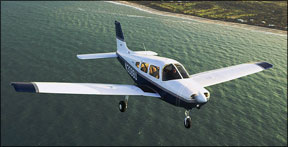
When considering basic airplanes, the 150/160-hp four-place, fixed-gear single is about as ubiquitous as one can get. The niche serves as the beginning rung of a market ladder where airplanes begin to be used as practical transportation tools. They wont haul a lot of people or cargo, nor will they do it quickly, but they offer economical travel. They often serve as a pilots first “real” airplane after primary training, and the market demands they be reliable, inexpensive to operate and relatively easy to fly. Airplanes in this class are sort of like Toyotas: not terribly exciting or fancy, perhaps, but they do what you need them to without costing an arm and a leg. Cessnas Skyhawk owns this market, of course, and used-airplane prices reflect that dominance. At least two of its mainstream competitors, the Piper PA-28-151 or -161 Warrior and AGAC AA-5 Traveler/Cheetah, are good, solid airplanes that can be had for less. (Beechs entry, the Sport, is short on performance when compared to the Warrior and Cheetah.) The AA-5 went the way of the dodo in the late 1970s, and attempts to resurrect it (in the form of the Tiger) failed. Beginning in the mid-1980s, Piper, too, fell on hard times and was forced into bankruptcy, finally emerging several years (and a few abortive buyout attempts) later as the New Piper. In 2006, “new” was dropped from the companys name. Unlike the Skyhawk, and with only one or two exceptions, the Warrior has been in production throughout, even if the number of airframes manufactured in each model year could be counted on the fingers of one hand. Now in the “Warrior III” configuration, the model is marketed mainly as a trainer.

Read More »
Used Aircraft Guide

Used Aircraft Guide: Mooney M20R Ovation

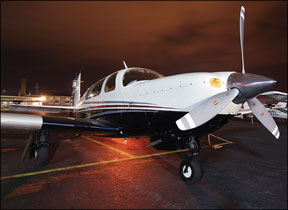
Airplanes are compromises: Theyre never large enough, fast enough or light enough for all potential customers. And going faster is always a popular upgrade. After all, we don’t fly airplanes to go slow. Of the two basic ways to increase top speed-clean up the airplanes aerodynamics or stuff in a larger engine-each has their benefits and drawbacks. But when one method has been tried, or reaches the point where further refinement isn’t cost effective, designers turn to the other. Mooneys M20 series is something of Exhibit A for this practice: The basic airframe had been cleaned up over the years and powered by different engines, resulting in iconic models like the M20J Model 201 and its turbocharged sister, the 231. But after those models saturated their markets, going faster still meant bolting on a different, larger powerplant. After all, there’s no replacement for displacement. In this instance, take a long-fuselage Mooney, trade its small Lycoming for a big-bore Continental, make a few other refinements, and the result is a comfortable190-knot speedster known as the M20R Ovation. Still in production today, the Ovation has seen its share of evolution.

Read More »
Commentary

Letters: 03/08

Im sure youre familiar with Joseph Juptners nine-volume U.S. Civil Aircraft series. Given all the aircraft that he lovingly writes about, you might wonder why he called the Luscombe the finest and most beautiful light aircraft ever made. He owned one. Paul Berge is my favorite-and certainly the wittiest-person writing about aviation today, or yesterday, or at any time perhaps. But the judge must recuse himself in cases such as this unless he has owned all of the aircraft judged.

Read More »
Used Aircraft Guide

Used Aircraft Guide: Diamond DA40 Star

The first time we clapped eyes on what was then the prototype of Diamonds new four-place single-what eventually became the Star-we politely oohed and ahhed. But secretly, we thought the thing didnt have a prayer. First, it was small. Second, it had a canopy rather than doors and last, it had that weird hatch for the rear-seat occupants. Who would buy that? Quite a few flight schools and individual owners, it turned out. The current FAA registry shows nearly 600 DA40s on the rolls in the U.S., with the total production now at about 1040 worldwide. Given its European roots, Diamond came at the DA40s design as sort of hybrid between the sleek glass gliders the company started out producing when it was Hoffman Flugzeugbau and more traditional aircraft U.S. customers are accustomed to. This yielded what we think can fairly be called a world airplane.

Read More »
Industry News

Four Skyhawks: The S-GA Model Rules

In the world of light airplane manufacturing, Cessna has figured out one thing better than any other single manufacturer: There’s a difference between people who talk about buying airplanes and people who actually buy them. The people who talk gave up the Cessna Skyhawk for dead when it was reintroduced in 1997; the people who buy made it the second best-selling single in 2006 behind the Cirrus SR22. It will occupy the same position when the 2007 sales figures are tallied. Not bad for an airframe conceived in 1956 and still selling against the cutting-edge best from Cirrus, Diamond and others. Incredibly, Cessna isn’t done with the Skyhawk yet, having announced a Thielert-powered diesel version last fall at AOPA Expo in Hartford and, as of press time, it has dropped the 160-HP R-model from the lineup. Given Cessnas confidence in the 172, we wondered how the four variants of the Skyhawk-two versions of the 180-HP gas model and two versions of the new diesel-stack up against each other and against an older Hawk.

Read More »
Maintenance

Aircraft Battery Trials: Concorde Sealed Wins

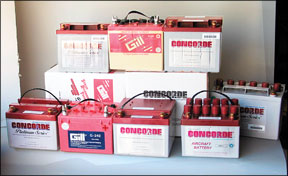
To hear some owners tell it, buying an aircraft battery is like playing the lottery: You buy your ticket, cross your fingers and wait around to see what happens. Some owners-those lucky enough to get five years out of a battery-ask whats the big deal? But the poor sap who buys two batteries in as many years has a more cynical view. Is this any way to run an industry? Were not sure, but our tests and owner surveys reveal a wide disparity-not to mention a vein of customer ire-in battery performance and longevity. In this article, we’ll examine aircraft battery options to make sense of it all. Upfront, we’ll say that the smart money rides on sealed battery designs from Concorde, with flooded models from Concorde as second choice and Gill flooded products a close third

Read More »
Used Aircraft Guide

Used Aircraft Guide: Piper Arrow

Pipers Arrow isn’t the fastest, the roomiest or the most stylish single-engine retractable available on the used market. But-just as all cross-country airplanes are compromises-it has enough of those qualities to give it enduring popularity. And it might be the most economical, if you don’t mind giving up some cruise speed to others in its class, like a Mooney or Bonanza. It also has the advantage of not being an orphan-the Arrow is still being made. Since its little more than a retractable Cherokee, the Arrow is a logical step-up airplane for pilots accustomed to Pipers fixed-gear four-seaters. Moving from one cockpit to the other, everything will be familiar, from gauge placement to systems to handling and procedures. Thats no accident, of course: Offering a full line of airplanes was the basic marketing model for all of the major manufacturers in the 1960s and 1970s. As they started out in two-seat trainers, pilots were encouraged to step up into similar four-place, fixed-gear models, then to retractables from the same blood line.

Read More »
Commentary

Letters: 12/07

Im a little late responding to the top 10 safety investments article (see July 2007 Aviation Consumer), but I was surprised at the omission of autopilots. How many of all the judgment-type accidents might have been avoided if pilot workload were reduced by an autopilot to let the pilot actually check the weather, be less fatigued, understand the maps or maintain flight in IMC? The most important criteria-which is impossible to determine-is how many accidents have been avoided because of a safety investment. I think autopilots would rank very high on that list, even though the Nall Report will never cite “failure to have or use autopilot” as the cause of an accident.

Read More »
Aircraft Stepups

iFlys Club Approach: Cheaper, But Not Cheap

Owning an airplane isn’t what it used to be. Or should we say, operating one isn’t. Given the cost of avgas, sole ownership looks less appealing than it once did and multiple-owner partnerships and fractionals look more attractive than ever. So do flying clubs, which split ownership among many and further reduce individual costs.But the problem with flying clubs is similar to renting. The airplanes probably arent the newest and pilots who own a tenth or a twentieth of an airplane arent likely to have much pride of ownership and the clubs airplanes may reflect that. But what about combining the fractional idea with the economics of a club? Thats the idea behind iFly, which launched a little over a year ago. iFly is basically an exclusive flying club that asks what fractionals ask: What if you could have all the benefits of ownership, but none of the hassles?

Read More »
Used Aircraft Guide

Used Aircraft Guide: Cessna 152

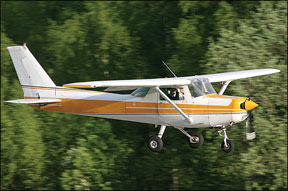
If any airplane can be considered economical, the Cessna 152 probably makes the cut. A “modernized” version of the Cessna 150, the 152 was first delivered in 1977 as a 1978 model and quickly found its way into training and rental fleets around the world. But its production run ended a short eight years later when the bottom fell out of Cessnas piston-aircraft market in 1985 and all production ceased. Although Cessna restarted piston-aircraft production in 1996, the 152 wasnt part of that revival. Over its eight years of production, 7584 examples of the 152, including A152 Aerobat and French-made Reims Aviation variants, were built. Today, the FAA shows more than 3800 copies presently wearing an N-number; many others are overseas, soldiering on alongside competing contemporaries from Piper (the PA-38-112 Tomahawk) and Beech (the Model 77 Skipper).

Read More »
Maintenance

Tails from the Crypt: Making Sense of Salvage

Lets say you need a part for your airplane-not a maintenance item like a Brackett foam filter or a spin-on oil filter, but something more exotic, say an elevator trim tab or a new wingtip. The immediate impulse is to order it new through your shop or FBO or get it from one of the discount vendors like Preferred Airparts. The second impulse will be to sit down and steel yourself for the price. As we reported in the September 2007 issue of Aviation Consumer, finding replacement parts is getting to be an expensive chore. Often overlooked, particularly by owners, is the option of buying a used part from an aircraft salvage yard. Around the country, there are dozens of small and not-so-small businesses that deal in recycled airplane parts

Read More »