Aircraft Stepups

Blackhawk Upgrades

Throughout our conversations with PT-6 operators, sales professionals and shops, one word recurred: Blackhawk, specifically Blackhawk conversions for PT-6-powered aircraft. These loom large in the PT-6 universe because they compete favorably with overhauls and many operators see the economics of upgraded, new engines compared to overhauls as far more favorable.

Read More »

Best case overhauls are rare

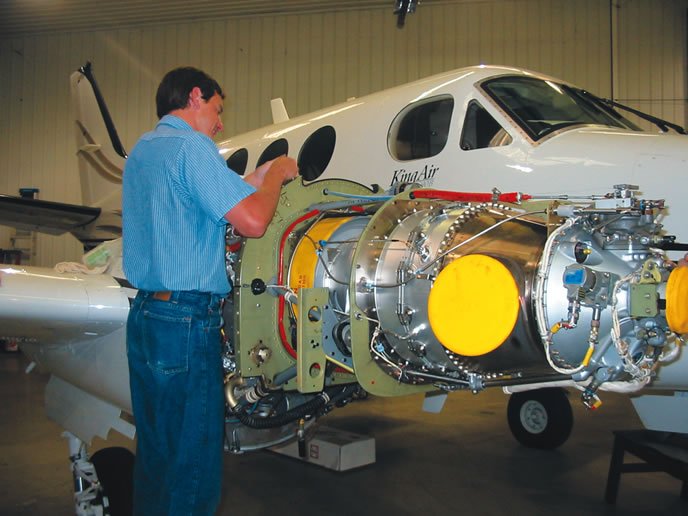
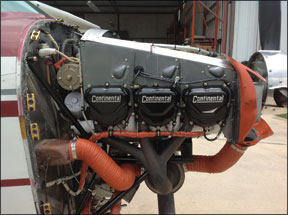
As part of its business plan to expand opportunistically, Continental Motors got into the PT-6 business in 2015 by purchasing United Turbine, a Miami-area shop with 24 years of turbine overhaul experience.Like other shops of its type, United is a Swiss Army knife of sorts, taking on virtually all models of the PT-6A and the Twin-Pac PT-6T. Shop manager D.J. Davant ran us through the workflow on a recent visit.As with piston overhauls, engines are brought in, stripped, cleaned and inspected for damage and out-of-spec parts. A good deal of that inspection involves non-destructive analysis to detect hidden cracks. United, as per FAA requirements, strictly follows the P&WC overhaul manual, but unlike the factory, it can rely on less expensive PMA parts or FAA-approved repairs that the factory might or might not use. (As noted, P&WC isn’t forthcoming about the details of its overhauls and wont quote even price ranges until it sees an engine.)


Read More »

PT-6 Overhauls: Complex and Expensive

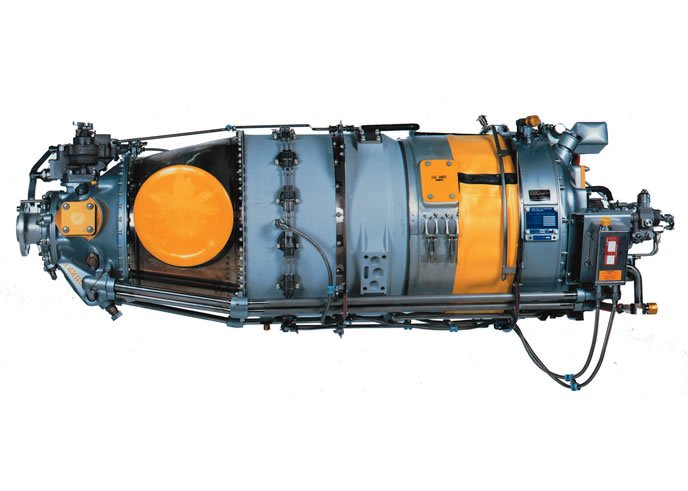
As a variation on the tired trope about not being able to afford something if you have to ask its price, we offer this: If you want a detailed understanding of all there is to know about the myriad models of Pratt & Whitneys workhorse PT-6 turbine, youd need a career change just to frame the question. If variety is the spice of life, the PT-6 is off-scale high on the Scoville index.Daunting or not, PT-6s eventually have to be overhauled and the market for such services is competitive and well-served, albeit structured a bit differently than the piston-engine overhaul world. Given the complexity, newbie PT-6 owners-and there appear to be more every year-may be unavoidably dependent on advice from shops which either specialize in aircraft powered by the PT-6 or, better yet, independent consultants who understand these unique engines.

Read More »

Cessna Skymaster:

The idea of the push-pull twin makes such fundamental sense that it has been applied to aircraft designs in one form or another for nearly 100 years and in literally dozens of models youve never even heard of. Back in 2005, Adam Aircraft tried the idea again with the A500 push-pull piston twin. Like many before it, it failed more by market reality than by a fundamental flaw in the idea.

Read More »

Composite Propellers: Longevity, Efficiency

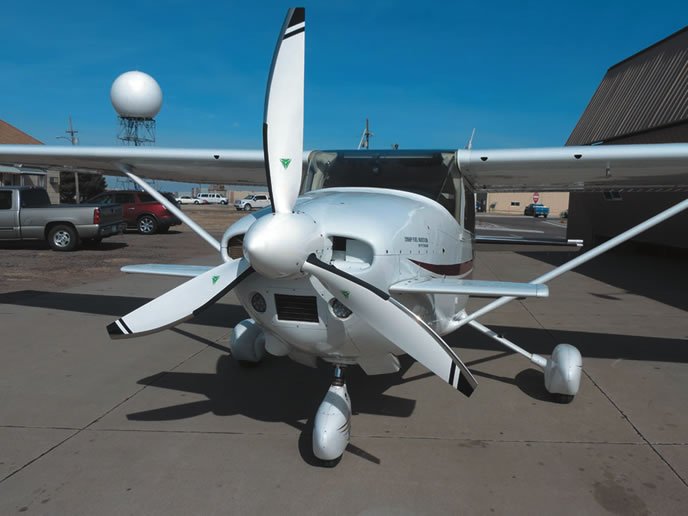
With minimal fanfare, composite propellers have been appearing as original equipment on more and more airplanes and more and more owners are finding that they are an option for their airplanes when it comes time for an overhaul or replacement. Composite props are more expensive than their aluminum counterparts, so we were curious why owners are shelling out the extra bucks-whats the attraction and whats out there to buy?

Read More »

First Word: February 2015

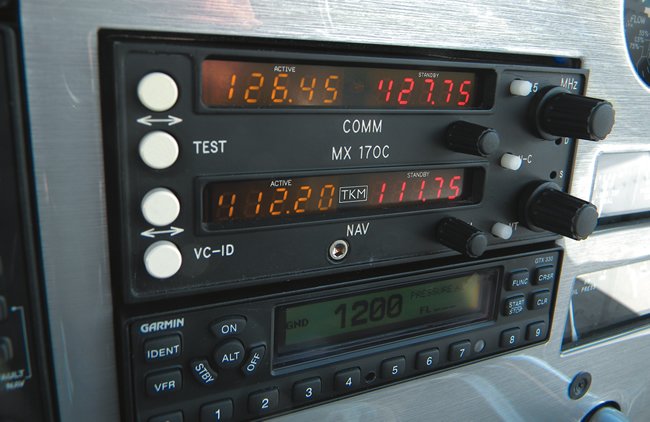
There are seemingly more signs of stability in the avionics market with Scottsdale, Arizona-based TKM/Michel Avionics under new leadership. It says it has an improved product line and is currently planning the next generation of slide-in replacement navcomms, while it ratchets up support for existing units in service-roughly 37,000 radios.

Read More »

310 PRANGS: GEAR COLLAPSE, OTHER

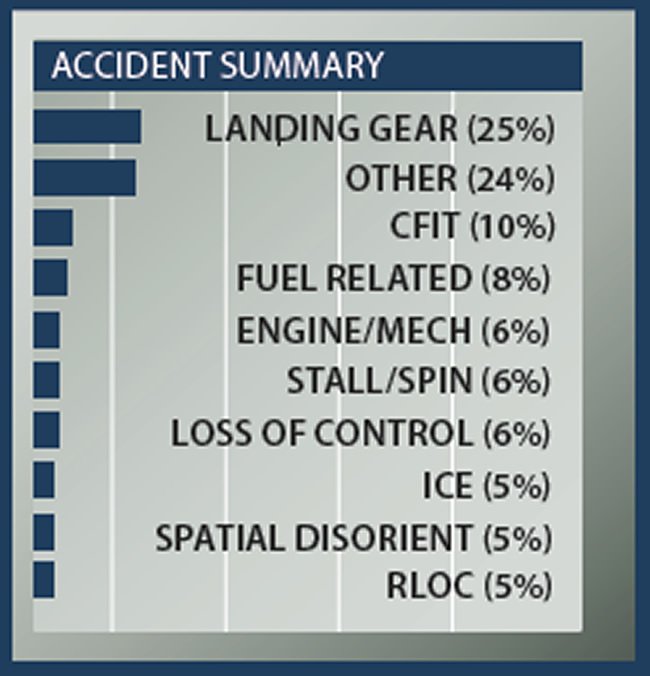
In our review of the 100 most recent Cessna 310 NTSB accident reports, landing gear problems led the list. There were 25 reported gear-related events, 20 of which were collapses. There were probably more because gear-up landings arent always reported-they almost never cause enough damage to meet the NTSB definition of a reportable accident.

Read More »

Cessna Engine Upgrades: Wide Market Choice

No replacement for displacement. There’s no substitute for horsepower. The clichés have been stuck in your head for a few months. You own a single-engine Cessna and you want more performance, but you don’t want to buy more airplane. You want to know if you can drop more engine in your airframe, how much it will increase performance, what it will cost and whether you’ll get the investment back when you sell the airplane. We’ll walk you through the answers to those questions while providing a sampling of some of the amazing number of engine mods available for single-engine Cessnas. We’ll also discuss how to look at the cost-benefit evaluation of a conversion.

Read More »

Active Winglets: Bolt-on Efficiency

In the imaginary world of ideal airplane design, wings would be infinite of length and short of chord, yielding lots of lift and little drag. In the real world of airplane design, that’s not an option, so we resort to aerodynamic tricks to whittle away drag. One of these is winglets, a retrofit idea being aggressively pursued by Tamarack Aerospace. Although winglets may appear as stylish cosmetics implying speed and modernity, Tamarack claims they’re a lot more practical than that. Winglets mimic the characteristics of a high-aspect-ratio, low-drag wing, so on high-performance aircraft, they increase climb rate and improve efficiency by allowing equivalent cruise speeds at lower power settings. But it’s not as simple as that, at least for the retrofit market. Even as they add lift, winglets impose additional structural loads on the wing that can exceed its certification limits.

Read More »

Turboprop Conversions: Pricey, Capable

Power and speed—two of aviation’s touchstones—have been pursued as long as there have been airplanes and people willing to throw money at them. Aftermarket designers have hung ever-larger piston engines on factory airframes, with varying levels of success, for decades. By the 1980s mod shops were bolting on turboprops in place of reciprocating engines and achieving impressive speeds, despite the challenges of assuring the airframe could handle the horsepower and juggling the fuel/payload equation on the small airframes. The small size and high power density of turbine engines makes them attractive, as does the increasing difficulty of obtaining avgas outside the U.S. However, there’s no free lunch; jet fuel weighs .7 of a pound per gallon more than avgas. That adds up because turbine engines have higher fuel specifics than piston pounders. For each horsepower output, the turbine uses more fuel than does a piston engine. The result is that the light weight of turbines is offset by the need to carry more, heavier fuel to achieve reasonable range. This becomes particularly acute in the relatively small, piston-powered airframes, and their correspondingly small wings and fuel tanks, designed for piston fuel consumption specifics.

Read More »

Husky A-1C: Higher Gross, New Gear

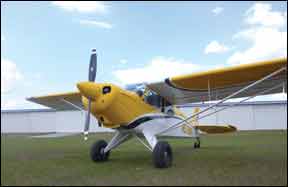
When we speak to companies that build new utility airplanes—CubCrafters, Champion, Maule, Aviat and the like—we’re often told that buyers tart the things up with every feature imaginable suitable for jaunts into the bush. But do the owners really fly into remote mountain strips and river sandbars? Some do, but they’re just as likely to hangar the things in Houston or Kansas City and use them as fun flyers. We’re sure that comprises at least half of the market for the Aviat Husky A-1C, which comes as close to a new hardcore taildragging bush airplane as we can imagine.

Read More »

Good Glass Deals: Skyhawks and DA40s

We’re a long way from every cockpit having some form of a glass panel, but we’re getting there. Aftermarket installations of products like Aspen’s Evolution and Garmin’s G500 are making inroads and as some airplanes head for the scrap heap (or Brazil), the percentage of glass cockpits slowly grows. If you want glass, the cheapest, least painful way may be to simply shop the used market for the first airplanes that got glass panels, meaning 2003 to about 2007. These airframes have taken their predictable depreciation nosedive, but many of them are still a long way from the ratted-out phase.

Read More »