Maintenance

Letters: 11/09

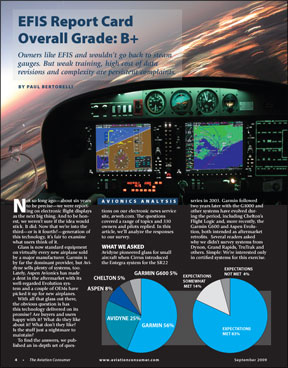
I read with great interest the EFIS article in your September edition. I did not participate in your survey, but feel compelled to comment on my G1000-equipped Diamond DA40. I obtained my private certificate on steam gauges and then purchased my Diamond DA40. After two incidents where I am convinced that my glass cockpit saved my bacon (and that of my CFI), I would never fly steam gauges again. In October of 2007 on approach, while working on my instrument rating, I was descending through 1200 feet on long final at the POH-specified air- speed of 70 knots. ATIS information informed me that surface winds were 7 knots from 250 degrees. I scanned my MFD and thanks to the winds aloft vector on the G1000, I observed that the winds aloft were 37 knots from 040 degrees. I mentioned to my CFI that there would be one heck of a windshear on approach.

Read More »

Maintaining Your LSA : Few Lurking Land Mines

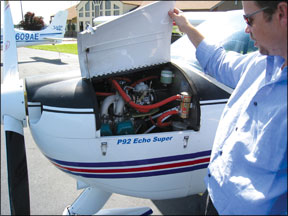
Back when this whole LSA thing was being conceived, part of the appeal was simplicity: Two seats, fixed-pitch prop, a couple instruments … what could go wrong? Actually, a lot can go wrong, break or just plumb wear out. So-called legacy LSAs can have over half a century on their airframes. Corrosion and fatigue mean just about anything can snap. For a Piper J-3, thats no problem. You could literally build a J-3 from scratch with available replacement parts. For an Aeronca C-3, your options are limited. Flying a new light sport (S-LSA) doesnt guarantee parts and support will be simple. Your experience will almost entirely depend on how the company built the aircraft, how we’ll they prepared for maintenance and how long they stay in business. Old or new, the first step in protecting yourself is understanding why LSA maintenance is different and knowing what questions to ask before you buy. Supportability for legacy LSAs is primarily a numbers game. If enough airframes of a particular are model flying, then its probably worth someones trouble to supply parts. Thats what makes models like the Piper J-3 (Cub) and PA-11 (Cub Special), or the Aeronca 7AC (Champ) and 11AC (Chief) good picks.

Read More »

Letters: 10/09

We were pleased that Jeff Van West liked Version One of the FXVIEW software. However, we felt that most of the article was fair, there are some misleading points we would like the opportunity to clarify.The FX10 is only one ounce heavier and one inch wider than the Kindle DX but it has about 14 percent more display area. Some of our customers tell us they would prefer an even larger device. While pleased that Van West liked the zoom and pan functionality we were surprised that he did not see a use for it. Being able to zoom in on a briefing strip, missed approach procedure, or small text boxes can significantly reduce the need to rely on reading glasses for those of us (myself included) with aging vision. There are also many Jeppesen charts in a two-page format. While the unit and FXVIEW software is not inexpensive, the price is set to support a viable business model that can support customers, provide functionality enhancements, and bring new products to market. We cannot apologize for having a business plan that allows us to employ the best, be viable and provide a return on investment. The landscape is littered with bankrupt aviation ventures that promise too much for too little.

Read More »

Turbo Overhauls: Sooner Not Later

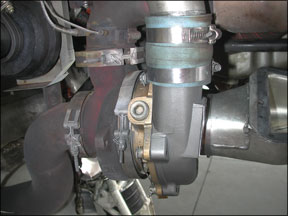
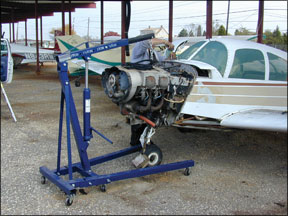
Pity the poor turbocharger: It sits in your engines exhaust stream, subject to extreme heat and corrosive gases, spinning at up to 120,000 RPM, boosting manifold pressure. Pity also the turbocharged aircraft operator, since he or she gets to pay for maintaining and overhauling the turbo, its controller and its wastegate. Although turbos often last as long as the engine itself before needing overhaul, they also can need attention we’ll before scheduled TBO. And, even if the engine doesnt need work before an overhaul, you might want to consider overhauling the turbo halfway to the engines TBO anyway. Its sort of like paying it forward. In some cases, problems with the engine can mean turbo issues, too, since they share the same lubricating oil; what gets into your engines oil also can get into your turbo. Whether your turbo is sent out for overhaul with the engine or removed before TBO after a routine inspection uncovered a problem, there are few things you need to know and decide before giving the shop a go-ahead for work.

Read More »

Spin On Oil Filters: Champion Prevails

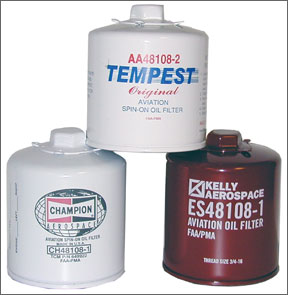
Replacing oil thats been fouled by combustion by-products is one of the easiest and most-reliable ways to help prevent internal corrosion of your engine, thus the recommendation for frequent oil changes. Between changes, of course, we depend on frequent flights and the oil filter to help keep dirt and metal shavings from circulating and potentially damaging expensive parts. And when we change the oil, examining the used filter can help identify potential problems or confirm that all is well. Which filter to install at the next change often is determined by whats available on your mechanics shelf, or by the FBOs profit margins. Since all filters are FAA-PMA approved, theyre all pretty much the same, right? Not necessarily. To find out for ourselves, we obtained samples from the three companies manufacturing spin-on oil filters for Continental and Lycoming engines-Champion, Kelly and Tempest-cut them open and examined their construction. We found the Champion filters had more robust components, but all three have different features.

Read More »

Portable Tiedowns: Claw is a Top Pick

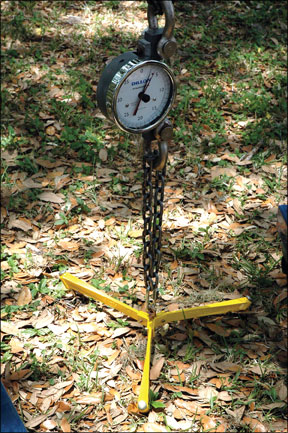
Most paved parking ramps are equipped with tiedown rings, plus adequate rope or chain to do the deed. But some of the most-desirable destinations have nothing of the sort. At back-country airstrips, a friends cow pasture and most fly-ins weve attended, you need to bring your own gear. One option is to assemble a kit from hardware-store items-rope and general-purpose anchors can meet the need. But as with everything else in aviation, if there’s a better way, someone will invent and market it…thus commercial tiedown kits. But are these things worth the money? Are they really any better than the classic cheap doggie auger you can buy at Wal-Mart for under $5? Maybe. Maybe not. While we agree the hardware-store stuff isn’t optimal, we were curious about which of three popular commercial tiedown products are best. To find out, we obtained samples from each manufacturer, plus some gear from our local hardware store, then tried to pull each of these anchors out of the ground. The results surprised even the most cynical among our testing crew and reminded us that what works we’ll in one soil type may not be worth the trouble in another.

Read More »

The Cam Problem: Corrosion, Failures

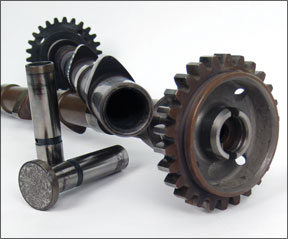
Just as you thought it was finally safe to buy a cylinder, now comes a crisis over camshafts. Specifically, engine shops tell us theyre seeing premature wear and failures due to spalling and many also report that cams that used to make it through one TBO run and into another are now too worn to reuse. This trend has actually been brewing for a number of years and no one seems able to say definitively if its getting better or worse. Opinions bridge the divide. “Definitely worse, in my opinion,” says Penn Yan Aeros Bill Middlebrook, who shipped us a couple of scrapped cams to prove the point, along with a couple of spalled lifters. “We had a brand new cam come apart in the test cell-it wiped one lobe,” he added. This sort of thing used to be limited to Lycomings, whose cam is mounted higher in the engine core, away from oil misting from the crankcase and in line with blowby from the cylinders. But lately, shops tell us theyre seeing more cam-related wear issues in Continental engines, too. TCM seems to have noticed this and in 2005, it issued SID 05-1, a service directive related to cam and tappet wear. And speaking of tappets, some in the industry think thats definitely the problem and a worn cam is the secondary result. “We think the problems definitely start in the lifters, predominantly,” says Greg Merrill at Aircraft Specialties Services, a Tulsa house that regrinds and reconditions cams and tappets for many engine shops. His company also developed CamGuard, an anti-wear, anti-corrosion oil additive. “We do see the occasional cam with a bad lobe, but its rare. Its almost always a problem with the tappets,” Merrill adds. What exactly is going on here? Everyone has a theory, so take your pick. Some, like Allen Weiss at Opa Locka, Floridas Certified Engines believe that something changed in the fuel or the oil in the recent past, recent being perhaps in the last 10 years.


Read More »

Avoiding Ethanol: Easy Tests Do the Trick

As the number of aircraft engines capable of using automobile gasoline-mogas-rises, so does pilot interest in using it instead of pricier 100LL. And the next time oil prices spike, as they did during the summer of 2008, interest will be greater. But the increasing alcohol content in mogas, coupled with less-stringent quality control when compared to 100LL, makes it impossible to know exactly what youre getting. That alcohol, specifically ethanol, may not be a problem if youre driving a car or truck manufactured in the last couple of decades. But for those aircraft engines approved for mogas, there’s a catch: Few of them allow large percentages of ethanol. And if youre flying an older aircraft using mogas under a supplemental type certificate, none of them allow it. To be sure what youre putting in your tanks, you need to test the fuel for its ethanol content. Blending ethanol into mogas has its roots in the gas crises of the 1970s, but really didnt get going until the late 199 0s. New U.S. air-quality rules enacted early in that decade reduced allowable carbon monoxide levels and refiners started adding methyl tertiary butyl ether (MTBE) as an oxygenate to meet the requirements. Soon, however, MTBE was blamed for contaminating groundwater and, as of 2006, it had been banned in 20 states, although no federal ban currently exists. States and localities still had to comply with air quality rules, so ethanol became the oxygenate of choice. Presently, renewable fuel standards in nine states require blending ethanol with mogas, according to the American Coalition for Ethanol. Fourteen states have incentives for marketing ethanol-blended fuels and many more have on the books various incentives supporting ethanol production. Despite questions about its economics and energy required to produce it in the U.S., ethanols presence in mogas likely will increase.

Read More »

Letters: 04/09

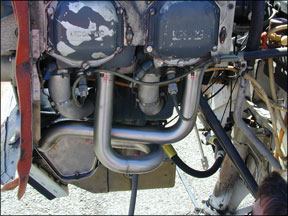
Id like to add some experience to your report on Power Flow exhaust system article in the February 2009 issue. We installed a Power Flow exhaust on our 1976 Cessna 172M about eight years ago. Its been long enough that I cant provide any reliable performance improvement numbers, but what I read in your article is about what we experienced. A significant advantage is the ability to lean more with our Lycoming O-320-E2D. I advise all our pilots to lean aggressively. We installed an engine monitor and discovered that the only engine or flight mode that causes heat problems is high-altitude Vy climb, when the lower density of the air doesnt provide adequate cooling below 70 knots or so. This is at altitudes above the stock service ceiling of the 172.

Read More »

Engine Warranties: Stay Close to Home

If there is a truism regarding piston aircraft engines, its this: Standard warranties arent. Our research and responses to a recent survey suggest that manufacturer and shop support quality is all over the map, literally and figuratively. For example, engine manufacturers generally enforce limitations in warranty provisions, without exceptions, right? Most of the time, yes, but evidence suggests exceptions are made. At the other end of the spectrum, stories abound of local overhaul shops going beyond their warranties, usually as a way to ensure favorable reports about them spread among area pilots. But if they go out of business, where does that leave you? Despite those exceptions-or perhaps because of them-survey responses indicate youre better off addressing the obvious questions of expense and downtime by sticking close to home: If one shop did all the work, you know where to go if something isn’t right. But if you bought a factory reman, for example, and your local FBO did the installation, getting the right person to pay attention to a problem can be, well, a problem. The good news is there are plenty of choices; the bad news is horror stories are alarmingly frequent. And, as many owners know, it seems no matter whose cylinders are bolted on, there’s no guarantee there wont be an AD or factory recall adding to the frustration.

Read More »

Swift AvFuel: Too Good To Be True?

The worry about 100LL is less when it will disappear than how many more stories you’ll have to endure predicting its imminent demise. We started in 1984, first warning of the air quality issue followed by the impending loss of the lead additives, which we predicted was just around the corner. Next, it was the refiners-there wouldnt be enough to make the stuff. Then all the states would run leaded fuel out of town or the truckers wouldnt truck it. It was always something. Yet, there it still is: Genuine 100LL at your local airport. Its at least available, even if it isn’t cheap. But we swear, the stuff is going to go away and this time we mean it. The latest threat is simple economics: Declining demand may soon render avgas not worth the bother of blending, at least for some refiners. (Check back in 2015 to see how this prediction works out.) Next up as a would-be replacement is an intriguing new product that surfaced last summer called Swift Fuel-Swift being the name of the start-up company that proposes to develop the process to produce it. While other pretenders to the 100LL throne have come up short octane wise or just havent proven practical, the initial take on Swift Fuel is just the opposite. Initial tests show that it has the octane punch required to keep detonation-prone turbocharged engines from exploding, it burns cleanly, has no toxic lead and-get this-its a renewable biofuel that the inventors say can be made for $2 a gallon. If this sounds like one of those too-good-to-be-true business schemes pitched on the cable channels, it might not be. Swift Fuel is a serious industrial research program whose claims at least pass the initial smell test. But there are some niggling details that, if not show stoppers, could sprinkle a little sand in the gears.

Read More »

Cirruss New TKS: De-Icing Kicked Up

Pilots who fly a lot of weather sort themselves into two groups when it comes to the risk of flying in ice. One group-call them the “Im-willing-to-give-it-a-go” set will launch into any reasonable forecast and deal with the ice as it comes. The other group-call them the Legal Beagles-would do the same, but they get their pants snagged not so much on the actual risk, but whether the FAA will come after them for flying in forecast or “known ice” in an airplane not equipped for it. Great swaths of pulp forest have been sacrificed in the name of trying to define known ice and were not sure weve succeeded yet. What we have managed to do is create a not-so-small market slice of would-be buyers to whom an airplane legally equipped for known icing is a big deal. Ever sensitive to the whims of the market, Cirrus has created the perfect airplane for these buyers: The new SR22 line equipped with a TKS-based flight-into-known-ice package. In the past, weve viewed so-called FIKI packages as more window dressing than real substance. TKS is such an effective system that, in our view, with respect to actual icing outcomes, whether the system is certified or not is a distinction without a difference. To be sure, known-ice packages protect more surfaces and are probably more robust, but our view is that if 10 airplanes certified for known ice and 10 with so-called inadvertent systems flew the same winter systems for a year, there wouldnt be a noticeable difference in outcomes. So whats to improve? In the Cirrus view, that would be the highest fluid rates of any TKS system on a single and what amounts to significant design decisions that mold the Cirrus icing system into an integrated package. Conclusion: It works better, its easier to use and gives the pilot more control and more choices. Heres how.

Read More »