









Maintenance

Pay for Play: Managed Maintenance

Although pilot training provides the knowledge and experience we need to safely fly an aircraft per the regulations, little more than the school of hard knocks is offered to help us maintain it. Amid stories of five-figure annual inspections for piston singles, the typical aircraft owner faced with a maintenance-related decision is more likely to defer to the shop than to seek a professional second opinion. That can get expensive. And, until now, professional maintenance management-that is, having a professional make these decisions on the owners behalf-simply wasnt available for personal aircraft at any cost. But is there even a market for such a thing? Mike Busch thinks there is. Busch is long-time maintenance advisor to the Cessna Pilots Association, the FAAs National Aviation Maintenance Technician of the Year for 2008 and founder of the Savvy Aviator Seminars on aircraft ownership. In mid-2008, he founded Savvy Aircraft Maintenance Management (SAMM) which offers to professionally manage the scheduled and unscheduled maintenance of most models of owner-flown aircraft. This service strikes us as moderately priced and the company bills it as a service that will pay for itself by saving owners money. Is it worth it? Our contacts with early clients of SAMM indicate that theyre pleased with the service and seeing reduced maintenance expenses, along with increased confidence.

Read More »

Owner Survey: Maintenance Quality

Is the aircraft maintenance industry broken? Or do we just like to carp about how hard and expensive it is to get an airplane fixed? To put numbers on these questions, we published a survey in our online publication, www.avweb.com asking about maintenance experience and opinions. A total of 455 pilots and owners contacted us, the vast majority of which (88.2 percent) operate single-engine piston aircraft of some type. There were a smattering of piston twin and turboprop operators, too. Our survey revealed that 97.1 percent of owners actively participate in their aircraft maintenance, either managing it or turning wrenches. No surprise there. Slightly fewer, 78.2 percent, told us they regularly perform preventive maintenance such as changing oil and spark plugs. Also not surprising is that owners think the price of parts is too high but, interestingly, the majority think the cost of labor is fair. (We didnt expect that, frankly.) The chart at right summarizes some of the surveys findings. One other surprise is that getting parts is a big enough hassle to represent a major maintenance challenge for owners.

Read More »

Letters: 01/09

I just received the November 2008 issue of The Aviation Consumer and read the article on deicing. I have a TKS system on a Mooney 262 (a 231 modified firewall forward to 252 specs). From my experience, don’t trust estimates. The original installation cost was estimated at just over $25,000. By the time we were done, it was over $35,000. This kind of price escalation is nothing new to people with experience in aircraft maintenance and upgrades. More important, I was disappointed in what the article failed to disclose about TKS. Your article clearly pointed out the critical deficiencies of Thermawing and pneumatic boots, but failed to state the TKS is ice prevention and is not deice. While most people and even the manufacturer talk about it as a deice system, it will not deice light rime ice nor will it deice clear ice once it has frozen into the pores.

Read More »

Letters: 12/08

I am a subscriber to Aviation Consumer and ravenously enjoy each issue. I am sure that the Garmin GPSmap696 will receive unmitigated praise, as it probably deserves. I am an owner of a 496 and think it is an excellent product. The 696 seems exponentially better. However, in all the reviews of GPS I have seen, scant attention is paid to the ongoing cost of keeping the databases up to date. The 496 has several different databases-terrain, AOPA data, navigation/Jeppesen and so on. I believe that if a user were to get every update, it would easily cost more than $1000 a year. More alarming is the caveat in the 696 sales literature that if the IFR plates are not kept up to date (every 28 days, I think), they become inaccessible. Putting aside the questionable legality of this marketing approach (no one takes away my printed approach plates when they are outdated), I urge you to explore this issue from a pure cost perspective. Its probably inaccurate to say that the 696 has approach plates-its more truthful to say that it has the ability to display approach plates if one were to incur an ongoing expense of several hundreds of dollars annually.

Read More »

CamGuard Oil Test: Results Require Time

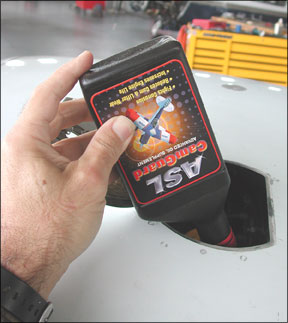
The companies that sell aviation oils tend to view their products as being like Mother Nature-and you don’t mess with Mother Nature. Which is another way of saying that if they thought their oils needed a certain additive package, they would put that package into the product. It stands to reason, then, that if an oil company doesnt use a certain additive, you don’t need it. The fault in this logic is that its manufacturer-centric-it assumes that whats good enough for the oil company should be good enough for you. And if an oil maker doesnt use an additive simply because it costs too much, thats a marketing decision the customer would be ignorant of, not a technical consideration. This more than anything explains why the oil companies have been chilly toward an additive we think is promising-ASL CamGuard. Our bench tests of CamGuard have proved promising, especially with regard to corrosion prevention, which we are increasingly inclined to believe is the more critical consideration than running wear. We recently performed an informal in-service test of CamGuard and were reporting on a more extensive test done by our AVweb colleague Mike Busch in his Cessna 310. His findings mirror our own.

Read More »

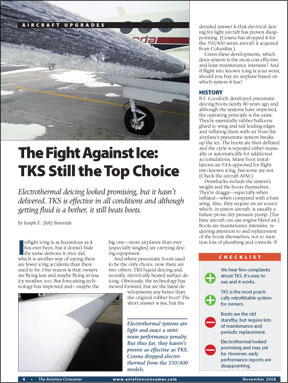
The Fight Against Ice: TKS Still the Top Choice

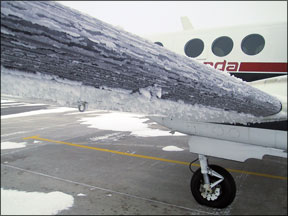
Inflight icing is as hazardous as it has ever been, but it doesnt hide the same demons it once did, which is another way of saying there are fewer icing accidents than there used to be. One reason is that owners are flying less and maybe flying in less icy weather, too. But forecasting technology has improved and-maybe the big one-more airplanes than ever (especially singles) are carrying deicing equipment. And where pneumatic boots used to be the only choice, now there are two others: TKS liquid deicing and, recently, electrically heated surface deicing. Obviously, the technology has moved forward, but are the latest developments any better than the original rubber boot? The short answer is yes, but the detailed answer is that electrical deicing for light aircraft has proven disappointing. (Cessna has dropped it for the 350/400 series aircraft it acquired from Columbia.) Given these developments, which deice system is the most cost effective and least maintenance intensive? And if flight into known icing is your wont, should you buy an airplane based on which system it has?

Read More »

Finding Affordable Gas: AirNav vs. 100LL.com

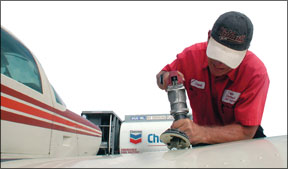
Ten years ago, when avgas prices soared to the point of being noticeably painful, fuel costs were still the smallest percentage of total operating costs. In an era of $5-plus avgas, thats less true for owners who operate airplanes burning 8 GPH or more. So now, the question is no longer how to find cheap avgas-there isn’t any-but how to avoid getting your eyes gouged out on a typical fill-up. An unpleasant reality is that avgas prices have become wildly spiky from airport to airport-its not unusual to see a $1.50 or $2 difference between airports in the same region or even across town. Our favorite example is the poster child for high gas prices-Jet Aviation in Teterboro, New Jersey, which was charging a salty $8.68 at press time. Yet 21 miles away, Greenwood Lake Airport was asking $5.36 for a difference of a whopping $3.32. For a modest fill-up of, say, a Cessna 172, that amounts to $116 total. For a big single, its more like a $250 and a total charge of $650. Owners who travel with their airplanes by necessity have to plan around high fuel prices-forget winds and weather; find an airport with affordable fuel. But whats the best way?

Read More »

Ailing Instruments: Replace Them If You Can

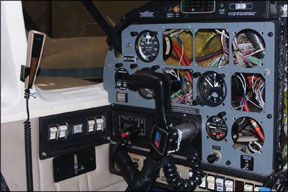
Despite the hoopla that has surrounded modern glass cockpits, round dial steam gauge instruments still represent the majority of the fleet. Plus, theyre still required for backing up glass panels. Eventually, the costly prospect of dealing with failed flight instruments must be addressed. The common question is this: Should the instrument be repaired or simply replaced with a new or newly overhauled unit? The short answer is that it depends on the instrument’s vintage, its complexity and what you expect for its longevity. There are a few factors that should help make the decision: your expectations for aesthetics, the shop’s warranty period and whether the instrument is primary and critical or used as a backup. Consider that primary instruments could be worth your life. Heres a look at some of the tricky details that come into play when instruments need service. Be forewarned that quality repairs wont come cheaply. The old saw of getting what you pay for certainly applies to instrument work. In fact, if an instrument repair or replacement cost seems excessively low, quality is likely being sacrificed somewhere in the process. For once, the FAA can actually be accused of offering a level of leniency when it comes to instrument overhaul-at least according to practice versus manufacturers definition. A shop can legally represent an instrument as overhauled (abbreviated OHC for “overhauled condition”) even if none of the internal components are actually replaced. One shop told us that a simple inspection of the instrument’s internal components might be enough to stamp the instrument as overhauled. But when it comes to satisfying the criteria spelled out in a given instrument’s maintenance and overhaul manual, this practice wont cut the mustard.

Read More »

Prop Overhauls: Its All Your Fault

Unless youre among the small but increasing number of aircraft owners lucky enough to own a jet, your airplane has at least one propeller and sooner or later, it will need an overhaul. The cynical joke among some mechanics and owners is no known prop shop ever saw a propeller that didnt need an overhaul. While that may be too harsh, even cheapskate owners are finding that there are too many substandard props out there that are signed off as airworthy but are, in fact, marginally airworthy. No small number of them are absolute junk. Why? Corrosion, mainly, and lack of maintenance by owners who just don’t understand what kind of care propellers typically need and whose ignorance costs them money. In fact, according to the pros, treating your propeller like the critical component it is and lending it a little TLC every now and then can go a long way toward preventing costly maintenance. And when your well-cared-for prop does go into the shop, you may have more options than just getting it overhauled.

Read More »

Best Fuel Economy: Diamond, Mooney Win

Not to alarm you, but the highest price avgas in the U.S. recently topped $8, although the average hovers closer to the mid-5s. Long before this distressing development, a reader wrote with this suggestion: “You know, you really should look at the fuel economy of various airplanes. Im beginning to wonder if there’s a big enough mileage difference to make it worth looking at something else.” Answer: We can, we have and there is. A certain class of owner-OK, the cheap screws-have always considered fuel efficiency above all else, either because they don’t have to carry much in the airplane or they don’t want or need to go fast. Of such stuff are Mooney owners made. (And we can prove it.) Since it costs $250 to fill up a Cherokee, more owners than ever are dropping back to survival mode and asking what kind of capability 8 gallons an hour will buy. (More than you think, perhaps, but in any case better than padlocking the hangar door.)

Read More »

Cylinder Survey: ECI and Lycoming are Tops

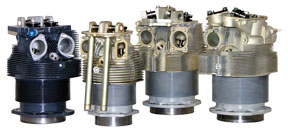
In the four years since our last survey (May 2004 Aviation Consumer), several things have changed in the world of engine overhauls. Teledyne Continental Motors (TCM) and Textron-Lycoming have both pumped up their marketing of zero-timed and factory-overhauled engines. Engine and cylinder rebuilders have expanded their presence with both Engine Components, Inc. (ECI) and Superior Air Parts offering complete engines to the experimental market. Superior is even certifying their Vantage engine to compete with the Lycoming O-360 and IO-360. For all thats changed, however, the long-term viability of your new engine will largely depend on the quality of your cylinders. Is it a better road to use aftermarket cylinders like Superior Millenniums or ECI Titans? Or is it a safer bet to go with the OEM product?

Read More »

Aircraft Engine Oils : Bp vs. Everyone Else

When an engine tanks prematurely, the recriminations begin. Did the shop screw up the overhaul? Was it bad cylinders? Or could it have been the oil you used? Yeah, maybe thats it…if only youd used Exxon Elite instead of Aeroshell, you wouldnt be looking at a mid-time overhaul. This is the sort of fear, uncertainty and doubt that advertising is meant to mine. And the copywriters are good at it. Elite, for instance, is touted as offering a two-fold increase in rust protection over the nearest competitor. Aeroshells popular 15W50 “helps engines start faster and eliminates need for seasonal oil changes.” BP is marketing Castrols aviation oil and not just claiming its the best, but offering to prove it with lab tests showing Castrol Aviator passed rust and engine deposit trials while its competitors failed. Whats going on here? Are the oil companies lying or just stretching the truth? In our view, its more the latter than the former-the engine oil ads make claims that are demonstrably true, but they make no effort to place these claims in context. The oil companies are happy having you make buying decisions in their favor with little grasp of the larger picture of oil performance.

Read More »