









Maintenance

Aircraft Tire Burnout Goodyear is Tops

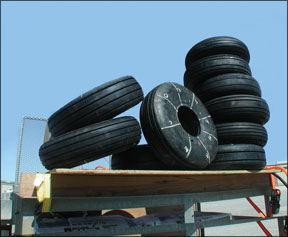
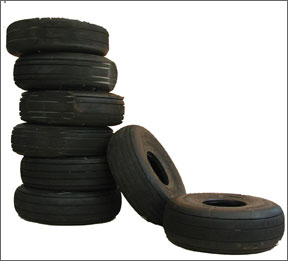
While car tires are all about the finer points of traction and resistance to hydroplaning, the best we can hope for with airplane tires is that theyll make it through a couple of annuals. To do that, they need a lot of tread depth, the right rubber compound and a pilot whose idea of making the first turnoff doesnt involve landing with the brakes locked. Heat is hard on tires, but landings chew up the rubber so to find out which tire is top dog, we conducted the second Great Florida Tire Death Match, subjecting each of 11 new tires to 300 blistering, rubber-burning simulated touchdowns on a flat stretch of I-75. Conclusion? He with the most tread wins, and that would be the Goodyear Flight Custom III. In this case, “wins” means delivers the most landings for the money-in other words, the best value. But that doesnt mean the most expensive tire is always the best choice for every owner. More on that later, but first, on to the tests.

Read More »

Fine Wire vs. Massive: Which is Better?

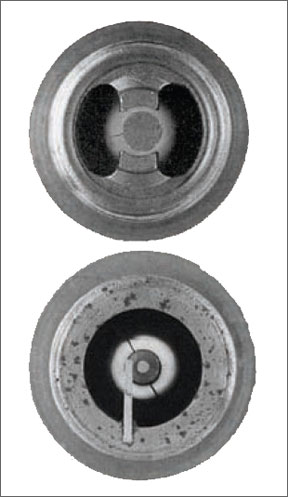
What kind of spark plug do you have in your aircraft engine? Do you even know or care? Or should you just leave that up to the shop and buy whats cheapest? While delegating this choice to your shop is the no-hassle option, we think having an informed opinion on spark plugs might save you a few bucks. Maybe a lot of bucks, actually. But its a case of spending more to save more. In aviation as in everything else, youre confronted with the dilemma of one product that does the same thing as another, but costs twice or three times as much. Thats definitely the case with spark plugs. The popular massive electrode plug sells for a third less than its fine-wire electrode cousin. In this article, we’ll make the pitch for spending the additional money, at least for owners who fly high-performance aircraft and who are interested in fuel economy and long-term durability.

Read More »

Interior Shop Survey: Great Results for a Price

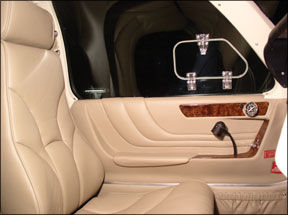
Its the scope of aircraft interior work thats hard for many owners to wrap their mind around. Imagine you want to spruce up your living room. You could spring for a couple slip covers for the tired couch and put down a new throw rug. Or you could strip out everything right down to the studs in the walls and build it up fresh with new wall boards, carpet, built-in bookshelves … you get the idea. Looking at our recent reader survey, aircraft owners exercise the same range of upgrade options on their aircraft. With over 200 responses we saw everything from slip covers to cabin-class makeovers that cost more than a small house. Even trying to narrow this down to the standard seats, panels, headliner, and carpet work to compare is difficult. Consider that some shops might remove a pilot-side panel, clean it, paint it, recover the armrest, and reinstall it. Other shops would take that same panel and refinish the surface, dye penetrate the plastic for color and UV protection or cloth-cover it, perhaps add pen and chart holders or remove and cover a long-unused ash tray, rebuild the foam in the armrest and cover that with Italian leather.

Read More »

It Costs How Much!? Over-the-Top Invoices

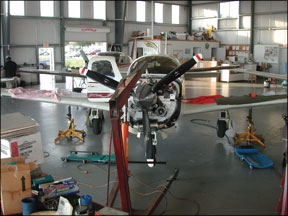
Surrendering your airplane to the shop for maintenance work requires a certain stoicism. You have to steel yourself to expect the worst and enjoy the relief when the news isn’t so bad after all. Then there’s the invoice, which is always higher than you figured. Sometimes a lot higher. Why is that? Cant a shop provide an accurate estimate and stick to it? Why must opening the invoice envelope be an agita-inducing moment? There’s no easy answer to this, other than to say thats the nature of airplane ownership-get used to it. But there’s a limit to how much over the estimate an invoice can or should go before something has to give-either the shop gives you a break or, better, you knew the invoice was spiraling upward before the envelope ever arrived.

Read More »

Why Don’t Tires Last? Heat’s The Enemy

In the list of the egregiously expensive stuff you have to buy to maintain an airplane, tires barely rise to the level of annoyance. But when the shop calls and says you need a new left main, if your reaction is, “didnt we just do that?” youre hardly alone. You may very well have traded your last car before it needed new tires. Why isnt it the same with airplanes? Its a good question and one we recently posed to several experts in the aircraft tire industry. The answer is that airplane tires are to modern car tires as apples are to kumquats. Other than both being round-you hope-car tires and airplane tires dont have much in common because they perform radically different jobs. Car tires have been driven relentlessly forward by competition and technology; airplane tires, not so much.

Read More »

Aircraft Battery Trials: Concorde Sealed Wins

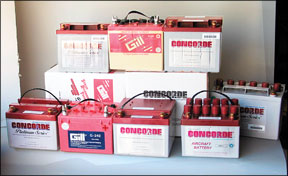
To hear some owners tell it, buying an aircraft battery is like playing the lottery: You buy your ticket, cross your fingers and wait around to see what happens. Some owners-those lucky enough to get five years out of a battery-ask whats the big deal? But the poor sap who buys two batteries in as many years has a more cynical view. Is this any way to run an industry? Were not sure, but our tests and owner surveys reveal a wide disparity-not to mention a vein of customer ire-in battery performance and longevity. In this article, we’ll examine aircraft battery options to make sense of it all. Upfront, we’ll say that the smart money rides on sealed battery designs from Concorde, with flooded models from Concorde as second choice and Gill flooded products a close third

Read More »

Tails from the Crypt: Making Sense of Salvage

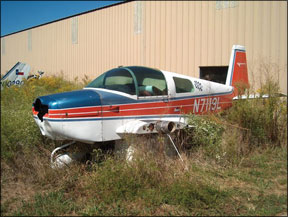
Lets say you need a part for your airplane-not a maintenance item like a Brackett foam filter or a spin-on oil filter, but something more exotic, say an elevator trim tab or a new wingtip. The immediate impulse is to order it new through your shop or FBO or get it from one of the discount vendors like Preferred Airparts. The second impulse will be to sit down and steel yourself for the price. As we reported in the September 2007 issue of Aviation Consumer, finding replacement parts is getting to be an expensive chore. Often overlooked, particularly by owners, is the option of buying a used part from an aircraft salvage yard. Around the country, there are dozens of small and not-so-small businesses that deal in recycled airplane parts

Read More »

No Longer Available: Parts are Getting Scarce

For those of us to whom a half-million bucks for a new airplane is a non-starter, older airframes-maybe 40-year-old airframes-are the only option. And even those can cost the better part of $100,000. For that kind of money, a would-be buyer assumes these expensive purchases will be supportable with parts, accessories and upgrades for the foreseeable future. And for the most part, a telephone call and a credit card payment are all thats needed to get a specific part to your mechanic in a matter of days, if not hours. But that isn’t always true and it may become less true as our airplanes get older. And even when a part is available, in some cases you may find that the hit to the credit card is breathtaking, if not prohibitive.

Read More »

Replacement Glass: Proactive Upgrades

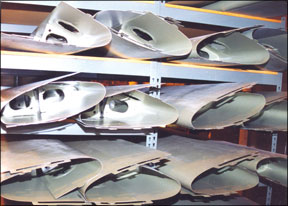
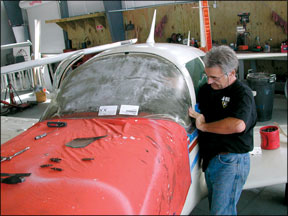
We read in a blog the other day that discarded plastic bags in a landfill are thought to last 500 years before degrading. With that useless bit of trivia in mind, we would be thrilled if an aircraft windshield-also plastic, mind you-would last a tenth as long. Actually, they probably do last that long, its just that you cant see out of them any longer. For that reason, there’s a lively business in the aircraft replacement glass market. We call it “glass,” by the way, as a term of art. Apart from a few exceptions on larger aircraft with heated windshields, all of the windows in light airplanes are made of plastic, specifically cast acrylic commonly called by the trade name Plexiglas, although not all manufacturers of aircraft windows use Plexiglas. In fact, a material called Spartech (formerly Polycast) seems to be the favored product.

Read More »

Cracked Crankcases: Repair or Replace?

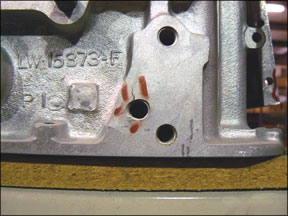
Doctors learn that a certain bedside manner is helpful when conveying bad news to a patient. Airplane mechanics-at least the ones we know-don’t necessarily feel the same obligation, thus when catastrophe looms large during an annual inspection, you might hear, Hey, we found a crack in your case, youre hosed. The medical analogy is apt, for a cracked case is the equivalent of plugged arteries; surgery isn’t just an option, its a must. In most cases, a cracked case will ground the airplane and an overhaul will follow. No matter how much time is on the engine, splitting the case to fix a crack and reassembling it makes little sense. A full overhaul or reman is the way to go.

Read More »

Battery Chargers: VDC Winds in a Walk

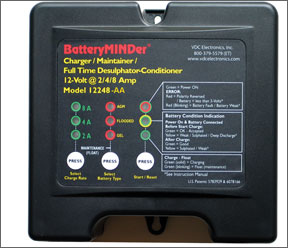
Although aircraft batteries arent high on our list of things to worry about, that isn’t the case for many owners, given the volume of reader mail we receive on this subject. Battery chargers figure into this concern, too, and following our report on this topic in January 2006, the subject has become, improbably controversial, spurred along by some new technological developments. By virtue of customer complaints about Gill sealed batteries, our previously recommended battery charger choice, the Battery Tender Plus by Deltran Corp., has been withdrawn from the aviation market and another company, VDC Electronics, has introduced an aviation-specific design based on charging profiles from the Concorde Battery Company. Our tests of this device show that its promising, with circuitry that reduces the peak charging voltage limit and lowers the float voltage for aviation AGM batteries.

Read More »

Vacuum Pump Trials: Which Sucks Best?

Sometimes when we test products, we learn things we would rather not know. For instance, we didnt know that an ordinary carbon vane vacuum pump gets too hot to touch after three or four minutes at operating speed. We also werent aware that on takeoff roll, some pumps are whirring along at 4200 RPM while the prop loafs along at two thirds of that speed. And we definitely werent prepared for the ear-splitting screech these things emit at high RPM.

Read More »