









Register

Search Results for: piper

Uncategorized

Letters: May 2012

I had the ACF-50 corrosion treatment applied to my 1978 Piper Seneca II in 1991, and there is still a bit of weeping around rivets to this day. Maybe it was applied too heavily. Had a fuel bladder replaced in 2000, and there were no signs of corrosion in the wing. I purchased the aircraft brand new in 1978, and it has always been based within 6 miles of salt water and has flown hundreds of hours at or below 1500 feet AGL over salt water as a Coast Guard Auxiliary aircraft, but always hangared.
Read More »
Maintenance

Aircraft Antennas: Worth a Close Look

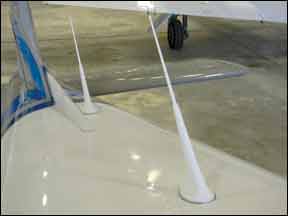
Geeks to the core, we’ve always had an odd fascination with aircraft antennas. Maybe it’s our ham radio background or the fact that airborne antennas are a critical means of communicating, navigating and reporting our position to the ground. Truth is the average pilot rarely gives these critical antenna systems—fondly slanged “antlers” around the shop— a second thought. That’s until the avionics shop suggests a high-cost replacement option or they’ve deteriorated to the point of creating a system failure. Antenna work can be an expensive endeavor while fabric and composite aircraft could make the invoice even more shocking. Here’s an insider’s look at antenna maintenance, tips for upgrading ancient ones and some of the symptoms associated with deficient antennas.

Read More »
Uncategorized

Cessna 152 vs. LSA: Vintage Wins the Day

It’s fair to say the entire foundation of the GA industry was built on the back of the dowdy Cessna 150 and 152. But even the newest of these airframes date to aviation’s Jurassic age. Some in the industry thought the light sport wave would fill the need for new airframes as the old 150s and 172s become uneconomical to operate. To a degree, that has happened, but the wave has been more of a ripple than a tsunami. LSA sales have been modest at best and these airplanes have proven more kite-like than even the venerable Piper Cub. Flight schools have found LSA economics less attractive than was originally thought and maintaining an old Cessna is just more profitable.

Read More »
Aircraft

TBM 850: Fast, Comfortable, Manageable

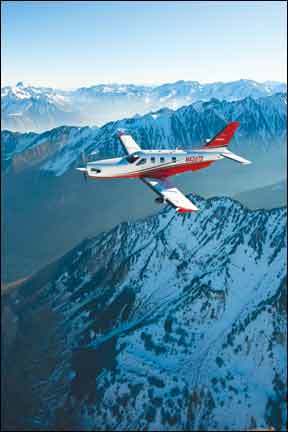
When you put a sharp pencil to it, a 20-knot speed advantage for one airplane over another really isn’t squat. It amounts to 12 minutes on a 500-mile trip. But how about 50 knots or even 100? On a 1000-mile trip, that’s the difference between landing just in time for dinner or arriving early enough for a round of golf and cocktails. Above 300-knots cruise speed, the space-time scale shifts and that’s where the Daher-SOCATA TBM850 lives. The airplane is a no-apologies, uncompromised high-altitude personal transportation aircraft that enjoys, if not high-volume sales, a loyal following and an improved market thanks to the lukewarm blooming of the very light jet market.

Read More »
Industry News

Lightning Detectors: Still Worth Having

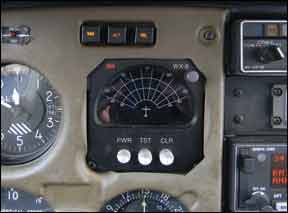
Back in the day if your aircraft sported a Ryan Stormscope, you might lead the way around buildups just like the heavy iron did with ship radar. Today, many owners are yanking old Stormscopes and StrikeFinders from the panel in favor of datalink radar. After all, your trusty portable GPS saddled up with satellite weather tells you everything you need to know about storms. This argument is highly debatable, and that’s why there’s still a market for traditional lightning detection gear. The good news is that the used market is littered with models of all vintages to choose from. There’s also the high-end Avidyne TWX670 and proven WX500 Stormscope, both of which are compatible with many existing displays.

Read More »
Aircraft

Gippsland GA8TC: Flies Sweet, Hauls a Lot

The heavy-hauler aircraft niche is such a sub-specialty that not many dedicated models exist, with Cessna’s Caravan being the most obvious success story. Piper’s Saratoga and the 200 series from Cessna qualify, but none are devoted purely to the lots-of-people or the lots-of-boxes role. That certainly can’t be said of the Gippsland Aeronautics GA-8 Airvan, an aircraft that’s unabashedly devoted to hauling stuff. A lot of stuff. We were first introduced to the Airvan 10 years ago, just after it appeared as what we might now call the leading edge of the world or international airplane. Built in Australia, the model hasn’t been a huge seller, but with about 170-plus flying, it’s gained a foothold.

Read More »
Engines

Bulletproof Engines: Are There Any?

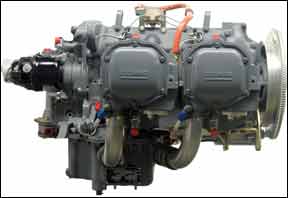
Next to $5 avgas, the cost of routine engine maintenance and overhauls takes the biggest bite out of the aircraft ownership budget. You can always choose not to paint your airplane or live with ratty seats, but if the engine tanks, you’ve got an 1800-pound radio stack you can’t even use because there’s no way to spin the alternator. Our owner reports on various models consistently confirm what we’ve always known: Some owners spend a lot less on aircraft maintenance simply because they own airplanes equipped with engines we have often considered bulletproof. This concept is, itself, a misnomer. Nothing in aviation is truly bulletproof, but it’s fair to say that some engines have a better service history than others and, conversely, some are simply money pits. That’s not to say they don’t perform, but it’ll cost you more and reliability will suffer.

Read More »
Uncategorized

Turbine Step Ups: What’s Involved?

For the moment, let’s set aside the vulgar discussion of money and consider whether turbine aircraft are all they’re claimed to be. Well, of course they are. Case closed. Turbines are faster than piston-engine aircraft, fly higher and since all the engines’ moving parts are always rotating in the same direction, they’re generally more reliable. Moreover, the owner of a turbine aircraft is untroubled by that pesky problem of whether a high-octane fuel will be available and what it will cost. There’s no argument that Jet A is the world fuel of the future and it’s available in parts of the world where high-octane avgas has long since disappeared.

Read More »
Maintenance

Fuel Tank Reseal: Thankless, Expensive

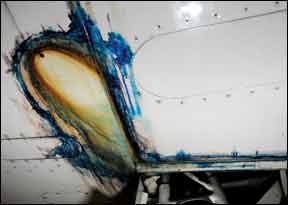
One of the unfortunate side effects of slow aircraft sales has been an erosion in the maintenance base. Many smaller shops have disappeared and some of those that remain are either losing the ability to do some kinds of work or are just declining to accept it.One maintenance procedure on the chopping block has been the resealing or repair of wet wing fuel tanks, especially in Mooneys, but in a few other models as well. At best, repairing weeping wet-wing tanks is a dark art, at worst, it’s something some owners say they have to have done several times to stop the leaks, if even the leaks can be stopped.

Read More »
Avionics

Retrofit Fuel Computers: Auracle and EI Excel

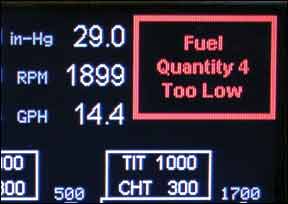
The reoccurring head-shaker in the NTSB reports is the pilot who wrecks a perfectly functioning aircraft because of mismanaged fuel burn. But the truth is that eventually even the most conservative gets tempted to push the envelope of fuel endurance. That’s why a fuel computer installation makes sense, and there’s one for every budget. Speaking of budget, fuel computers assist with miserly leaning—a real plus in the world of pricey low lead.

Read More »
Used Aircraft Guide

Used Aircraft Guide: Cessna Cardinal RG

At EAA Airventure in 2006, a mysterious airplane made a low flyby, arriving unannounced. It turned out to be the Cessna NGP, the now-tabled high-performance follow-on to the popular 210 that Cessna dropped from the line in 1986. But at a glance, it was easy to mistake the airplane for something else: the Cessna 177 Cardinal RG. And many observers did. Although introduced 40 years ago, in 1971, the Cardinal RG remains one of the sleekest and most attractive highwing airplanes ever marketed. Despite its age, it retains a loyal following. It’s easy to see why. The RG is one of the best compromises for its class in terms of speed, payload, cost of ownership and economy.

Read More »
Used Aircraft Guide

Used Aircraft Guide: Cessna 421

Like the Lockheed Constellation, Cessna’s 421 Golden Eagle is an airplane of another age. Impossibly sleek, fast and comfortable, it’s hard to imagine such a thing ever being built at all, never mind again. But owners rave about the 421’s exceptional combined capabilities and even though many of them could easily afford turbines or light jets, they stick with their Golden Eagles for delivering the best value for the money spent. But that’s not to say owning a 421 is cheap. Far from it. The engines alone can amount to $50,000 or more each and with known ice, pressurization and even a lav of sorts, there’s a lot to maintain. Said one owner: “Don’t even ask what it costs to run it. That just shows you can’t afford it.”

Read More »