










Register

Accessories

Letters From the Readers: April 2019

As you might surmise, there is a lot of opinion out there on that subject. You seem to be implying in your article that VGs would be a preferred choice over a STOL kit, but you didn’t actually say that. From your experience, if you were in my shoes, and money wasn’t the single most important consideration, how would you proceed and why? You would certainly make my day if you can answer this question.

Read More »

Cirrus at 25: A Safer Airplane?

A quarter century later, it’s fair to ask: Well, was it? The easy answer is yes, it was and is. But with a host of safety features such as crashworthy seats, energy absorbing structure, cabin flail space and the first-ever certificated airplane ballistic recovery parachute, Cirrus also implied that its new airplane would be safer, without actually saying the safest ever. So, how about that? Has it delivered on those claims? Answering that is not as simple as crunching the GAMA numbers to enumerate Cirrus’ inarguable dominant market share. But with a quarter century of accident data to review, it’s reasonable to take a stab at it.

Read More »

Instrument Repairs: Still Cheaper Than EFIS

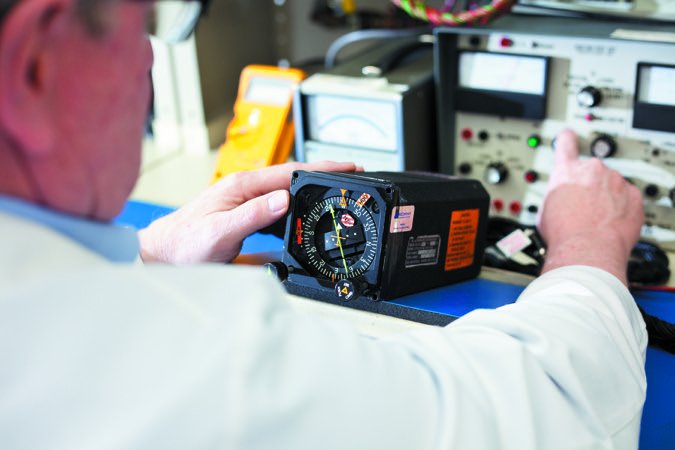
The fallback, of course, is repairing/overhauling old instruments that may be left over from the Reagan era. This may or may not make sense, depending on the supportability, reliability and bottom-line cost for the work. In this article we’ll look at the market for instrument repairs and exchanges, while offering tips for deciding whether an EFIS upgrade is the better decision.

Read More »

Warranty Coverage: Read the Document

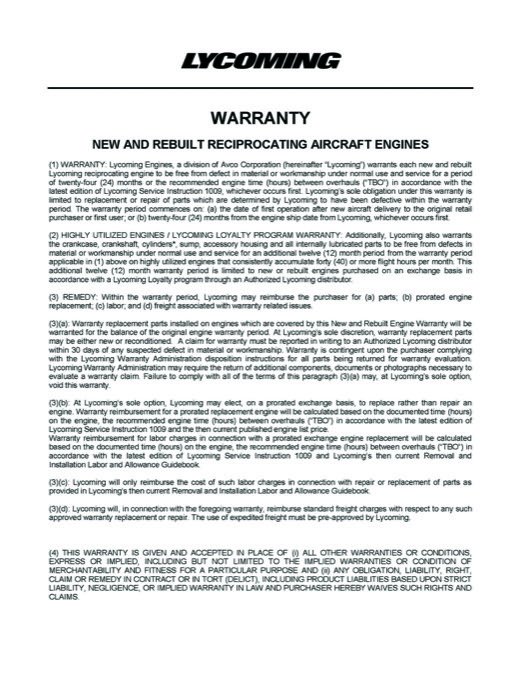
You bought something and now it doesn’t work. What recourse do you have? Can you compel the seller to exchange the bad something for a new one? If you return it, are you entitled to a refund of the full purchase price? Will the seller pay the full cost of getting it fixed? What if the something is three months old? A year? Five years? How long is the seller obligated to repair a defective product, exchange it or take it back and refund your money?

Read More »

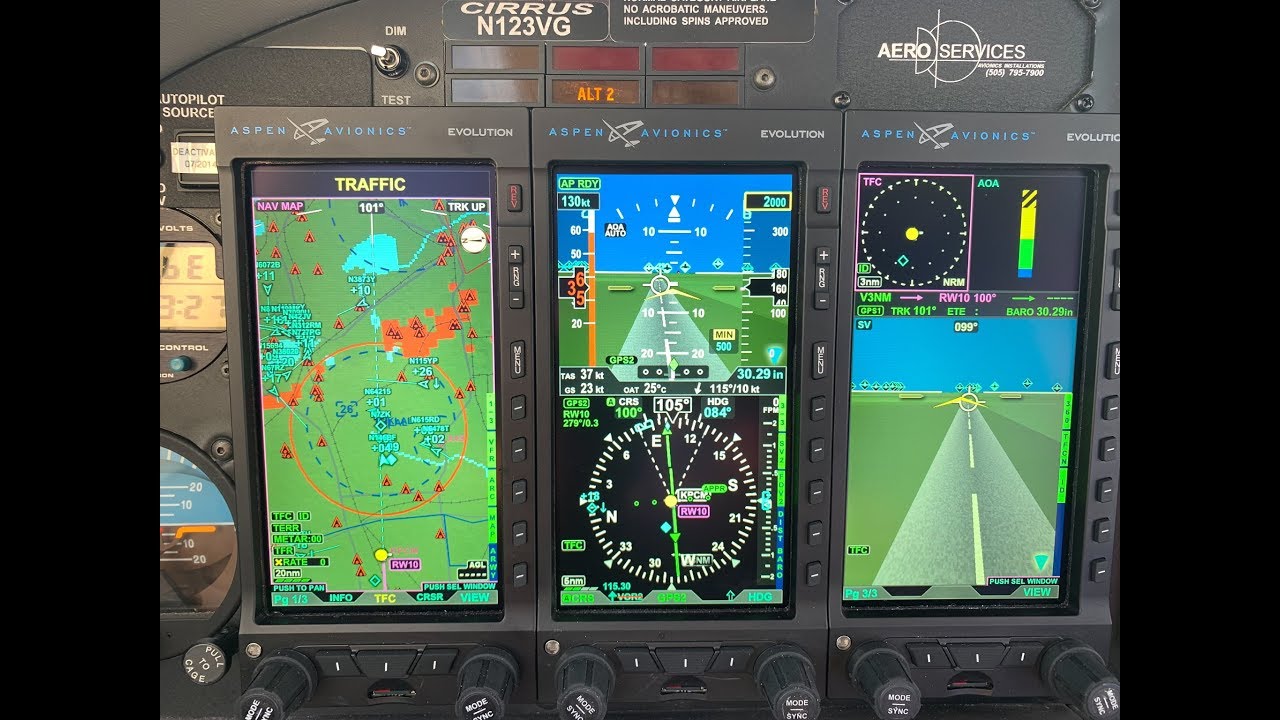
Traffic Tech Revisited: ADS-B Versus TAS

For example, the article referred to ADS-B ground stations as ADS-R stations, but they are not. The general term is Ground Based Transceiver (GBT). ADS-R is only one function of the GBT in which the GBT receives an ADS-B transmission on one data link frequency (978 or 1090 MHz) and rebroadcasts that transmission on the other frequency. This rebroadcast function only occurs if a client aircraft (ADS-B Out and In equipped) indicates in its transmission that it can receive only one frequency, and if the target aircraft is broadcasting ADS-B Out on the other frequency. Plus, both aircraft must be within a defined proximity (generally 15 NM horizontally and 3500 feet vertically) of each other.

Read More »

IFR Training Hoods: ViBAN, Overcasters Top

The FAA calls them view-limiting devices, or VLDs, but we call them hoods. The concept is simple: In visual conditions simulate instrument conditions by restricting the pilot’s view to only the instrument panel and nothing outside. Who among us, however, hasn’t had “the hood” on and still snuck a peak outside? So, no matter how much it restricts your vision to the sides, you can always turn your head just that little bit and get a fleeting glimpse of the visual world beyond the instrument panel.

Read More »

LED Landing Lights: Worth the Investment

This economy of scale has put upward pressure on volume, downward pressure on pricing and competitive pressure to improve LED efficiency and longevity. In new aircraft, LED landing lights are all but standard, as are LED position and and strobe lights. The aftermarket remains a mixed bag. A survey of any ramp will find a smattering of LEDs, but a bunch of old GE 4509s. That the retrofit market is small is indicated by the small number of players-about six. As we went to press in February, that dropped by one when Whelen announced that it acquired LoPresti Aviation’s entire line, including the recently formed Illumivation for LED products. The new combined entity is called Whelen Aerospace Technologies. Most of these companies have some tilt toward large commercial and military applications because, well, that’s where the profit is.

Read More »

Vortex Generators: Got STOL? Think Twice

When things go south and you have to park an airplane in an unintended location, touching down at a lower stall speed means less energy to dissipate in the crash. Energy is a squared function, so reducing impact speed, even a little, pays big dividends. In a twin, reducing Vmc means reducing the risk of an uncontrolled roll following engine failure. A crash right side up means a far higher chance of survival than smacking the ground inverted.

Read More »

Garmin GTR200B: Comm, Bluetooth ICS

The $1395 GTR200B (the B is for Bluetooth) picks up where the first-gen $1199 GTR200 (still available) left off and sports the same chassis and overall footprint. Weighing just shy of two pounds, the radio measures 1.35 inches high by 6.25 inches wide and 9.39 inches deep with the interface connectors in place. That chassis is fairly deep and can pose a challenge for some panels, but it’s slim enough to save space on the face of the panel.

Read More »

Globalstar Sat-Fi2:Good Ergos, Pricey Data

Globalstar’s LEO (low earth orbit) constellation forms a network with 24 ground stations that serve as a bridge to traditional terrestrial telecommunications networks on six continents, providing communications to over 120 countries. The current-generation LEO satellite constellation delivers low-speed bandwidth (72 Kbps), not dissimilar to fast dialup modems-good for voice calls, text messages, short emails and textual websites. Don’t plan on downloading videos and other big files. That level of performance is best left to the more expensive geostationary satellite-based terrestrial broadband networks.

Read More »