









Register

Search Results for: piper

Aircraft Stepups

Seatbelt Upgrades: No Excuse for Bad Belts

The FAA didn’t get serious about seatbelts until 1978, and even then it was only requiring shoulder restraints for the front seats. Ten years later, they added the rear. Given how long aircraft stay in service, that means there are thousands of craft flying every day with inadequate protection for the most valuable item on board. If you’re flying with only a lap belt—shame on you. As much as some pilots don’t like having belts over their shoulders, the study data has been clear for decades: 88 percent of injuries and 20 percent of fatalities can be eliminated by adding shoulder or additional restraints over lap belts alone, according to the the FAA.

Read More »
Industry News

American Champion: State of the Art Classics

For as bad as the aviation boom-bust cycle is for companies that make airplanes, it’s just as bad for the people who buy them. The euphoria that goes with pocketing the keys to a brand new airplane has to be tempered by the reality that the company that built it maybe teetering toward bankruptcy. Is there a better business plan, one that envisions modest production and flexible size and that can survive the test of the worst economic downturns? There are at least a couple of examples that suggest this can work. The family-owned Maule Air is one, shipping 30 or 40 airplanes a year to Cessna’s 500, but lately a lot less.

Read More »
Avionics

Adding Synthetic Vision: Worthy Upgrades For All

Touchscreen may be the top buzzword in avionics, but synthetic vision (SV) is right behind. Many pilots don’t know why they want synthetic vision, or even fully understand exactly what it is, yet the gee-whiz factor alone has made SV systems the most sought after upgrade we’ve seen in a while. Whether synthetic vision is worth the non-trivial expense depends on your mission and your ability to absorb a lot of overlapping data on small screen.

Read More »
Aircraft Stepups

Buying Into NextGen: Piecemeal May Be Best

If you have an IFR-certified GPS with WAAS in your panel, you’re already equipped to take advantage of the bulk of what NextGen has to offer GA today. There, don’t you feel better? The reason is that NextGen is a fat catch-all for a host of technologies that mostly target airlines and major airport ground ops. Biz jets will reap some of the airline-focused bennies, but for the bulk of GA, NextGen boils down to RNAV instrument approaches and ADS-B. And it will likely remain that way for the next decade at least.

Read More »
Engines

Owner Survey: Factory Engines

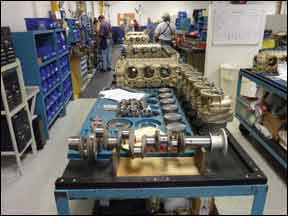
With the two engine factories fighting field overhaul shops for a piece of an ever-shrinking engine pie, it’s no surprise that the factories are pushing their rebuilt and overhauled engines. They find enough buyers for these services such that rebuild work now constitutes a significant revenue stream for both Lycoming and Continental. Anyone shopping for an overhaul usually gives the factory options at least a cursory look. So how are they doing? To find out, we asked our readers to tell us about their experiences with both Lycoming and Continental factory engines of various kinds.

Read More »
Used Aircraft Guide

Used Aircraft Guide: Cessna 150/152

On the cover of Aviation Consumer’s July 2010 issue is one of the most forlorn photos we’ve ever published: The nosegear of an LSA sitting in the middle of a lonely runway, having dropped out of the airplane after takeoff rotation. Although we didn’t intend it that way, the photo ended up as a testament to another airplane entirely, the Cessna 150. The reason? Venerable old 150s are still flying side-by-side on the rental line with new-age light sport designs and the older airplanes, despite decades of abuse, still hold up better than some of the newer designs and often require less maintenance. The harsh lesson here is that despite advances in materials and computer-aided design, the 1950s engineers who designed the 150 knew their way around structure and half a century later, what they built still remains serviceable for the foreseeable future. The airplane that trained thousands of pilots endures.

Read More »
Used Aircraft Guide

Used Aircraft Guide: Beech Baron

Anyone who has flown a Beechcraft will have come away impressed with the lines quality and, especially, the handling qualities. All the way down to the lowly Musketeer, Beech just took pains to get the airplanes handling qualities a cut above everything else, and that applies in spades to the Baron series. Even so, every aircraft company has to make compromises. In the 55 Baron, for instance, what many find to be pleasant handling characteristics can prove to be a handful in poor weather, or when the air turns green with turbulence. And nothing comes for free. No one mistake the Barons for being cheap to own or operate, although thanks to a perennially soft market for twins, theyre no longer ruinously expensive to buy. In fact, there are some real bargains out there on 55s.

Read More »
Industry News

The Mogas Option: Plenty of Engine Choices

While the FAA and the oil industry plod along toward an eventual replacement for 100LL, one alternative persists like a large elephant squatting uncomfortably on the conference room table: mogas. We know more owners, desperate for at least some kind of clarity, are seriously considering it as an option. Moreover, the list of airplanes that can burn mogas is longer than you might imagine and likely to grow. Last year, Lycoming quietly announced that it had approved its 180-HP parallel-valve O-360 series for use with a specific grade of mogas. Does this mean the company is bullish on mogas as an alternative to a 100-octane equivalent? Not really. The company is just responding to market realities. In other parts of the world-Europe and Asia, mainly-mogas is becoming a fuel of choice because avgas and the infrastructure to dispense it isn’t available.

Read More »
Used Aircraft Guide

Used Aircraft Guide: Beech Model 19/23

The concept of “training” and Beechcraft go together like ketchup and ice cream, which is to say you know about both, but Beech airplanes don’t spring to mind when you think of cheap-to-fly entry-level airplanes. Nonetheless, during the heady days of GA in the 1970s, Beech did dip its toe in the trainer market. The model 19 and 23 series Beechcraft, the Musketeer, Sport and Sundowner, were Beechs answer to Pipers Cherokee line and if not the 150/152, then the 172 from Cessna. Beech didnt exactly set the world on fire with sales, but the two models did acceptably well. Theyre neither the fastest nor sleekest looking of the GA lot, but theyre better built than the competition and there’s no question that these airplanes-really, all of the Beech line-are the best handling light GA aircraft.

Read More »
Used Aircraft Guide

Used Aircraft Guide: Twin Comanche

Piper’s Twin Comanche occupies a special status in the world of GA airplanes. When we last examined the model five years ago, we compared it to Diamond’s new-age DA42 twin. Diamond may have stubbed its toe since then, but the Twinco has lost none of its luster. Owners prize the airplane for the same reasons that they always have. It’s an affordable, economical and accessible twin with decent performance. In many ways, it’s one of the few twins that can claim to be not much more expensive than a single to own and operate. Or so many owners say. Prices of Twin Comanches have softened in the last five years, but they haven’t plummeted. It’s possible to find one with a spiffed-up panel and new paint for around $70,000.

Read More »
Maintenance

Replacement Plastic: Aftermarket Saves Big

Like bargain wine and crotchety magazine editors, plastic gets touchy with age. Sunlight is the biggest enemy, but even tucked in a climatecontroller hanger, the compounds that give plastic its flexibility outgas, leaving the remaining material prone to cracking or shattering from a stress it would have sloughed off 10 years prior. Everything aviation costs roughly an order of magnitude higher than an analogous non-aviation part, and plastic interior pieces are no different. The small redeeming point with interior plastic is that parts for the majority of GA aircraft can still be had, and that you can save a bit by doing the installation yourself, if youre so inclined.

Read More »
Used Aircraft Guide

Used Aircraft Guide: Socata TB-20 Trinidad

When the so-called Caribbean line from Aerospatiale first appeared at the Paris Air Show in 1977, the U.S. general aviation industry was booming, building mainly tried-and-true, if staid, designs like the Cessna 172 and the Piper Cherokee line. Against that backdrop, the new TB-20 was a splash of cold water. Its not that the airplane was terribly innovative-it wasnt, sporting the same Lycoming engines we had all been flying behind for years. But it had something no Skyhawk ever did: a sleek and stylish European panache. Ultimately, this didnt help much with sales, but the thing sure was-and is-good looking, what one aviation writer famously described as a Cherokee done over by Club Med. The Trinidad is the top of the line of a small family (five) of single-engine aircraft developed and built by Socata in Tarbes, France, from which the TB derives.

Read More »