









Register

Accessories

Bluetooth Audio Panel PM8000BT Does It All

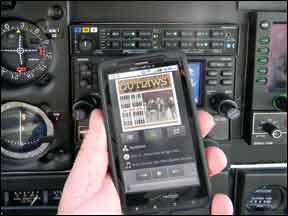
PS Engineering is compulsive when it comes to perfecting and adding new features to otherwise well-engineered aviation audio products. The result is a product line that remains cutting edge and a step above the competition. The newest talent of the line is the PM8000BT.The six-seat-capable PM8000-series audio system earned top-dog status in our audio panel review (Aviation Consumer, August 2009), and that status has held up under long-term testing. We didnt think it could get any better until company founder Marc Scheuer took it to the next level with the logical addition of Bluetooth connectivity-an industry first.

Read More »

Lakeland Tiedown Test: What Worked?

Sun n Fun 2011 may very we’ll go down as the year of The Claw, the ubiquitous yellow three-leg tiedown system that dominates the portable tiedown market. When an F1 tornado roared through the airport, The Claw got its supreme test. Did [IMGCAP(1)]it pass? It generally appeared to perform we’ll and the company wasted no time getting testimonials up on its Web site. But there were dramatic failures of all the tiedown systems, including The…

Read More »

Portable ADS-B WX: Free Data with Limits

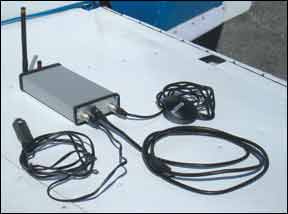
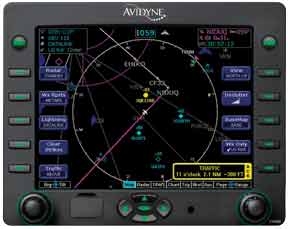
In the formative days of ADS-B, the FAA had a carrot-and-stick plan. Youd have to invest in equipment to comply with the FAAs new traffic system. But youd get free datalink weather in the cockpit as part of the bargain. Unfortunately, that “bargain” requires a $10,000 Universal Access Transceiver (UAT) to transmit and receive your traffic data (called TIS-B) and receive the free weather (FIS-B). Cheaper solutions meet the ADS-B mandate, but without weather. Thats all stick and no carrot. The free weather data is still out there, however, and it was only a matter of time before someone built a receiver to paint that data on a portable display. To be clear: None of these comply with the ADS-B mandate for traffic data. They just provide weather data similar to XMs satellite-delivered weather.

Read More »

Choosing Retrofit Glass Aspen Takes the Prize

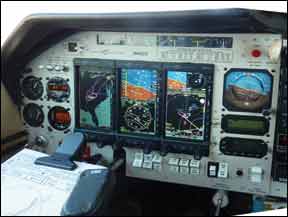
If youre committed to the account-draining task of a major avionics upgrade, your sights are likely set on either of the two most sought-after systems for the aftermarket: Garmins G500 and the Aspen EFD1000-series. We think buyers go into the decision-making process smitten by the G500s bigger size, and for bigger, more valuable airplanes, its easy to label the G500 a logical fit. But our experience is that Aspen wins the install bid more often than Garmin. Why? Its the install complexity that ultimately rules the decision even when a buyers heart is set on the G500 from the get-go. That said, keep in mind that to compare apples to apples, you need two Aspens to equal a single G500.

Read More »

Lightspeeds New Zulu: Clearer, Quieter, Comfier

For years, Lightspeeds Zulu was our favorite headset for its winning combination of comfort, quiet and features, like Bluetooth cellphone connectivity. Last year, at Oshkosh AirVenture, Bose leapt into the 21st century with their new A20, improving their ANR and comfort, as we’ll as adding Bluetooth for cell phones and a jack for external audio. We tried an A20 at Airventure, on the long ride home and beyond. Our verdict was that head-to-head, we preferred the Bose, but werent sure it was worth the $200 price delta.

Read More »

Picking Progressives: The Right Lens is Key

Your 45th birthday is a memory. You caught yourself squinting at the gauges on a recent approach to minimums. The near-vision test on your last medical? You passed it-barely. You have presbyopia, or old eyes. This term probably made sense 120 years ago, when 40 was old, but the term persists. Its the result of the loss of elasticity in the crystalline lens in the eye, which allows us to zoom focus on near objects. Because its the lens getting stiffer, not the focusing muscles getting weak, no amount of exercise will resolve the problem. The problem gets worse with age, no matter what you do. To better understand your options for progressive lenes, take a look at your vision in general. If youre nearsighted and wearing distance-only glasses, you may have excellent near vision without your glasses and be more comfortable without glasses for reading than with progressives. That works fine at home, but not in the cockpit, so progressives are still a necessity.

Read More »

External Power: Starting Amps a Plus

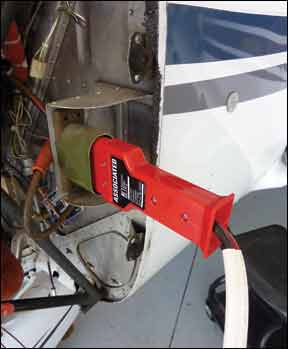
When gas was cheap(er), no one thought about doing avionics training on the ground. After all, how long does it take to learn to tune a radio and center a needle? Glass panels changed that. Now, even if you have a sim program, you still have to seal the deal with some seat time in the airplane. Thats best done on the ground, preferably with the engine off and thats where a ground power unit comes in. Not many owner hangars have these valuable gadgets, but a new offering from Audio Authority, the 2860A GPU, might provide a reason to buy one.

Read More »

Letters: March 2011

I was interested to read your article on in-the-ear headsets in the February 2011 issue as I converted to an ITE system 3 1/2 years ago. I fly a turbonormalized Cirrus SR22. At Sun-n-Fun 2007 I bought both the Quiet Tech Halo and the Clarity Aloft with the intention of testing them to evaluate them against my Bose headsets. Going into my test I felt the Bose would be superior and the Clarity Aloft would beat the Halo, based on appearances.

Read More »

Add-on GPS modules for the iPad and iPhone

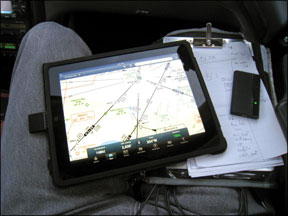
After flying with iPads and iPhones ourselves and talking to many pilots who also do, we’ve concluded there are those who’ve had the internal GPS lose its location—and those who will. The issue isn’t accuracy, so much as reliability. Some apps purposely don’t offer items like georeferenced approach plates because they don’t trust the GPS. But that may all change. There are add-on GPS units for the iPad/iPhone hitting the market. Two of the first are the plug-in Bad Elf and the Bluetooth GNS 5870 MFI.

Read More »

Top-Value CO Detectors: BW GasAlert, SafeTest

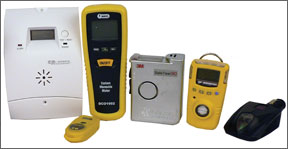
If youre absolutely determined to kill yourself in an airplane, you’ll have to find a better way to do it than gassing yourself with carbon monoxide. The world is so awash with CO detectors across a range of prices and capabilities that we cant imagine many owners havent at least considered these gadgets. And the good news is that all of them work quite well, even, you might be surprised to know, the $4 cheapie stick-on detectors that all your friends tell you are a joke. (They arent.) How real is the risk of your exhaust or a perforated heater doing you in? Its real enough, although not the level of risk that should keep you awake at night. On the other hand, given the choices in detector technology, there’s no reason you cant eliminate the risk entirely or at least tamp it down.

Read More »

In-The-Ear Headsets: Halo is a Top Value

After a couple of hours, most people are ready to get out of a traditional, skull-clamping headset. Go eight hours in a sweaty cockpit, and wearing even a top-of-the line Bose A20 or Lightspeed Zulu gets old. The alternative is an in-the-ear (ITE) headset, which is fundamentally a pair of earplugs with speakers and a mic. don’t knock earplugs. When inserted correctly, they offer noise reduction comparable to all but the best ANR headsets (We tried. Its true.) They don’t clamp down on your head or cause sweat to bead up around your ears, either. Still, they arent for everyone. They require more practice and patience than a headset you can just toss on. They arent for pilots who jump in and out of aircraft all day. ITE headsets are small and light, but the thin cords and tubes are more susceptible to tangling or breakage. And then there’s earwax. It will get on the earplug tips (call them eartips) and require keeping a bag of them on hand to replace as needed.

Read More »

LED Flashlights: S&Ws Are Top Picks

For the pilot of even modest equipage, a flashlight is something of a necessary fetish item, so much so that some pilots we know carry a half-dozen in the cockpit. Fear of darkness or just prudence? Both, we think. A decade ago, most of us bought a D-cell bat handle with a penlight backup, but now the market is flooded with sophisticated LED choices. And in our view, LED is the only illumination type worth considering, given the variety of choice, low power consumption, durability and color choices. And what choices there are. We shopped the popular pilot emporiums and Web sources for some practical choices and winnowed the field down to 15. You might pick an entirely different 15, but we have to start somewhere.

Read More »