Accessories

GPS Mounting Solutions: RAM Tops Our List

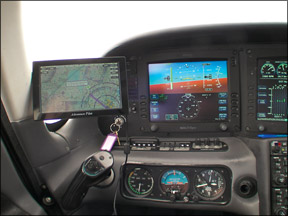
The age of the Big GPS unearthed an annoying truth: They don’t fit in the cockpit. Now that weve evolved to the Really Big GPS, things have only gotten worse, so any attempt to mount a portable navigator can only be called a varying degree of compromise. But compromise we must, so we recently set out to review a range of gadgets designed to mount a portable navigator in the cockpit in such a way that makes it actually useful. Most of these are from RAM Mount Products, but there are others as well, including stock offerings from the GPS makers. For this article, we’ll concentrate mostly on RAMs offerings.

Read More »

GPSMap 696 vs. AERA: No Slam Dunk Winner

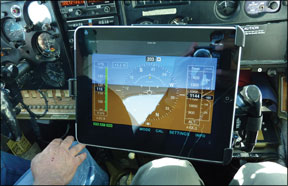
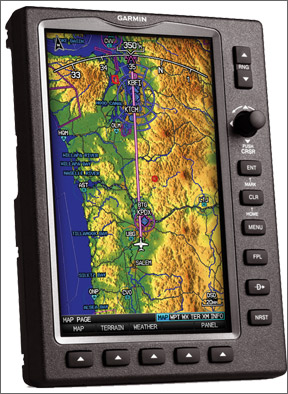
Although there’s plenty of portable GPS out there, the market isn’t as competitive as it once was, with Garmin dominating…well, the world. Two of the hottest products are both from Garmin, the GPSmap 696 and the aera series, Garmins first aviation touchscreen. These represent a conundrum for buyers in that they have nearly the same capability, but at different price points. And “nearly” isn’t the same as “exactly.” The 696 has some features the aera doesnt and vice versa. One outlier in this equation is whether Apples large-screen iPad can step in for either one of the Garmins.

Read More »

New Premium Headsets: Bose Comes Back Strong

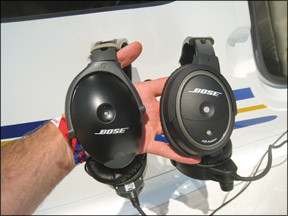
Bose has always held a place at the top end of noise-canceling headsets, with a history dating back to 1989. The company has been virtually silent in the aviation arena for the past 12 years, resting on the continuing strong sales of their Headset X. But even the Bose devotees have been getting restless due to the lack of auxiliary music input and a Bluetooth connectivity for phones (to be used, uh, on the ground only, of course). All the while, Lightspeed Aviations Zulu has been steadily increasing its dominance in the premium headset market by offering active noise reduction (ANR) on par or exceeding that of the Bose, along with music and phone connectivity.

Read More »

iFly 700: A Big, Yet Basic, GPS for a Great Price

There is no perfect cockpit GPS. Some folks want a big screen; others need portability. Some want all the frills and some just need the essentials. What the iFly does best is what it does right after startup: display scanned charts. The screen is crisp and readable and the charts can be zoomed in and out by on-screen buttons. It renders charts quickly enough to avoid annoyance. The aircraft position is superimposed, as we’ll as any flight plan. As these are scanned charts, they are only presented north-up. Panning the charts is a matter of sliding your finger on the touchscreen in style of an iPhone/iPad. The hardware has a good feel under the fingers and we rarely saw a screen touch misunderstood by the system.

Read More »

Headsets Inc. and DRE: Decent ANR on a Budget

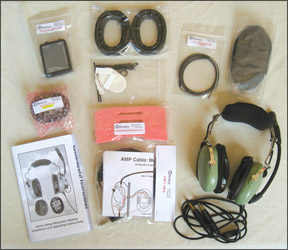
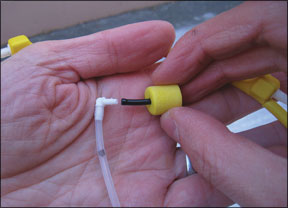
The world of noise-canceling headsets is largely ruled by the high-end units like the Bose X and Lightspeed Zulu. If pilots baby their ears, it seems they go for the best they can buy. But there’s still a place for good deal on ANR, be it for backseat passengers or just to stretch your own flying dollar. Headsets Inc. offers a drop-in module that fits a wide range of existing headsets and helmets. OK, its not quite “drop in.” Some wire clipping and soldering is involved. The company also sells complete headsets with their ANR installed headset, and they revived the DRE Communications line of headsets, which includes one with ANR.

Read More »

Aviation Apps for iPad: A Cut Above Phones

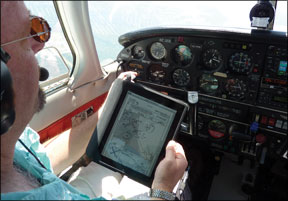
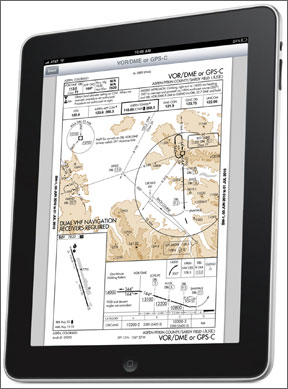
The iPad may be many things to many people, but there are several things it is not: a moving map, a good navigator or a datalink weather display. I doubt if Garmin will even feel a minor nick in sales from iPad competition. The iPad is, however, an excellent plate reader. There are several ways to obtain and manage plates and Im sure this function will improve as the market matures. It can also do enroute charts and sectionals reasonably we’ll and it flat aces things like weight and balance and E6B calcs.

Read More »

Gear of the Year: Aspen is Our Top Pick

You cant imagine how difficult it is for us to keep a straight face when we ask a company for an estimated delivery date of some new airplane or widget. We dutifully report what these companies tell us and when theyre out of earshot, we allow the sniggering and eye rolling to begin unabated. But there are exceptions. Some companies do what they say theyre going to more or less when they said they would. One of these is Aspen Avionics, which we are selecting as our company of the year.

Read More »

Jeppesen Plate Reader: The FX8 Gets it Right

When we reviewed the first Jeppesen plate reader from SOLIDFX in September of 2009, we saw a lot of promise in the innovative software but we found the hardware too big and slow. SOLIDFX said they were working on improvements to the software and on the prowl for better hardware platforms. Nine months later, they have delivered on both promises with the FX8. Were picky when it comes to these plate readers. They have to hit the Goldilocks zone of comfortable enough to hold in your hand as you could a piece of paper but big enough to view everything you might need to see between the final approach fix and the missed approach without panning or zooming.

Read More »

Kneeboards: Sportys Classics, ASA Top Picks

Even in this age of cockpit electronica, there’s often a need to jot something down, hold open a chart or approach plate, or stow your checklist. Enter the kneeboard, and the reviewers dilemma. Kneeboard needs and preferences vary not only person-to-person, but even aircraft-to-aircraft. So heres the best in class as we see it from several perspectives. The core function of a kneeboard is to write stuff down. With strictly that goal in mind, we liked the Classic VFR and Classic IFR kneeboards from Sportys. The only difference between the IFR and VFR models is the “useful” data printed on the metal board itself. Beyond reminding you what the light-gun signals are if you go lost comm, we don’t think that information matters much. Other than that, the two boards are the same.

Read More »

Tablet-Based EFBs: ChartCase Wins by a Nose

We get a steady stream of requests for reviews of electronic flight bags (EFBs). In theory, they make sense: all your charts and approach plates in one place and geo-referenced so you can see your exact position, up-to-date airport information at your fingertips and a pre-flight planning tool that becomes the in-flight resource without reentering information. In practice, were in a Dickensian “best of times, worst of times” state where the technology is marginally up to the task and no one has quite nailed the software. All three of the solutions we tested for this article get the job done-approach charts, sectionals, airport information, XM weather, a moving map GPS-its all there. All have touch-sensitive screens (that work with gloves on). All are available as ready-to-fly solutions and meet the FAAs requirements as Class 1 or 2 EFBs.

Read More »

Plate Reader Roundup: Many OK, None Ideal

Call us overly picky, but we have yet to find a digital approach-plate solution we can completely endorse. Perhaps the problem is that they have yet to surpass the bar. That is, theyre almost as good as paper when what we really want is something better than paper. In fairness, the e-reader solutions for approach plates are superior in three critical ways: You can carry plates for the entire country without risking a hernia, updates are a breeze (so long as youve got some free time and a good internet connection) and there’s no wasted paper. The readers all support PDF documents, so you can also load useful items like your aircraft handbook or maintenance manual if there’s space to do so.

Read More »

Product Support: There’s a Limit

The term “product support” means different things to different people. For example, someone in the market to buy a new aircraft may worry about whether the local FBO has personnel trained to maintain it. Meanwhile, a renter pilot buying a new headset wonders what will happen if an earcup cracks five years from now. Both pilots may also be in the market for a handheld GPS: Will database updates for it still be available in a few years? Perhaps because of the relatively high prices we pay for these and other products, there’s often the expectation of manufacturers supporting them forever. And Jeppesen should continue offering custom database updates long after the memory space required outstrips that available in the hardware. Good luck with both. So, how long can we expect to receive a manufacturers support for their products? What factors into a manufacturers decision to discontinue support of a product? Are our expectations unrealistic? If so, why?

Read More »