










Accessories

Cirruss New TKS: De-Icing Kicked Up

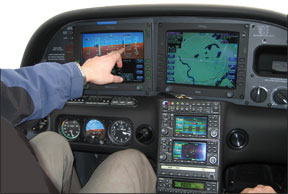
Pilots who fly a lot of weather sort themselves into two groups when it comes to the risk of flying in ice. One group-call them the “Im-willing-to-give-it-a-go” set will launch into any reasonable forecast and deal with the ice as it comes. The other group-call them the Legal Beagles-would do the same, but they get their pants snagged not so much on the actual risk, but whether the FAA will come after them for flying in forecast or “known ice” in an airplane not equipped for it. Great swaths of pulp forest have been sacrificed in the name of trying to define known ice and were not sure weve succeeded yet. What we have managed to do is create a not-so-small market slice of would-be buyers to whom an airplane legally equipped for known icing is a big deal. Ever sensitive to the whims of the market, Cirrus has created the perfect airplane for these buyers: The new SR22 line equipped with a TKS-based flight-into-known-ice package. In the past, weve viewed so-called FIKI packages as more window dressing than real substance. TKS is such an effective system that, in our view, with respect to actual icing outcomes, whether the system is certified or not is a distinction without a difference. To be sure, known-ice packages protect more surfaces and are probably more robust, but our view is that if 10 airplanes certified for known ice and 10 with so-called inadvertent systems flew the same winter systems for a year, there wouldnt be a noticeable difference in outcomes. So whats to improve? In the Cirrus view, that would be the highest fluid rates of any TKS system on a single and what amounts to significant design decisions that mold the Cirrus icing system into an integrated package. Conclusion: It works better, its easier to use and gives the pilot more control and more choices. Heres how.

Read More »

Buying Used Glass: Beware the Pitfalls

Last month we looked at buys on late-model, four-seat singles (“Late-Model Cruisers: Cessna, Cirrus Are Tops,” Aviation Consumer March 2009) and were shocked at how many good deals there were on used aircraft with glass cockpits. How about a 1300-hour 2005 Cessna 172SP with a G1000 and autopilot for $157,000? We found similarly-equipped 2005 and 2004 Diamond DA40s with about 1000 hours on them for $165,000 and $159,000, respectively. Tipping the scales a bit further was a well-kept 2003 Cirrus SR22 with 1251 hours, TKS de-ice, Skywatch, Stormscope, XM-weather, digital charts, TAWS and the latest revision of the PFD software for $210,000. Looking up the food chain to Mooneys, Columbias, Barons and the like, the deals are less dramatic, but they are still huge discounts from the new prices for relatively low-time aircraft. A good example is the 165-hour 2006 Mooney Ovation 2 with a G1000, known ice and most every option for $350,000. With the economy pulling the rug out from more and more people, repossessed aircraft are hitting the market as well. Were even seeing still-new 2007 models that have been wallflowers waiting for an owner with their sticker price sinking lower and lower.

Read More »

LED Landing Lights: Better Than Expected

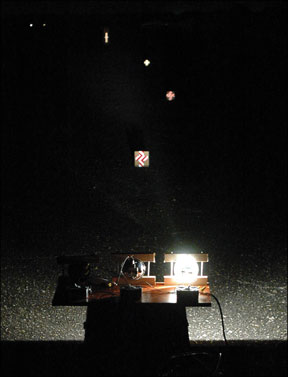
Automotive technology trickles into aviation in fits and starts and with spotty success. HID lighting, for example, was practically standard equipment on some cars before it finally gained a foothold in the light aircraft GA market. Now LEDs-light emitting diodes-are undergoing a similar evolution. Weve seen them in cars and on motorcycles for years and lately, theyve found their way onto wingtip and nav/position lights. Next step: landing lights. In this article, were examining a new product recently sent to us by a company called AeroLEDs. AeroLEDs is by no means the only supplier of this technology. Whelen, for example, makes a line of LED landing lights and we know of some other similar products in development. Well do a detailed comparison of all the LED products in a future issue, but in this article, were interested in testing the concept itself. Landing and taxi lights are big draws on the airplane electrical system for a reason: You need a bunch of light to reach through the murk to find night details necessary to establish depth perception and hazard detection. Although theyre inefficient in terms of converting electricity to light, conventional incandescent bulbs are still more than bright enough to do the job, which explains why theyve endured so long. At $20 a pop, theyre also relatively cheap, if not always reliable. Can LEDs hope to compare? We aimed to find out. LEDs are one of those alluring technologies that seem too good to be true. They deliver bright, cool light with a fraction of the power required for an incandescent lamp. This, more than anything, explains why LEDs are turning up in everything from flashlights to automotive tail lights. LEDs themselves have more to do with transistors than with traditional filament-type bulbs. LEDs have p-n or positive-negative semiconductor junctions, just like transistors do. When power is applied to the junction, electrons flow and drop into so-called electron holes-they actually revert to different orbits in the junction material. When that happens, energy in the form of photons is released. Physically, the p-n junction is small and so are LEDs. An individual LED is bright, but its overall light output is small, so to approach the requirements for something like a landing light or even a navigation light, multiple LEDs are ganged together. The SUNSpot product that AeroLEDs sent to us has 16 LEDs arranged in a circular lens assembly.

Read More »

Reader Plates: Close, No Cigar

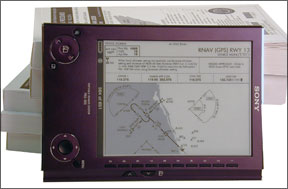
Blame it on Elrey Jeppesen: If he hadnt invented what has become the modern approach plate as a means of saving his own hide, we wouldnt be up to our shoulder harnesses in paper charts today. Approach plates from the FAA alone occupy 24 bound volumes averaging an inch thick for full U.S. coverage. And even if we can display approach plates on panel-mounted avionics, the Luddites among us also carry some paper charts, guarding against the day (or night) that all that expensive equipment soils the bed. And still, the industry toils mightily to devise the perfect electronic solution to allow us to ditch the paper. Thats the easy part. Choosing from among the many hardware and software options for displaying electronic charts and picking the best one is tough and no one has hit the jackpot yet. A recent entry is what we’ll call the inexpensive electronic flight bag or EFB and its called Reader Plates. It uses a Sony electronic paper platform, the idea being to keep costs low. Reader Plates uses Sonys PRS-505 e-book hardware to display the entire collection of more than 13,000 approaches, arrivals, departures and other pages in the FAA/NACO instrument approach procedures database. Reader Plates converts the charts into a downloadable format for either Windows or Macintosh and the user can then transfer it to the e-book reader via USB. Youll need a solid broadband Internet connection to be able to download the data file from Reader Plates, which amounts to 1.3GB. Every 28 days, when charts are updated, users have the option of paying $9.95 for the most current data or skipping the download altogether. Its all or nothing. You cant obtain, say, procedures for a single state or region. Thats by design, since one of the main ideas of doing away with paper plates is the ability to have all the procedures at your fingertips. And, unlike some other EFB solutions, the charts don’t expire or otherwise become unusable after a period of time. If you already own a PRS-505-sorry, Reader Plates isn’t available for other e-readers-youre golden.

Read More »

Top Flightbags: Sporty’s, Brightline and SkyHigh

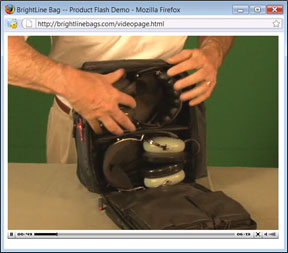
Our first impression of the Brightline bag was that it looked like an escapee from a zipper factory. It had so many pockets it seemed to venture beyond basic organization and cross into obsessive-compulsive disorder. Then we used the bag for a few flights … and ended up buying it. The coup performed by Brightline wasnt simply adding a bunch of pockets-in fact, we don’t think it needs quite so many-it was how it used space. For example, the center compartment was designed primarily with a headset in mind, but headsets come in many sizes. The Brightline solution is just the right size for one bulky headset, such as a Lightspeed 3G upright or two David Clarks on their sides. Pull out one DC headset and you’ll find a complete bag for a GPS also fits in that spot. We even fit the new Garmin 696 and a DC headset in that space. If youre only using one headset, there is empty space in that compartment, so there are pockets on the inside of the compartment to take advantage of it. The whole bag is ripe with clever arrangements of pockets and space. In fact, when we loaded up the bag with a bunch of typical pilot supplies we were surprised by how heavy it was given that its not that big dimensionally. Then we realized it had somehow swallowed as much stuff as we fit in another bag nearly one-third larger in size. A cell-phone pocket and, separate, sunglass pocket are on the top of the bag for easy access. There is a two-part chart area that lets you keep all of your charts in a library area, but keep todays charts, or a thin kneeboard in an outer pocket.

Read More »

Letters: 11/08

A friend lent me his August issue of Aviation Consumer because he knew Id enjoy reading your article on Tri-Pacers. Actually, I own a 1962 Colt, pretty much stock, although it was recovered for the second time five years ago. The previous recover was in 1973, before I owned it. With fabric still airworthy, my concern, as you pointed out, was what lay beneath it. We actually found very little structural rust and corrosion, so the restoration was a picnic and I enjoy flying it once again. Two things pop out in your article. First is the disparity in the current price range for airworthy Tri-Pacers, which your article stated as between $15,000 and $20,000. Ive been seeing prices between $25,000 and $30,000-plus. A little more research might be in order. Second is the phone number to contact Eleanor Mills, membership officer of the Short Wing Piper Club, who has recently moved to Springfield, Missouri. The number is now 417-883-1457 or e-mail swpn@sbcglobal.net. I heartily recommend the group. Their bimonthly news magazine alone is worth the price of admission.

Read More »

Logbook Software: AircraftLogs.com Rocks

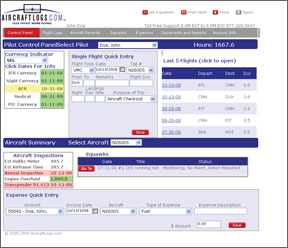
Task one in looking at logbook software is figuring out what you want to log and why. If youre not detail-oriented and only care about when your last BFR or IPC was, then anything more than a Post-It on the corner of your computer monitor is probably a waste. If you need to track duty time, watch the numbers for pilots and aircraft in a school or business, track time for tax reasons or are in the grind of pursuing higher ratings, logbook software can be a godsend. We reviewed over a dozen systems to keep the numbers in the right columns. Here are our top picks to meet the variety of needs out there. This website is geared mostly to corporate users and flight departments, but has a lot of utility for private aircraft owners as well. Its strength is in tracking aircraft time as it meets all the FAA requirements for electronic logbooks for aircraft-including electronic signatures. Why is this useful? First, if your shop is willing, they can access any of your aircraft records at a glance and cut down their admin time by signing you off electronically. Second, part of the service is scanning in all your aircraft documents and backing them up (you can also upload more on your own at any time). Also, ADs and Service Bulletins are automatically retrieved by the system, warnings flags for time-limited parts and inspections pop up automatically … the list goes on.

Read More »

Ailing Instruments: Replace Them If You Can

Despite the hoopla that has surrounded modern glass cockpits, round dial steam gauge instruments still represent the majority of the fleet. Plus, theyre still required for backing up glass panels. Eventually, the costly prospect of dealing with failed flight instruments must be addressed. The common question is this: Should the instrument be repaired or simply replaced with a new or newly overhauled unit? The short answer is that it depends on the instrument’s vintage, its complexity and what you expect for its longevity. There are a few factors that should help make the decision: your expectations for aesthetics, the shop’s warranty period and whether the instrument is primary and critical or used as a backup. Consider that primary instruments could be worth your life. Heres a look at some of the tricky details that come into play when instruments need service. Be forewarned that quality repairs wont come cheaply. The old saw of getting what you pay for certainly applies to instrument work. In fact, if an instrument repair or replacement cost seems excessively low, quality is likely being sacrificed somewhere in the process. For once, the FAA can actually be accused of offering a level of leniency when it comes to instrument overhaul-at least according to practice versus manufacturers definition. A shop can legally represent an instrument as overhauled (abbreviated OHC for “overhauled condition”) even if none of the internal components are actually replaced. One shop told us that a simple inspection of the instrument’s internal components might be enough to stamp the instrument as overhauled. But when it comes to satisfying the criteria spelled out in a given instrument’s maintenance and overhaul manual, this practice wont cut the mustard.

Read More »

Cell-Phone Weather: No Perfect Solution Yet

Collecting, assimilating, and safely deciding what to do about weather is one of the hardest things we pilots do. But it seems like every computer platform to do this has a drawback. Weather terminals at FBOs are handy but require lots of clicks. I might drill down through many pages for METARs-a U.S. map, region map, and a state map-then scroll a long alphabetical list of stations. I go to more screens for TAFs, winds and temps, PIREPS, forecasts and satellite images. Then I try to picture the data on my route. For airport info, I pull out a book. Flight planning software puts all the weather around one route. But it requires a computer, software and, often, arduous setup and learning. Fine for home or office, but not ideal on the road. There are Web-based products to overlay METARs, TAFs, PIREPs and winds graphically on a route map. But evolution of cell phones into hand-held computers means there’s an even more convenient option. Here are the four leaders in cell phone weather. Note that your phone determines your choices or, perhaps, vice-versa.

Read More »

Budget Headset Tests: QFR, Gulf Coast Prevail

Just about everybody has one or more budget headsets. Perhaps you purchased one as your primary headset when you couldnt afford anything fancier or youve bought them for passengers or as spares. Having reviewed ANR and pricier passive headsets in previous issues (see Aviation Consumer May and July 2007) were examining budget headsets in this report. As in earlier reports, all of the headsets weve evaluated are circumaural-they fit around your ear against the side of your head. At the budget end of the spectrum-in this case generally less than $150-the market leans towards house-branded headsets. In this case, Gulf Coast Avionics loaned us three of their house-branded headsets and we tested a LightSPEED QFR and the AVCOMM 200P. Pilot USA was unable to supply a headset in time for our testing. In our previous review of passive headsets, we tested the Flightcom Classic 4DLX in this price range so weve recapped those results. We measured the headsets in a professional audio lab, then subjected them to flight trials by a focus group. This has proven to be a successful way to evaluate headsets because in the end, how the headset sounds and its comfort level are what count most.

Read More »

Reader Headset Survey: Bose and DC Best Bets

One thing from our survey was crystal clear: Most pilots love their current headset. An astounding 90 percent of the over 900 pilots who answered our survey considered their headset to be a good value after using it in the field for some time. Considering the majority of respondents had their headset for more than four years, thats saying something. When asked if, knowing what they know now, would they go out and buy the same headset again, 86 percent said they would. Several of the “no” votes were just because they wanted to upgrade to active noise reduction (ANR), Bluetooth or a cell phone interface. Such rosy-cheeked satisfaction isn’t what we usually see on these surveys. Does it mean you’ll be happy with whatever you buy? Hardly. Performance is largely in the eye of the beholder. If there’s one takeaway from this survey, its that the best headset for you depends on your mission, your wallet and, most importantly, your head.

Read More »

Datalink Weather: WSI Beats XM By a Hair

Datalink weather from WSI (Weather Services International) or through XM-based WxWorx, are far more alike than different. Even the pricing is identical for the basic and second-tier service, at $29.99 and $49.99 a month respectively. But close examination reveals a few key differences. Remember that vendors, such as Avidyne or NavAero, decide how to display the data from either service in any manner they choose, and even what data to display. WSI (WSI InFlight) and WxWorx (WxWorx on Wings) both provide their own software that displays all of their broadcast products, so thats what we’ll use for our head-to-head comparison. Ground-based radar is the cash cow of both services. Its high glance-value is the reason why pilots justify the fixed $30 or $50 monthly subscription. There is no clear-cut winner since both vendors broadcast a nearly identical ground-based radar product thatll tell you where you are likely to spill your coffee.

Read More »