









Accessories

Complete O2 Systems: Aeromedix is Top Value

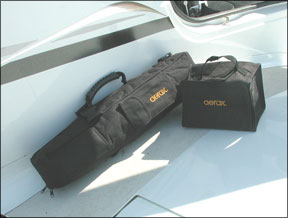
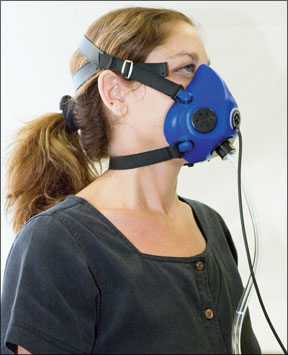
Its no secret serious use of a personal airplane requires climbing far above pattern and practice altitudes where the air is thinner and true airspeeds peak. That, more than anything else, may explain the veritable explosion in complete, state-of-the-art portable oxygen systems and the accessories that go with them. If your airplane doesnt have built-in oxygen, and the time and money to add it isn’t in the cards, youre a prime candidate for a portable system. Total cost for a two-user system? Under $500. But if you usually carry more people or need a few bells and whistles, things start getting complicated: The choices available from some vendors can be almost as dizzying as five hours in the teens without O2. In the January 2008 issue, we examined in detail new accessories such as regulators and cannulas, but we skipped discussing full systems. So in this article, were considering the whole enchilada, so to speak-complete, in the box systems. Since we last examined this topic five years ago, the market has become more competitive and there are some excellent values out there.

Read More »

LightsPEED Zulu: A Bose Contender

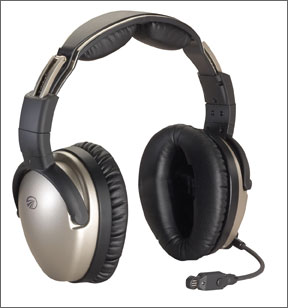
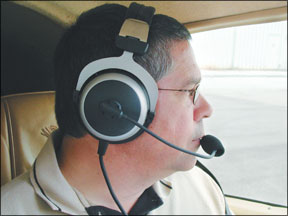
Bose created the first aviation noise-canceling headset and has always held the title of “Best Performer.” Many manufacturers have challenged the champ, but nobody has equaled Bose performance and comfort, although some have improved the features and value. Now, LightSPEED, with a reputation for solid-performing economical headsets, has introduced the Zulu that, while not clearly superior, may we’ll be preferable to many buyers. LightSPEED has clearly targeted the Bose X with the Zulu. Sound quality is as good or better and the Zulu clearly surpasses the Bose with features. The Zulu is also in the Boses price stratum, although still about 15 percent less. They even look somewhat similar. Of note to some pilots is that the Zulus mic is not reversible – the mic is always on the left when youre properly wearing the headset. The Bose mic is reversible, but requires a screwdriver to do so. The Bose is a TSOd headset; the Zulu is not. But this is of little significance to the GA pilot.

Read More »

The Wireless Cockpit: It (Mostly) Works

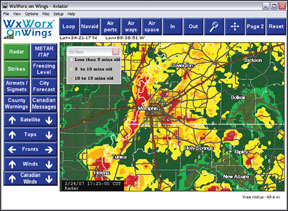
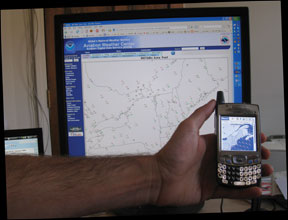
You just got a new cellphone equipped with a slick Bluetooth headset. You love the wireless freedom and you idly wonder if the same technology could alleviate the tangle of wires from your portable cockpit gadgets. While you dream of this luxury, you realize that your cellphone headset doesnt always work quite right and you question if Bluetooth in the cockpit is the best idea. Youre right in both views. Bluetooth wireless is one of those great ideas that works we’ll most of the time and can be quite useful, especially with a hands-free cellphone headset. But its tender enough to cause frustration for some users, especially if the equipment isn’t we’ll designed or there’s electromagnetic interference where you happen to be. (These days, that can be everywhere.)

Read More »

Whats New in O2? A-5 flowmeters To Start

Not so long ago, when using oxygen in the cockpit graduated from being a nice-idea to the must-have phase, the equipment took a quantum leap forward. In case you havent looked recently-and we have-state-of-the-art oxygen gear is better than ever, so good, in fact, that it may be time to toss that converted medical junk and upgrade.But what to buy? To find out, we recently scanned some of the latest offerings from the top oxygen suppliers in general aviation. What we found was more choices in regulators, flowmeters, cannulas, masks, conservers and monitoring devices, all at competitive prices. In fact, since we last reviewed oxygen equipment in our August 2001 issue, the industry has almost reinvented itself, due in part to advances in the medical market.

Read More »

Large Format Monitors: Promising Technology

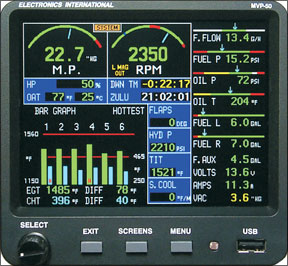
If your older airplane is like ours, its powerplant and electrical system gauges resemble what was left behind on the factory floor when GM built its last 1937 Buick. Until recently, though, if we wanted to upgrade our factory instrumentation from what Beech or Cessna decided was adequate, we were stuck figuring out how to install round or square gauges from companies like UMA and Mitchell into rectangular holes. Those gauges are excellent products, but feature few bells or whistles. And few aftermarket engine monitors are equipped or approved for the primary-read “only”-display of information like oil pressure or how much fuel remains in the left tank.

Read More »

New Vertex VHF: Thanks, But No Thanks

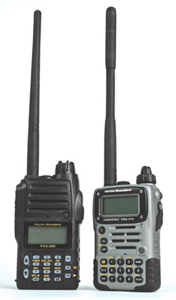
For a couple of hundred bucks, a handheld VHF radio is cheap insurance against a comm failure and its useful for obtaining clearances on the ground or just monitoring ATC. As we reported in our October 2005 mega-review of VHF handhelds, the would-be buyer has plenty of options. In our previous wrap-up, we picked the Sportys SP-200 and ICOM IC-A6 as our top choices. Since then, Vertex Standard has introduced the VXA-710 Spirit and the VXA-220, touted as improved versions of the previous models. Are these good enough to knock Sportys and ICOM off the VHF pedestal? Unfortunately, we don’t think so. If anything, at least one of the models may be a step backward, in our estimation.

Read More »

A Noise Reduction Rating Is Nice, But It’s Not Everything

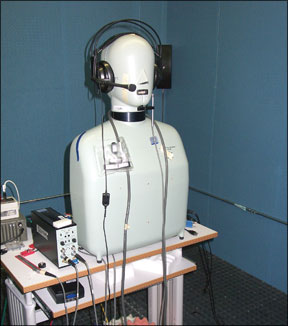
Following our report on active noise reduction headsets in the May issues, the e-mails trickled in. With all those expensive lab tests, why the heck didnt you guys publish good numbers on noise reduction values? a couple of readers asked. After all, manufacturers do this. Well concede the point, but its not as simple as that.

Read More »

Passive Headsets: Clark, Telex are Tops

With the exception of GPS, hardly any segment of the GA gadget and accessories market lacks for competition. Thats especially true of headsets, where there are dozens of models to pick from in both active and passive noise reduction designs. There are so many, in fact, that its impractical to test them all. So for this article, we picked seven popular passive headsets and wrung them out, both in the audio laboratory and in an impartial, focus-group aircraft test.Interestingly, our lab findings and inflight results diverged dramatically on some of the headsets. It turns out that just because a headset has good lab numbers doesnt mean its a go-to model in the airplane. Comfort and perceived audio quality can and should rule the decision.

Read More »

Cockpit/Cabin Coolers: Do They Really Work?

There are three reasons why more airplanes don’t have air conditioning: Its expensive, its heavy and saps payload and no matter how hot it is, you usually don’t need it above 5000 feet. So most owners just go without and swelter through the hot months. As an alternative to sweat and bear it, a cottage industry has sprung up offering portable coolers for the cockpit which circulate air through block or crushed ice stored in a modified picnic cooler. Weve seen these products at trade shows and on the Web and our reaction is always some version of this: They cant possibly work, can they? Actually, they do work and although not practical for all owners, they offer a limited alternative to the cockpit steam bath

Read More »

ANR Headset Shootout: Bose is Tops

There are so many headsets on the market today-ANRs, passives, in-the-ear, featherweight designs-that we often wonder if there are enough buyers to keep all of the companies in business. And even if there are, what distinguishes one headset from another sufficiently to choose it? There’s no simple answer. In the past, weve evaluated headsets purely on a subjective basis and for this review, were doing that again. But this time, we also subjected the headsets to a thorough battery of audio laboratory testing.

Read More »

EFB Tablet Flyoff: Samsung is Our Pick

If our conversations with fellow pilots are typical, many of us are looking for a practical electronic alternative to paper charts in the cockpit. But it remains an elusive goal, hampered by technology thats frustratingly close, but not quite there. But how about tablet computers pressed into the electronic flight bag role? Weve heard about and seen a handful of these. Can they work?

Read More »

Panel Replacements: Metal vs. Overlay

Utilitarian to the core, we arent impressed by flashy instrument panel work. And by this, we mean panels decked out in custom colors and patterns that blend with a pricey leather interior and a toney exterior paint job. But were not crazy about the 1970s-style Royalite overlays, either. These long ago outlived their appeal and few have aged gracefully.

Read More »