










Accessories

iPhone Aviation Apps: Some Serious, Some Silly

We can imagine only three reactions to the phrase, “there’s an app for that.” One, utter puzzlement because youre clueless about apps, two, you recoil in disgust against the overblown preciousness of Apples iPhone or, last, “yeah, Ive seen it.” Apps are, of course, modest little single-purpose programs that run on Apples iPhone smart phone or iPod Touch MP3 players. At last count, there were more 140,000 apps and at least 195 of them are aviation applications of some kind. In this report, we’ll take a minimal survey of a handful of these but, more to the point, we’ll examine the basic Zen of apps. Are they just gimmicks or are they really useful? (Its a little of each, in our view.) Worth noting is that other smart phones like the Android-based products and the Blackberries also have aviation apps. we’ll get to those later.

Read More »

GPS Survey Favorites: Garmin, Anywhere Map

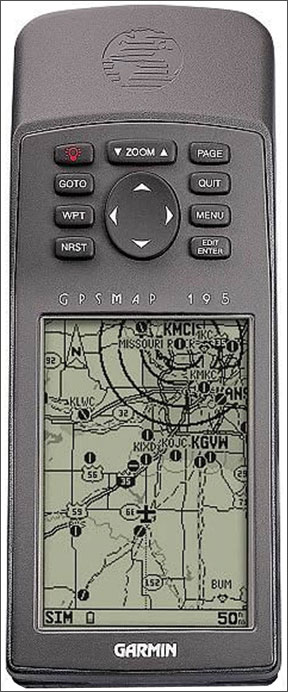
Portable GPS devices are arguably the most useful cockpit tool since the invention of the E6B. Or aeronautical charts. So it was no surprise when our reader survey on portable GPS generated we’ll over 1000 responses. There were comments from pilots still flying trusty, monochrome Magellans to ones using the newest Garmin aera. We saw dozens of poetic waxings about most every major supplier and surprisingly few complaints. That said, no company or product escaped with no complaints and we saw some direct conflicts: Pilot A had such a dismal time with Anywhere Map that he went to Garmin and is much happier, while Pilot B finally got so sick of Garmin troubles he bought an ATC and now flies in a state of bliss. To each his own.

Read More »

New Cockpit Lighting: Options for All Budgets

It was close to midnight and after a long day of flying we were cooked. A couple miles out something just didnt look right. If not for the landing light reflecting off the trees, we might not be here to review cockpit lighting upgrades. The instrument-panel lighting in that 70s-vintage Arrow was so poor we cranked in the wrong altimeter setting-misreading a two for a three in the Kollsman window. There’s no reason to live with (or risk death due to) substandard cockpit lighting. Panel upgrades require skill and a decent budget. The good news is there are several options to light up your night.

Read More »

Add-on Bluetooth: BluLink Works Flawlessly

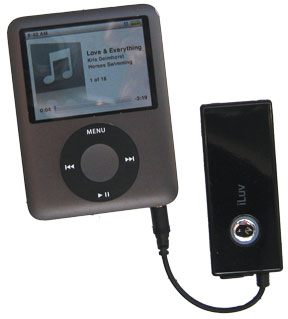
Its refreshing to review a product that makes a modest claim on what it can do and then delivers completely. Thats exactly what happened with our flight tests of the Pilot Communications USA BluLink Bluetooth headset adapter. BluLink adds Bluetooth connectivity to any headset. You simply plug your headset into the BluLink unit and then plug that unit into the intercom. It can be ordered with cables for traditional two-plug intercoms, helicopter plugs or Lemo-powered plugs used in many Bose X headsets. If you fly more than one setup, the same BluLink controller can use any of the cables interchangeably. The cabling for BluLink is the most cumbersome part of the whole setup as it makes your headset cords even longer. This annoyance is about our only beef with the system.

Read More »

SheepSkin Seat Covers: DIY Comfort

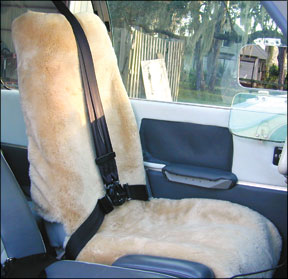
Most airplane seats are poor places to park your keister for a few hours. After a decade or so of the temperature extremes found on the typical airport ramp, their foam deteriorates, eliminating any resilience in the cushions and creating a permanent sag. The vinyl and fabric-or, if youre lucky, leather-has long since started to rip apart at the seams, snagging shirts and trousers as you shift and squirm. A good interior shop can fix this for a grand per seat, but there are less-expensive options, including ready-made upholstery you install yourself. One often-overlooked option is to do nothing at all with the seat itself but simply hide the ugliness and discomfort with a custom-fit cover. A wide variety of materials are available-especially if you don’t mind installing something from the automotive market. One of the more popular options is the made-to-fit sheepskin seat cover. Installing one automagically resolves several issues, among them eliminating the hot/cold seat, sticky vinyl and unsightly, worn and torn upholstery. They trap air between you and the seat itself, so theyre cooler in the summer and warmer in the winter, plus they wick away moisture, like the sweat from your next flight review.

Read More »

Aspen MFD: Cost- and Size-Effective

Once upon a time in a galaxy not far away and not that long ago, there was no such thing as an EFIS. The aviation world was guided by spinning iron gyros on jeweled bearings. Then, overnight it seems, you could practically buy one of these things in the electronic department at Walmart. Okay, so thats an absurd exaggeration, but there are still a bunch of aftermarket EFIS choices out there and Aspen, Garmin, Avidyne and, soon, Bendix/King continue to offer more. Most recent is an expansion of the Aspen line with new approvals for the EFD500 and EFD1000 in the multifunction role. As weve reported previously, Aspen has essentially invented its own niche market by engineering a compact, easy-to-install PFD that fits electronic gyros into the space normally occupied by the AI and DG/HSI. Even in an anemic market, Aspen has enjoyed brisk sales, evidently because the installation does less violence to the basic panel and because the price is right.

Read More »

Aerous ITE Headset: Audiophile Performance

Ever wonder where can you could get a lightweight in-the-ear headset made with the utmost attention to fidelity, designed for serious audiophiles who happen to be pilots? Someone, it turns out, has actually thought of this. In 1995, Jerry Harvey created a high-fidelity in-the-ear earphone and started a company called Ultimate Ears. These appealed to performing musicians who liked their in-ear monitors, but it quickly spread to include more casual users. Harvey left Ultimate Ears in 2007 and started JH Audio to build the Aerous-no-nonsense audiophile earphones with a mic-designed for pilots.

Read More »

Letters: 11/09

I read with great interest the EFIS article in your September edition. I did not participate in your survey, but feel compelled to comment on my G1000-equipped Diamond DA40. I obtained my private certificate on steam gauges and then purchased my Diamond DA40. After two incidents where I am convinced that my glass cockpit saved my bacon (and that of my CFI), I would never fly steam gauges again. In October of 2007 on approach, while working on my instrument rating, I was descending through 1200 feet on long final at the POH-specified air- speed of 70 knots. ATIS information informed me that surface winds were 7 knots from 250 degrees. I scanned my MFD and thanks to the winds aloft vector on the G1000, I observed that the winds aloft were 37 knots from 040 degrees. I mentioned to my CFI that there would be one heck of a windshear on approach.

Read More »

E-Reader for Plates: Kindle DX Gets Close

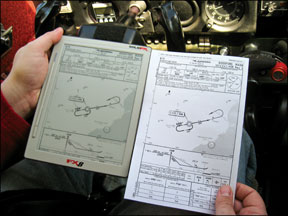
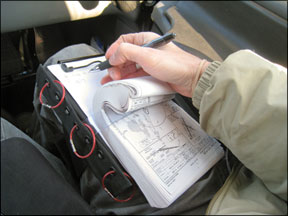
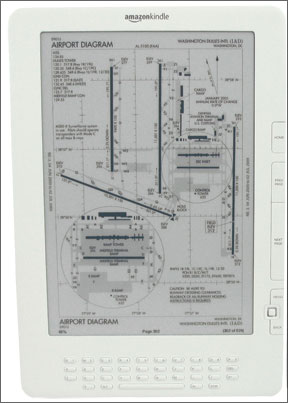
Getting approach plates to play on portable electronic devices has proven to be a round peg in a square hole. Several companies have tried to crack this nut, but it seems to defy an elegant why-didnt-I-think-of-that solution that resonates with everyone. The latest effort is to adapt Amazons much hyped Kindle e-reader to the task of being a chart library, something it was never designed to do but can actually manage with a reasonable degree of grace. A company called Gold Seal Ventures through its Web outlet www.airbrief.com will launch this product formally at EAA AirVenture in July. They sent us an advance unit for a first look and although were favorably impressed, perfection still eludes. Amazon has made ripples in the publishing world with its Kindle e-reader, a device thats sold as being so-called electronic paper. Kindles are among a class of products that have electrophoretic displays that use minutely charged particles re-arranged on a plastic substrate to produce readable images and text. The process is somewhat like the old Etch-A-Sketch toys we had as kids, but instead of a couple of X-Y knobs, the process is done rapidly by applying selective voltages to the screen to rearrange ink particles into type and rudimentary images.

Read More »

Is BRS Always a Life Saver? Not Exactly

At a Wall Street analysts forum in 2007, the CEO of Ballistic Recovery Systems, Larry Williams, told the audience why he thought the all-plane parachute made sense: “In 2005, there were just over 1600 [accidents] involving general aviation airplanes in this country that resulted in 556 deaths. Now, if you offset that with the fact that were saving 199 people, all of the sudden, parachutes start to make sense.” Except that its not that simple. As of this writing, BRS has claimed to having saved 233 lives, but thats counting every occupant on every successful parachute deployment as a saved life. A quick look at the record shows that death was far from a certainty in many of the parachute deployments. A subtler knot in the logic that BRS has saved 233 people is that having a parachute installed affects the delicate balance of risk versus utility in aircraft. We know from experience and interviews that there are pilots who will take on conditions such as rough weather with the chute that they wouldnt take on otherwise. We can only guess that some of the CFIT accidents in the Cirrus were influenced by the faulty assumption that the pilot will always have enough time to pop the bddn chute before auguring in. But the risk equation is more complex than that. Situations such as single-engine at night over mountains or low-visibility takeoffs are risky only because the consequences of an emergency are high, even though the likelihood of failure is extremely low. Having an ace-in-the-hole to cover that unlikely event will shift the go/no-go call for some pilots. We believe those pilots will get more out of their airplane with a negligible increase in real risk. So BRS may be overstating its positive impact on lifesaving, but also understating its positive impact on aircraft utility.

Read More »

Gear of the Year: Super SportCub

When Thomas Paine was writing about times that try mens souls, he was actually referring to the American Revolution, but thats nothing compared to GA sales figures for the first quarter. No ones jumping out of buildings yet. But then again, hangars don’t have second stories. Okay, so 2009 hasnt been so hot thus far, but like everyone involved in aviation, were optimists and we sense a turnaround in the wind. In any case, pilots and owners are still buying things so its time for our annual review of the best products and services weve seen during the past calendar year. When we reviewed our reviews for the past 12 months, we were surprised to find more new stuff than weve typically seen in a year. Heres our roundup of the most recommended things we tried this year. Were normally cautious about effusing too much about products with no market history, but were making an exception for this one. CubCrafters Super SportCub merits this treatment because in the LSA world, its truly innovative. It has a true ASTM engine-at 180 HP, a big one-and the concept of an uncompromised, hotrod LSA hasnt been offered by anyone else. The trouble with the LSA segment is that one white plastic airplane with high wings looks like any other white plastic airplane with high wings and we see a new one of them every week. The Super SportCub is thus in a league unto itself and deserves notice for that. For more, see www.cubcrafters.com

Read More »

Portable Tiedowns: Claw is a Top Pick

Most paved parking ramps are equipped with tiedown rings, plus adequate rope or chain to do the deed. But some of the most-desirable destinations have nothing of the sort. At back-country airstrips, a friends cow pasture and most fly-ins weve attended, you need to bring your own gear. One option is to assemble a kit from hardware-store items-rope and general-purpose anchors can meet the need. But as with everything else in aviation, if there’s a better way, someone will invent and market it…thus commercial tiedown kits. But are these things worth the money? Are they really any better than the classic cheap doggie auger you can buy at Wal-Mart for under $5? Maybe. Maybe not. While we agree the hardware-store stuff isn’t optimal, we were curious about which of three popular commercial tiedown products are best. To find out, we obtained samples from each manufacturer, plus some gear from our local hardware store, then tried to pull each of these anchors out of the ground. The results surprised even the most cynical among our testing crew and reminded us that what works we’ll in one soil type may not be worth the trouble in another.

Read More »