









Engines

OSH Diary: The Year of the Engine

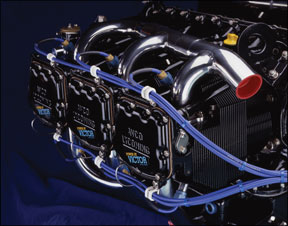
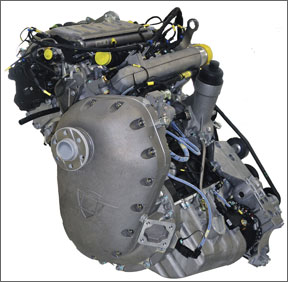
Although we didnt expect to see it, that great summer sweat-fest that is EAA AirVenture yielded some powerplant developments that were both eye catching and encouraging. (And neither did the sweat materialize; Oshkosh was unseasonably cool and dry for the entire week-at least by our standards.) We saw three significant developments that are worthy of note: Lycoming came out of the ground with not just a new engine, but an entire suite of new developments that represents a fundamental sea change for a company that has been technologically somnolent for at least a decade. Diamond says its serious about its Austro engine project and it meant to show it with a production mock-up of the new AE 300, which its driving forward to certify in Europe before the end of the year. Austro is essentially looking to become the next Thielert-but without the financial implosion-and its doing so at a breakneck clip. We got our first detailed look at the engine.

Read More »

Boutique Engines: Ego or Performance?

There is no shortage of aircraft engine overhaul purveyors out there appealing to a number of aircraft owners who are interested in engines with something special-something that says, “My engine is better than the run-of-the-mill overhaul.” Extras may mean outside flash, special parts, alleged attention to detail or tighter measurement tolerances. Plain, factory engines regularly make TBO, and problems en route to TBO are not often those that a custom engine build would address. Those are long times between overhauls and low utilization that cause corrosion, a cracked cylinder from a metal defect, or improper leaning technique leading to burned valves. Custom overhauls come with claims for more horsepower, greater reliability, smoothness or all three. In our view, the validity of these claims depends on the integrity of the shop, the size of your pocketbook and the seat-of-your-pants feel.

Read More »

Cylinder Survey: ECI and Lycoming are Tops

In the four years since our last survey (May 2004 Aviation Consumer), several things have changed in the world of engine overhauls. Teledyne Continental Motors (TCM) and Textron-Lycoming have both pumped up their marketing of zero-timed and factory-overhauled engines. Engine and cylinder rebuilders have expanded their presence with both Engine Components, Inc. (ECI) and Superior Air Parts offering complete engines to the experimental market. Superior is even certifying their Vantage engine to compete with the Lycoming O-360 and IO-360. For all thats changed, however, the long-term viability of your new engine will largely depend on the quality of your cylinders. Is it a better road to use aftermarket cylinders like Superior Millenniums or ECI Titans? Or is it a safer bet to go with the OEM product?

Read More »

Flight Fuel Efficiency: Is Diesel Really Better?

Give pilots and aircraft owners credit for one thing: It takes a strong constitution to remain functional and focused when the avgas truck creaks to a halt and you realize that what you thought was a 5 on the price placard at 100 yards was actually a 6. So you whimper softly and pay the man, perhaps salving yourself with the idea that the new Jet-A burning airplanes will make this nightmare go away. But will they really? Are diesels that much more efficient than gasoline engines? Yes, possibly. But it depends on the engines being compared. When it comes to efficiency, Lycoming and Continental are not created equal. But the larger issue-and whats driving the Jet A piston revolution-is that Jet A-burning pilots (piston or turbine) neednt get their pants snagged worrying about their fuel being phased out in 10 years. They can also count on it being available in every country on the planet and at ever more airports. And thats why we write stories about Jet A piston engines, not because theyre cheaper to operate-they can be-and not because theyre more efficient-they are, but not as much as you might think.

Read More »

Factory or Field? Price is Only One Driver

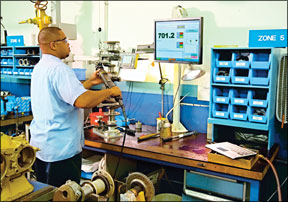
What exactly is the difference between a factory rebuilt, a factory overhaul and a field overhauled engine? And is opting for the factory version worth the extra money? As the engine overhaul business has become ever more competitive, there’s even more confusion about the difference between categories and sources. Hardly a month goes by when someone doesnt phone to ask: “here are the numbers the shops are giving me. What should I do?”

Read More »

Fate 1, FADEC 0

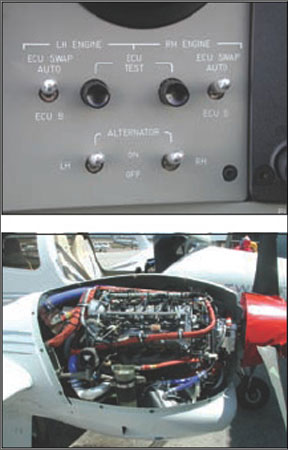
FADECs for piston engines-full authority digital controls-are an idea whose time seems to stubbornly refuse to come. Even though theyve been around for a decade and everyone seems to concede they make sense, buyers havent exactly clamored to turn ove engine operation to a black box on the firewall. Diamond and Thielerts impressive success with the TAE Centurion 1.7 diesel represents the high water mark for FADEC, since the 135-HP turbodiesel relies entirely on electronic control, with no mechanical backup of any kind.

Read More »

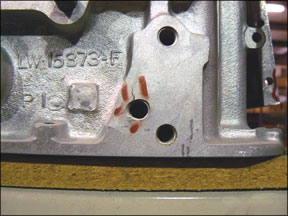
Cracked Crankcases: Repair or Replace?

Doctors learn that a certain bedside manner is helpful when conveying bad news to a patient. Airplane mechanics-at least the ones we know-don’t necessarily feel the same obligation, thus when catastrophe looms large during an annual inspection, you might hear, Hey, we found a crack in your case, youre hosed. The medical analogy is apt, for a cracked case is the equivalent of plugged arteries; surgery isn’t just an option, its a must. In most cases, a cracked case will ground the airplane and an overhaul will follow. No matter how much time is on the engine, splitting the case to fix a crack and reassembling it makes little sense. A full overhaul or reman is the way to go.

Read More »

Lycomings Do or Die: Why Retooling is a Must

In the realm of industries done in by capricious market forces, Lycoming and Continental arent just survivors, theyre evolutionary standouts. The entire GA industry imploded between 1980 and 1985 when sales rode over a cliff and both Lycoming and Continental had to rapidly reinvent themselves to survive in a world where 85 percent of their new engine business simply evaporated into thin air. Not many companies have weathered such a drubbing. (A captive replacement market helped.)

Read More »

Power Shift: Cirrus and Tornado Alley

Its not much of a reach to posit that the entire survival of piston general aviation pivots around the exhaust valve, a $100 part that lives a miserable existence being slammed against a hardened steel seat 10 times a second swirled in a gale of white hot combustion gas. When an engine tanks prematurely or needs a midstream top overhaul, its often something to do with exhaust valves-bad guides, leaky seats, cracks around plug bosses originating near the exhaust valve.The engine makers and airframers have tried to meet these problems head on with mixed success.

Read More »

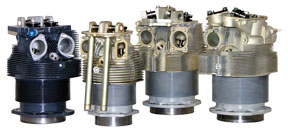
Nickle Carbide Jugs: Low Wear, No Rust

It may seem utter apostasy or even a fairy tale, but there once was a time when engine cylinders and crankshafts werent considered snake-bit parts. You could reasonably expect them to make to advertised TBO and beyond.

Read More »

Honda Builds a Jet: Anything But Timid

After you look at it for awhile and not a very long while at that the thing thats most noticeable about the HondaJet isn’t that the engines are mounted on those weird stalks on top of the wing, but rather that you don’t really notice that the engines are mounted on weird stalks on top of the wing.

Read More »

Cylinder Overhauls: Are They Worth It?

Thirty years ago, when every other airport of any size had a field overhaul shop, runout cylinder cores were money in the bank. Every shop had a shed full of prized cores and most maintained a lively and profitable business in refurbishing jugs for use in engine overhauls.

Read More »