









Engines

Tecnams Rotax Twin: Budget Performance

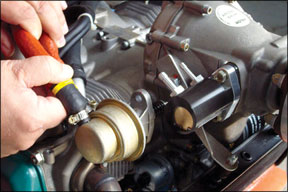
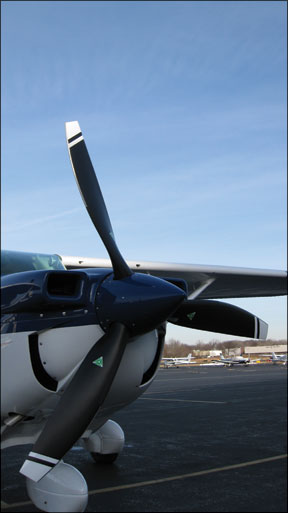
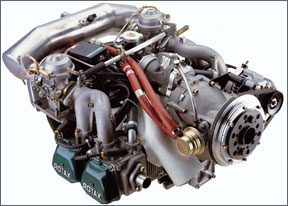
Despite being one of the bigger players in LSA market, Tecnam Aircraft isn’t we’ll known in the U.S. The company has actually been building aircraft and aircraft parts for over 60 years, and has 3000 aircraft flying worldwide. For comparison, Cirrus Aircraft and Diamond Aircraft have each delivered slightly over 4000 airplanes to date. Tecnam is reorganizing in the U.S. with a new website (www.tecnam.net), an expanding dealer and support network and a new aircraft: the Tecnam P2006T light twin. The P2006T (That name doesnt quite roll off the tongue, does it?) has specs more like a single than a twin. Its gross weight is only 2601-50 pounds more than a Cessna 172SP-and cruise speed is in the 140- to 150-knot range. The really novel item is that the P2006T sports two Rotax 912 S3 engines. The S3 is the certified version of the Rotax found in most LSAs. Each engine puts out about 100 HP.

Read More »

Cylinder Replacements: Lycoming, ECI Are Tops

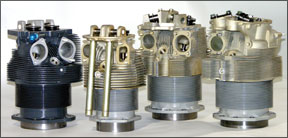
One perennial rite of passage for aircraft owners is what to do about cylinders at overhaul. Whether were talking about top-end work on a mid-time engine, or one we’ll past its published TBO, which cylinders to install can be a major decision. And its not getting any easier. In fact, there’s an element of crisis in the cylinder business. Superior Air Parts was once a major supplier, but is gone from the scene. Continental and ECI have both suffered significant quality issues affecting thousands of cylinders. A recent AD impacts owners of existing Superior cylinders, rendering what was once the cream of the cylinder crop as one-run wonders. One way out of that morass, of course, is to buy a new or factory-rebuilt engine: you’ll get factory jugs. But given Continentals troubles, thats no panacea, either. For those facing top-end work or an overhaul, the choices are more complex. And theyve gotten even harder in recent years given the aforementioned ADs and bulletins. Lycoming owners have it a bit easier: There are no recent ADs against factory cylinders or those supplied by Superior. But anyone with an aftermarket cylinder or flying a Continental engine is probably feeling a little paranoid about all this. After the last three years of ADs, whats going on? Cant anyone make a cylinder anymore? What do engine rebuilders recommend? And what should an owner do when its time to replace one or all of an engines jugs?

Read More »

Rotax Owner Survey: Overall, Top Marks

Despite the company having been around for some 90 years, powering an aircraft with a Rotax engine is something relatively new to most general aviation pilots in North America. Until the onslaught of light sport aircraft began five years ago, many had never even heard of a Rotax engine, despite their popularity and penetration in the power sport markets (motorcycles, snowmobiles, ATVs, personal watercraft and so on). As a result, these days its likely an ultralight, experimental or LSA you own or plan to fly is powered by a Rotax engine, part of Canada-based Bombardier Recreational Products Inc. That high level of market penetration means more and more Rotax engines are in service. Because of their increasing popularity, we wanted to find out about owners experiences with them, including maintenance frequency, factory support and overall costs of ownership. To find those answers, we crafted a 13-question ownership survey and made it available through our online sister publication, www.avweb.com, in early September. The results show owners are generally happy with their engines, and most maintenance issues are easily handled. But finding someone to work on them at an out-of-the-way location might be a challenge. Thankfully, the Rotax dealer network appears to be meeting owners needs, and those flying in the experimental category generally find the engines to be easy enough to work on themselves.

Read More »

Turbo Overhauls: Sooner Not Later

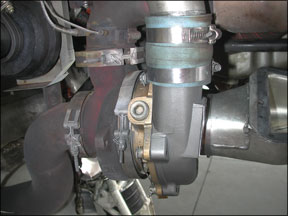
Pity the poor turbocharger: It sits in your engines exhaust stream, subject to extreme heat and corrosive gases, spinning at up to 120,000 RPM, boosting manifold pressure. Pity also the turbocharged aircraft operator, since he or she gets to pay for maintaining and overhauling the turbo, its controller and its wastegate. Although turbos often last as long as the engine itself before needing overhaul, they also can need attention we’ll before scheduled TBO. And, even if the engine doesnt need work before an overhaul, you might want to consider overhauling the turbo halfway to the engines TBO anyway. Its sort of like paying it forward. In some cases, problems with the engine can mean turbo issues, too, since they share the same lubricating oil; what gets into your engines oil also can get into your turbo. Whether your turbo is sent out for overhaul with the engine or removed before TBO after a routine inspection uncovered a problem, there are few things you need to know and decide before giving the shop a go-ahead for work.

Read More »

Turbo Wars: TAT vs TCM

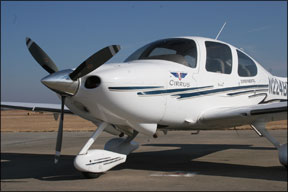
Does the world need another turbocharged Cirrus SR22? Continental thinks so, because at AirVenture Oshkosh it rolled out its long-rumored TSIO-550 demo project for the SR22. We know this project has been an on-again, off-again effort between Cirrus and Continental and now it looks like its on again, at least from TCMs point of view. Currently, Cirruss turbocharged offering-its best seller-is the turbonormalized set-up engineered and provided by Tornado Alley Turbo. The aircraft retains the stock 310-HP IO-550-N but with the addition of two turbochargers and lots of intercooling. Unlike traditional systems from Continental, the Tornado Alley system doesnt ground boost the engine but allows it to maintain sea-level manifold pressure we’ll into the 20s. Technically, the turbonormalized system doesnt have a critical altitude since it boosts to sea-level to the airplanes certificated ceiling of 25,000 feet.

Read More »

Tempest Dehydrator: Inexpensive, Effective

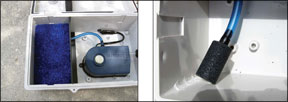
Think of Florida on a warm afternoon in July and youve got a good grasp of what your engine crankcase is like after you shut down after a flight. Throw in a little acid rain to season the heat and humidity to complete the picture. In short, the inside of an engine can be the perfect Petri dish for corrosion. Engine dehydrators or preservers are designed to address this by either pumping dry air into the engine, or sucking the humid miasma out of the crankcase and replacing it with moisture-free air. The idea has enough credence for three companies to have introduced dehydrator products. The latest comes from Tempest/Aero group, which adds a dehydrator to its well-regarded line of dry vacuum pumps and oil filters. The AA1000 Engine Preservation Systems retails for $235.Like the other engine preservers, the Tempest dehydrator pumps dry air into the engine after first passing it through a silica gel desiccant. The device consists of a small plastic enclosure about the size of small fishing tackle box-it may actually be a tackle box, by the looks of it-divided into two compartments. One compartment serves as a cell to contain the desiccant, which consists of about a pound of tiny blue beads. You just pour them in the box, making sure that the filtered pickup tube is near the bottom of the desiccant. The other two thirds of the box houses a small, continuous duty low-volume air pump powered by line voltage. A clear plastic tube exits the pump to be inserted into the crankcase oil filler.

Read More »

The Other Diesels: Austros Competition

If economic recovery requires the restoration of confidence, we have a suggestion: Just bottle up the bounding confidence that the developers of aerodiesels have that Jet-A engines are the future and distribute it to the general population. Although the aerodiesel market has, at best, stumbled along looking for serious traction, the unswaying conviction of those in the diesel industry seems to be that Jet-A piston engines are an inevitability. According to our count, there are six active projects in the aerodiesel arena: Austro, Centurion (formerly Thielert), DeltaHawk, SMA, Gemini and Zoche. (Remember them?) Heres an update on each.What we found most interesting about the current state of the aerodiesel market is that its four to two in favor of purpose-built aircraft engines rather than engines adapted from the auto segment. The automotive crossovers are Austro and Centurion, both of which are adapted from widely successful Mercedes Benz automotive diesels. SMA, DeltaHawk, Gemini and Zoche are all clean-sheet designs developed specifically for aircraft. Thus far, the only remotely successful aerodiesel is the Thielert (now Centurion) 1.7 and 2.0 liter diesel series which Diamond enabled by adopting it for the DA42 Twin Star and the DA40 TDI.

Read More »

Austro Diesel: Certified and Building

Back in the day when aeronautical engineers actually wore ties-skinny black ones-and ran calcs on wooden slide rules, it was accepted wisdom that to develop a new airframe and fit it with a new, untried engine was to court disaster. Diamond Aircraft proved the point in the digital age with its DA42 Twin Star. The Twin Star proved a terrific airframe and a strong seller. But the four-cylinder Thielert diesel engine Diamond selected as the powerplant turned out to be just the disaster the guys in the skinny ties worried about. Owners complained of high maintenance incidence, long downtimes and last spring, Thielert went bankrupt, beaching hundreds of owners who needed parts and engines. Moreover, during its initial recovery, Thielert quoted parts and replacement engine prices that raised hourly engine reserves to $100 or more-per engine, without fuel. Although Thielert seems to be getting back on its feet, Diamond went its own way and established the Austro Engine Company in Wiener Neustadt, Austria, next door to Diamonds factory. After what must be one of the fastest engine development cycles in recent history, Austro announced in late January that it has EASA certification for its 168-HP AE 300 diesel engine and production is already underway. (AE 300 is the marketing nomenclature; the type certificate calls the engine the E4.) The good news for Twin Star owners stranded by Thielerts cratering is that in the Austro, they now have a choice in replacement engines. The new engine delivers more power and is more fuel efficient, according to Diamond. The bad news is that it will be a number of months before retrofits are available for Twin Stars and the single-engine DA40 TDI. Diamonds Peter Maurer told us in February that the factory has the capacity to produce replacement engines for existing DA42s or soon will. But the initial production will go to new DA42 NG models (next generation) not to retrofits because Diamond wont have approvals for retrofits until later in the year. Meanwhile, certification work on the Lycoming-powered version of the DA42 is nearly complete, so owners may soon have the option of three engine choices.

Read More »

Late-Model Cruisers: Cessna, Cirrus Are Tops

It was the best of times, it was the worst of times. Were not talking about Dickens 19th century London, but last week in the used aircraft market. Its the best of times if youre looking for a late-model used aircraft of any kind, the worst if youre trying to sell anything for top dollar. Stated another way, if you made a note to yourself to start shopping for a used model with glass after theyd been on the market for five year, now would be a good time. The market is awash with good deals on recent model aircraft and many of them have full glass for under $200,000-the downward pressure on prices is obvious. High inventories and brokers willing to wiggle improve buying prospects.For this article, were focusing on entry level four-place cruisers, specifically the Cirrus SR20, the Cessna 172, the Piper Archer and the Diamond DA40 Star. There are even better deals in the step-up Cirrus SR22, but we’ll focus on that later. About five years ago, brokers we occasionally talk to surmised that as Cirrus, Cessna, Columbia (now Cessna), Diamond and others pumped new aircraft into the market, this flood of new airplanes would inevitably put downward price pressure on the used fleet. We seem to have crossed this dividing line, thus the used models that had been appreciating or holding their value, now no longer do. Values of older used aircraft havent yet paralleled the sort of depreciation thats standard for cars, but with fewer buyers, they simply don’t retain value as they once did. The trend seems to represent an unusually good buying opportunity for owners looking to upgrade to something newer. Some surprisingly recent model aircraft are selling for prices we wouldnt have dreamed of two years ago. For our purposes, “recent” means 1997 forward-thats the year Cessna came back into the market. Two years later Cirrus introduced the SR20, then Diamond rolled out the DA40 Star.

Read More »

LOP Lab Report : Lean Run is a Home Run

Start with a heaped serving of ignorance, add equal measures of industrial inertia and mediocre engineering, add a dash of petulant, not-invented-here intransigence and you’ll have a lucid understanding of how the airplane industry looked at the mundane world of engine management 10 years ago. Or, more accurately, how it looked at engine leaning. Five years before that, General Aviation Modifications, Inc. had begun marketing its calibrated fuel injectors to wide market acceptance. Along with that, came the old-new idea of running engines lean of peak EGTs to save fuel and tame high CHTs. Reaction from the entrenched interests was harsh. you’ll fry the cylinders, said Lycoming. you’ll fry the valves, said mechanics. you’ll fry everything, said some engine shops. What was needed was a controlled experiment whereby a fleet of airplanes running lean of peak could be carefully monitored. Yes, we know the orginal Piper Malibu specified lean of peak, too. But its engine service history was spotty, probably for reasons not related to leaning. When it introduced the SR22 TN in late 2006, Cirrus provided a better lab rat because every SR22 has sophisticated engine data monitoring. Here was an airplane whose POH required lean-of-peak operation. It was nothing if not a bold stroke.

Read More »

CamGuard Oil Test: Results Require Time

The companies that sell aviation oils tend to view their products as being like Mother Nature-and you don’t mess with Mother Nature. Which is another way of saying that if they thought their oils needed a certain additive package, they would put that package into the product. It stands to reason, then, that if an oil company doesnt use a certain additive, you don’t need it. The fault in this logic is that its manufacturer-centric-it assumes that whats good enough for the oil company should be good enough for you. And if an oil maker doesnt use an additive simply because it costs too much, thats a marketing decision the customer would be ignorant of, not a technical consideration. This more than anything explains why the oil companies have been chilly toward an additive we think is promising-ASL CamGuard. Our bench tests of CamGuard have proved promising, especially with regard to corrosion prevention, which we are increasingly inclined to believe is the more critical consideration than running wear. We recently performed an informal in-service test of CamGuard and were reporting on a more extensive test done by our AVweb colleague Mike Busch in his Cessna 310. His findings mirror our own.

Read More »

Letters: 11/08

A friend lent me his August issue of Aviation Consumer because he knew Id enjoy reading your article on Tri-Pacers. Actually, I own a 1962 Colt, pretty much stock, although it was recovered for the second time five years ago. The previous recover was in 1973, before I owned it. With fabric still airworthy, my concern, as you pointed out, was what lay beneath it. We actually found very little structural rust and corrosion, so the restoration was a picnic and I enjoy flying it once again. Two things pop out in your article. First is the disparity in the current price range for airworthy Tri-Pacers, which your article stated as between $15,000 and $20,000. Ive been seeing prices between $25,000 and $30,000-plus. A little more research might be in order. Second is the phone number to contact Eleanor Mills, membership officer of the Short Wing Piper Club, who has recently moved to Springfield, Missouri. The number is now 417-883-1457 or e-mail swpn@sbcglobal.net. I heartily recommend the group. Their bimonthly news magazine alone is worth the price of admission.

Read More »