









Register

Engines

Rotax Overhauls: Simple Options

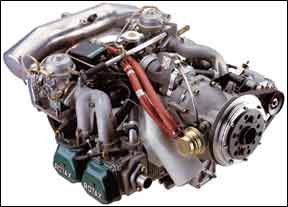
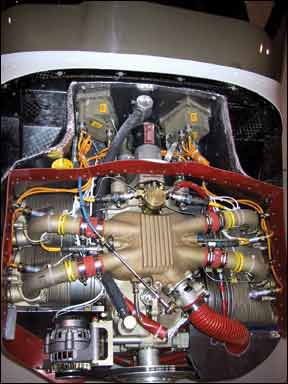
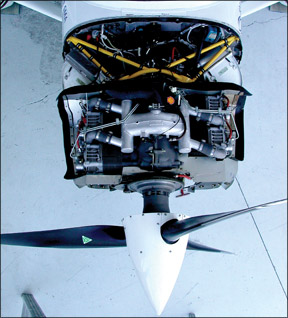
When Diamond introduced the two-seat Katana to North America in 1995, it might as we’ll have been powered by alien technology. The 81-HP Rotax 912F3 was about as familiar to aircraft mechanics as brain surgery is to a plumber. But all that has changed. Rotax has made serious market inroads and with the advent of light sport aircraft, it has become more familiar to maintenance shops and an overhaul infrastructure has sprouted. In North America, there are two sources for full overhauls. Rotech Research in British Columbia owns the North American territory and in Sebring, Florida, Lockwood Aviation Supply is a Rotech dealer for overhauls.

Read More »

Owner Survey: Factory Engines

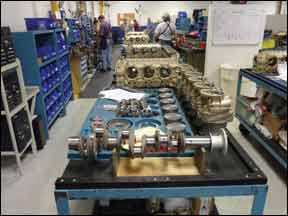
With the two engine factories fighting field overhaul shops for a piece of an ever-shrinking engine pie, it’s no surprise that the factories are pushing their rebuilt and overhauled engines. They find enough buyers for these services such that rebuild work now constitutes a significant revenue stream for both Lycoming and Continental. Anyone shopping for an overhaul usually gives the factory options at least a cursory look. So how are they doing? To find out, we asked our readers to tell us about their experiences with both Lycoming and Continental factory engines of various kinds.

Read More »

Battery Chargers: VDC in a Walk

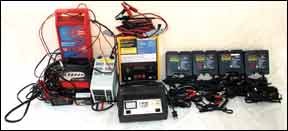
For many years battery chargers were simple beasts; a heavy transformer to drop the line voltage and a rectifier to change AC to DC made up the bulk of components. Some added a relay to turn on the charger when the voltage fell. Also, some chargers served as battery boosters with a temporary hit of 50 amps or so to nudge a discharged battery into a start. These chargers did a lousy job in terms of battery life and fully charging the battery to its potential (pun intended). Both the RV and boating industries were probably the big drivers in the development of sophisticated, computer-chip-controlled, multi-stage chargers, especially for deep cycle batteries.

Read More »

Thielert Report Card: Mixed Experiences

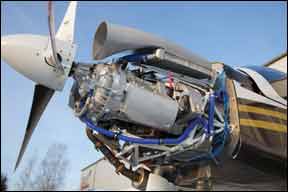
In business, its axiomatic that eight of 10 startups fail within three years. In general aviation, if anyone bothered to track them, the odds are probably a little worse. Nonetheless, when Thielert Aircraft Engines GmbH went belly up in the spring of 2008, it was a surprise to many who had been following the company casually. Diamonds innovative DA42 was selling well, the engines seemed to be performing and with avgas threatened, the trend line appeared to point in only one direction: up. Yet in the summer of 2011, the company remains under the bankruptcy protection of German law. But it also continues to operate, delivering both new engines and parts, albeit at high prices.

Read More »

Gear of the Year: iPad Apps Rule

That not-so-faint hissing sound you hear is us reacting at the slightest suggestion that we are Mac fanboys. We are, if anything, washed-in-the-blood cynics when it comes to the great bloated gust of hype that surrounds everything to do with Apple computers and products. But were also realists and fair to a fault, so when we see practical, meaningful products of any kind, we think the nod is due. So this year, we are naming aviation applications for the iPad as our products of the year. Please just shoot us if we use the phrase “game changer” applied to anything, most of all a computer. We prefer to think of the iPad and the dozens of useful aviations apps it has spawned as a substantial and useful contribution to cockpit information management.

Read More »

100-Octane Cost Data: Sharpening the Pencil

The two leading contenders to replace 100LL with an unleaded equivalent, Swift Enterprises Swift Fuel and General Aviation Modification Inc.s G100UL, both say their fuel will cost more than 100LL. But how much more? We took our own run at it based on what weve been able to glean about these fuels from patent filings and information from the two companies. According to its patent filings and published FAA test data, Swift is a binary blend of mesitylene (also known as trimethylbenzene) and isopentane. Mesitylene is a bit of an exotic, used for specialized solvents and industrial processes. Its a terrific octane enhancer, but so rare in industy that no commodity prices are available. One supplier we contacted sells it for $53 a gallon, a price thats obviously unsustainable for fuel use.

Read More »

TCMs FADEC Revisited: Will It Get Traction?

More than a decade ago, Teledyne Continental bought a fully formed full authority digital engine control system from a startup called Aerosance. It made perfect sense, since at the time, many in the engine business thought the market was overdue for dumping magnetos in favor of electronics, which cars have had since the 1970s. The many turned out to be wrong. TCM got hardly any traction with its FADEC system, even though those who have flown it, installed it and own it say it should have succeeded. Why it did not seems to be due to a combination of bad timing, a hidebound market and conservative OEMs. But with fuel prices rising and 100LL threatened, is there resurgent interest in electronic ignition in general and TCMs PowerLink specifically? It appears so.

Read More »

Avgas Survey: Owners Want 100 Octane

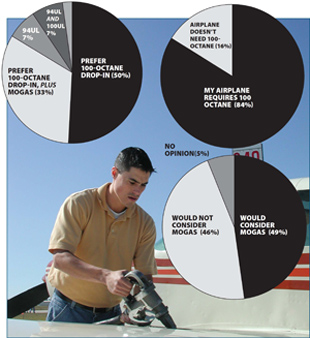
Imagine a world in which youre considering an expensive new luxury car, only to be told by the dealer that fuel to run it may be legislated out of existence in five years, but don’t worry, someone will come up with something. This is exactly the conundrum buyers of new aircraft face and, increasingly, so do owners of legacy airplanes considering upgrades such as paint and avionics. We wondered if lack of confidence in future fuel supplies is putting a drag on the market, so we asked. In a survey published on our sister publication, avweb.com, more than 3100 owners and pilots gave us their opinions on the quest for a replacement for 100LL. Among the findings: One in five owners told us theyre definitely delaying any purchases or upgrades and more than half-53 percent-say theyre either on the fence about purchases or definitely not buying until the fuel situation clarifies.

Read More »

Why Is Two-Fuel DOA? It Works in Europe

As general aviation moves bumpily along toward a replacement fuel for 100LL, there’s a backlash brewing. Why, ask the owners of low-compression, low-output engines, do we have to settle on a single fuel? Why cant there be two unleaded fuels, a less expensive one for some users and a high-octane version for the rest? And why cant one of those fuels be mogas, which enjoyed wide popularity during the 1980s? Two-fuel systems are in place throughout western Europe, although not every airport has dual fueling. Some-usually smaller grass and club fields-have only one fuel available, while others have a 91/96 (the equivalent of 94UL) and conventional 100LL. A handful even have three fuels, since mogas has a tiny presence in Europe.

Read More »

Letters: October 2010

Two articles, plus several letters, in the August issue might be summarized as “electrical vs. mechanical.” The description of the Lycoming IE2 system again raises the question of why most of us are still flying behind antiquated mixture, ignition and engine control systems, when even the most economical compact car sports electronic ignition, fuel injection and variable spark advance.

Read More »

Aircraft Diesels: Still No Slam Dunk

When Continental announced in May that it planned to develop a diesel engine for the light aircraft market, it was boldly going where many have gone before. Unfortunately, the many have had their diesel entries ground to a bloody pulp by a fickle market more interested in speed than economy and unconvinced that diesels supposed longevity is worth the higher purchase price. A historical fact: Depending on how you define commercial success, there has never been a commercially successful diesel engine for aircraft. The Thielert/Centurion line launched in 2005 comes closest, but the company went belly-up and although its building engines again, it remains insolvent

Read More »

Engines of Change: Fuels Driving (Or Not)

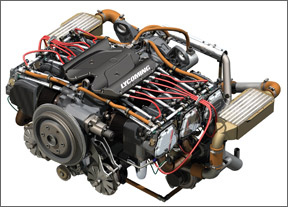
To visit Lycoming and Continental, as we did last month, is to step into a disconnected world that almost qualifies as an alternate reality. And no, were not resurrecting the hackneyed complaint that the engine companies are out of touch with the wants and needs of their customers. Its the other way around. While the world of piston GA drifts along in business-as-usual mode, the engine makers see a looming cliff defined by the extinction of 100LL and no one is tapping the brakes. Panic may be too strong, but if no universal fuel replacement emerges two years from now, it may be too mild.

Read More »