









Register

Engines

Engine Shop Survey: Field Overhauls Win

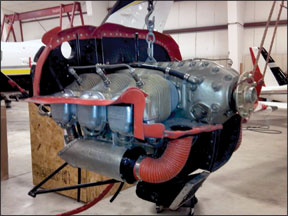
It goes from bad to worse. You sense something isn’t right with your engine, so you ask your shop to have a look. Hopefully it’s a fouled spark plug. Wishful thinking didn’t help because your shop called with news that you hoped not to hear for at least a few years: It’s time for an engine because half of the cylinders have low compression and there are valve problems, too. The shop suggests an overhaul. With dollar signs dancing in your eyeballs, it’s decision time. Do you opt for a field overhaul or buy a factory engine? How about cylinders, hoses, engine mounts and downtime? These are major considerations. The engine shop market is changing, so we conducted an engine shop experience survey on sister site AVweb.com to get a feel for how engine shops and the components they use are performing.

Read More »

Rotax 912 iS Flight: Economy, Premium Price

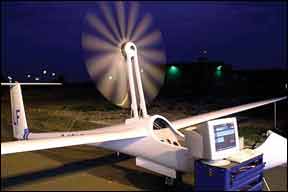
If avionics move forward at the speed of light—well, sound anyway—aircraft engine progress is rather more glacial, but it is progressing as we reported last spring with Rotax’s rollout of the new 912 iS. Although a few months late, the new engine is finally delivering in volume and we flew one in a Flight Design CTLSi, a new version from the leader in LSA sales. To speed the uptake, Rotax intended the 912 iS to be a bolt-up option for manufacturers and it basically is that, although some minor airframe mod requirements mean it’s not exactly an afternoon swap-out project. Just as Rotax predicted, the engine delivers better fuel economy over the 912 ULS used in many LSAs and its operation is somewhat simplified. (Not that the ULS exactly required a flight engineer.) But you’ll pay for the privilege of knocking the fuel burn down by a half a gallon. The asking price of the CTLSi is nearly $13,000 higher than the standard model with the 912 ULS Rotax. Presumably, there will be some payback in lower maintenance costs, but that’ll be for the future to prove.

Read More »

Speed: Buying 180 Knots for $180,000

Speed matters. Ask any pilot. Frustratingly, speed costs money and lots of speed, as the warbird set says, costs cubic money. In the single-engine piston world, we’d each love to blast across the sky over 230 knots in a Cessna TTX, yet for most, the exchequer doesn’t quite stretch to the nearly three-quarters of a million dollars needed to buy one. In this day and aviation market age, a $180,000 purchase price isn’t out of line, especially if it’s split a few ways. Moving through the air at 180 knots is cooking along nicely, so in keeping with our general fascination with symmetrical numbers, we decided to create the 180 for 180 club and then find out what airplanes are qualified to join—those that have a real-life cruise speed of at least 180 knots and a Bluebook value of $180,000 or less. It turns out that a nice selection of airplanes qualify for the club. Naturally, our research lead to a number of caveats—few of the airplanes in the speed and price range were built in this century, and every single one of them is of sophisticated design with complex systems, so a careful pre-buy carried out by a maintenance technician who knows the type of aircraft is essential if you are going to avoid purchasing yourself a financial nightmare.

Read More »

GAMIjectors: Precision Fuel Injection

Back in 1996, when General Aviation Modifications, Inc., (GAMI) of Ada, Oklahoma, announced that it had developed tuned fuel injectors called GAMIjectors, we were skeptical of claims that these gadgets made the engine smoother and more economical through lean of peak EGT (LOP) operation. After all, we’d seen our share of bolt-on engine devices that promised to enhance engine performance, longevity and cut fuel use than we liked to recall. Few if them worked. But GAMI was persistent and it published detailed engine operational data which helped sell the product to a pilot community accustomed to “trust-us, it-works” marketing. GAMIjectors developed a strong following, with more than 1000 selling in the first year. Loyal acolytes praised them to the skies, insisting that they were burning less fuel and their engines were running cooler. A devoted core of skeptics took the opposite view, arguing that owners were going to burn up their engines, cylinder life would be measured in double digits and the engine manufacturers would deny warranty claims on modified engines.

Read More »

Letters: September 2012

When considering the viability of electric-powered aircraft, it’s important to note the huge difference between the internal combustion (IC) engine that burns hydrocarbon fuels and an electric motor that relies on a battery energy source. The ratio of air mass to fuel mass at efficient combustion (stoichiometry) is about 14.6. That is, for every pound of fuel burned, 14.6 pounds of air are consumed. But you don’t have to carry the air since it is available in the atmosphere. Fuel weighs about 6 pounds per gallon, so 16 gallons of fuel weigh about 100 pounds. Over 1400 pounds of air will be consumed in burning that amount of fuel. An electric motor requires that all of the energy be contained in the battery. Since the energy density of lithium batteries is about 26 times less than the energy of gasoline, there is nowhere for electric propulsion to go. It is interesting to note that gasoline has 10 times the energy density of TNT that needs to carry its oxidizer within.

Read More »

Austro’s Aggressive Play: Fast Track Development

If new aircraft manufacturing ventures require a degree of faith to succeed, Austro Engine GmbH, grafted on to the side of the Diamond Aircraft factory in Wiener Neustadt, Austria must be the industrial equivalent of the Vatican. It’s not that Austro has no chance of success—the reverse may very we’ll be true—but that it’s investing heavily for a future that many in the industry can’t yet draw into sharp focus. The uncertain future of avgas—it seems to be all but dead in Europe and approaching life support in the U.S.—should make diesel engines a natural for strong growth. But with aircraft sales in the tank, that growth has failed to materialize. Gasoline powerplants still outsell diesels by a wide margin and some diesel projects—DeltaHawk, for instance, and Thielert’s slow-as-50-weight-oil life extension efforts, have a forever-over-the-horizon quality. The exception is Austro.

Read More »

Austro’s Aggressive Play: Fast Track Development

If new aircraft manufacturing ventures require a degree of faith to succeed, Austro Engine GmbH, grafted on to the side of the Diamond Aircraft factory in Wiener Neustadt, Austria must be the industrial equivalent of the Vatican. It’s not that Austro has no chance of success—the reverse may very we’ll be true—but that it’s investing heavily for a future that many in the industry can’t yet draw into sharp focus. The uncertain future of avgas—it seems to be all but dead in Europe and approaching life support in the U.S.—should make diesel engines a natural for strong growth. But with aircraft sales in the tank, that growth has failed to materialize. Gasoline powerplants still outsell diesels by a wide margin and some diesel projects—DeltaHawk, for instance, and Thielert’s slow-as-50-weight-oil life extension efforts, have a forever-over-the-horizon quality. The exception is Austro.

Read More »

Rotax 912 iS: So Long, Bing Carbs

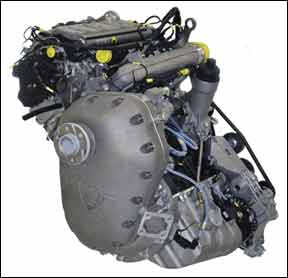
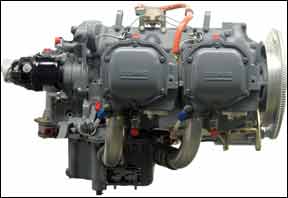
With its 912-series engines, Rotax owns the light sport propulsion market. But even though the 912s are technologically more advanced than the typical Lycoming or Continental engine, buyers have been wondering when Rotax would get around to fuel injection and electronic ignition. In early March, it did just that. At the company’s Gunskirchen, Austria, factory, it rolled out the new 912 iS, an “eco” engine with improved fuel economy, electronic fuel injection and a sophisticated, dual-channel ECU architecture with all the features you’d expect a modern aircraft engine based on automotive technology to have.

Read More »

Cylinder Survey: Top Marks for Lycoming

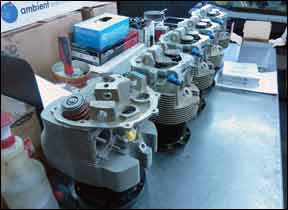
Propped up on the assembly bench, aircraft cylinders—regardless of who made them—look almost alike. But they don’t necessarily perform alike, which is why owners contemplating an engine overhaul wring their hands over which jugs to buy. Since the mid-1990s, the cylinder market has waxed and waned with regard to prices, choice and competition. What’s an owner to do? Ask other owners, that’s what. So we recently did just that, surveying nearly 400 owners of piston-powered aircraft about their experiences with cylinders. We also contacted a few shops to query about their recommendations. Curiously, the cylinder market has, shall we say, evened out since the last time we did this survey. We’re not exactly hearing choruses of Kumbaya here, but the schizophrenic spikes in owner bile toward one company or another seemed to have been displaced by a it’s-not-so-bad resignation toward cylinders that go bad now and then.

Read More »

Bulletproof Engines: Are There Any?

Next to $5 avgas, the cost of routine engine maintenance and overhauls takes the biggest bite out of the aircraft ownership budget. You can always choose not to paint your airplane or live with ratty seats, but if the engine tanks, you’ve got an 1800-pound radio stack you can’t even use because there’s no way to spin the alternator. Our owner reports on various models consistently confirm what we’ve always known: Some owners spend a lot less on aircraft maintenance simply because they own airplanes equipped with engines we have often considered bulletproof. This concept is, itself, a misnomer. Nothing in aviation is truly bulletproof, but it’s fair to say that some engines have a better service history than others and, conversely, some are simply money pits. That’s not to say they don’t perform, but it’ll cost you more and reliability will suffer.

Read More »

AeroFusion Additive: Didn’t Work for Us

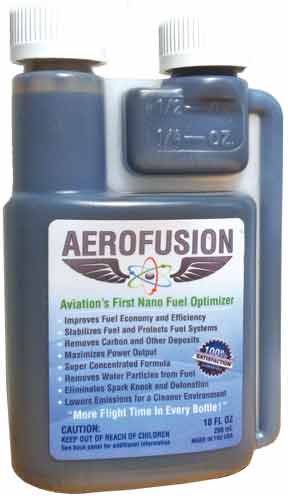
Everyone wants it to be true; let there be a long-lost secret that reverses aging, cures the flu overnight or squeezes 50 more miles out of every tank of gasoline. Trying fuel additives is rather like buying the occasional lottery ticket. You know the odds tower against you, but what if this one is a winner? When we met Keith Lange at Oshkosh last summer, he enthusiastically offered us two bottles of AeroFusion to test and review. He did so without qualification or condition, and we got the feeling he honestly believed in his product. He sells it with a 100-percent money-back guarantee, which not something you’d do if you expected unhappy customers. We said we’d give it a try.

Read More »

AeroFusion Additive: Didn’t Work for Us

Everyone wants it to be true; let there be a long-lost secret that reverses aging, cures the flu overnight or squeezes 50 more miles out of every tank of gasoline. Trying fuel additives is rather like buying the occasional lottery ticket. You know the odds tower against you, but what if this one is a winner? When we met Keith Lange at Oshkosh last summer, he enthusiastically offered us two bottles of AeroFusion to test and review. He did so without qualification or condition, and we got the feeling he honestly believed in his product. He sells it with a 100-percent money-back guarantee, which not something you’d do if you expected unhappy customers. We said we’d give it a try.

Read More »