Register

Engines

Lockheeds UTM: Stepping Up UAS Awareness

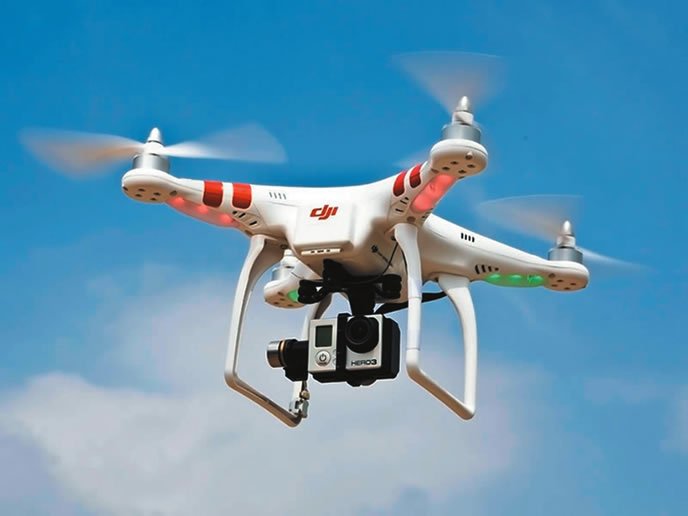
A reader flagged me down in the UAS-dominant Innovations building at AirVenture last month and asked when Aviation Consumer was going to take the lead in protesting the operation of recreational and commercial drones that were on display. This guy was convinced that a midair with that drone over in the corner with the flashing lights and integrated GoPro (pointing to a DJI Phantom quadcopter on display) was going to take him and his Comanche down in the rural Iowa skies. After offering a polite deal with it, dude-these things arent going away, I pointed him to Mike Glasgow, who was manning the Lockheed Martin Flight Services booth strategically colocated in the UAS exhibition area.

Read More »

Gear of the Year: No Slam-Dunk

Our editors choice awards are all about innovation and value. As we look back at the last 12 issues of Aviation Consumer, we find no shortage of credible products, especially in the ADS-B and aircraft consumable markets. But no single product or company stood out for being the most innovative.So to keep our high standards in check, we wont hand out an award for product or company of the year. Instead, we’ll present a combination of a dozen products and companies that we believe deserve equal recognition for being the best of the best.

Read More »

The Big Engine That Didn’t

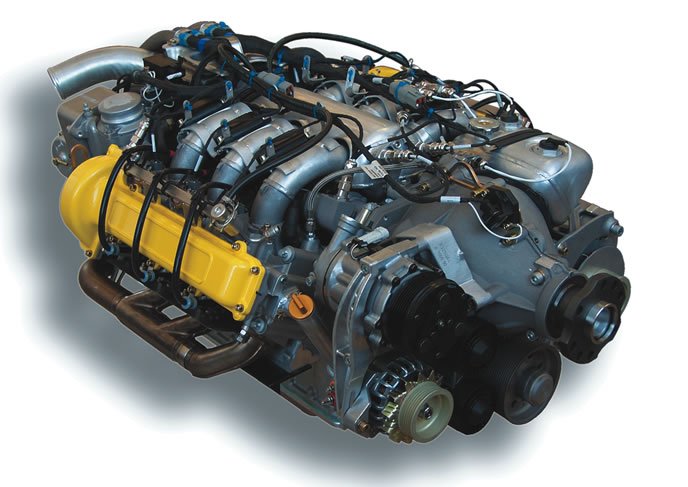
At Lycoming, executives roll their eyes when they hear Lycosaurus used to describe the lack of innovation in aircraft power plants. That suggests that the market hungers for engine innovation, but the reality is something different, as Rotax discovered in 2006.

Read More »

Inside Rotax: Leveraged Technology

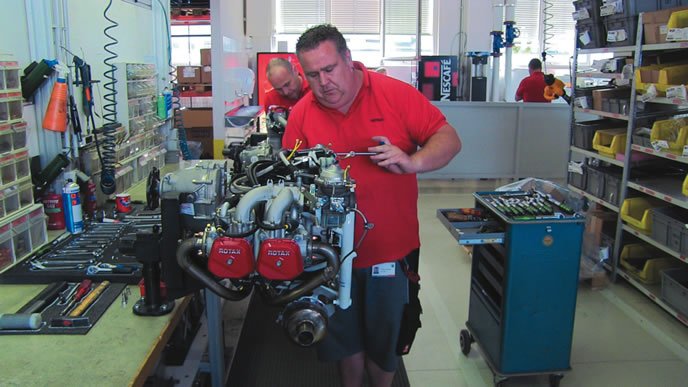
While companies are defined by what they make, what they decide not to make can be just as distinguishing as the product catalog. And that would be the case with Rotax, the Austrian engine giant that all but owns the light-sport engine market. But a decade ago, flush with success, Rotax drew back from an expensive project to take on Lycoming and Continental with its own six-cylinder engine.

Read More »

Lycomings Diesel

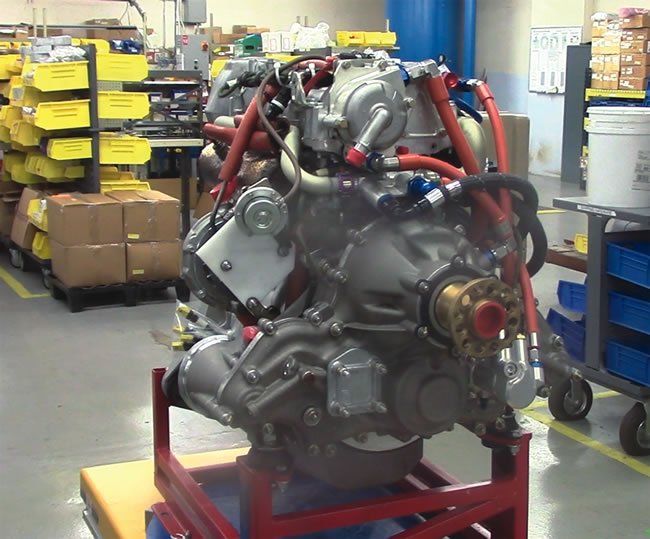
Although Continental gets most of the ink in coverage of aerodiesels, Lycoming has a thumb in the market, too, with the DEL 120. This project seemed to come out of the shadows reluctantly because its emergence is associated with the General Atomics Predator, the most widely used reconnaissance and weaponized drone. The Predator originally had the then-Thielert Centurion diesel, but when Thielert got into financial trouble, General Atomics sought other options.

Read More »

The Secret Life of Pistons

For engine builders, pistons require numerous specialized machine operations and inspections, so theyve generally come into the plant through the shipping dock. So it was surprising when Lycoming announced in 2010 that it was installing its own piston line.

Read More »

Lycoming 2.0: Survival in a Harsh Market

To survive in a market thats a shadow of what it was 40 years ago, Lycoming and Continental have had to reinvent themselves. This is the first of a series explaining changes at the engine companies.

Whens the last time your late-model car broke? Not a check-engine light, but we’ll and truly quit? It probably hasnt happened and one reason for that is that modern automotive quality is relentlessly driven by quality control systems that favor high volume in factories that build the very same engine, or transmission or ignition module in which the only thing that changes in 50,000 units are the serial numbers.

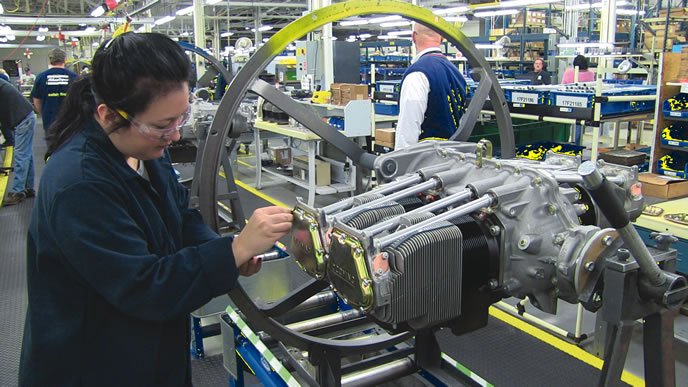
At the opposite end that continuum is Lycoming, a company that holds more than 700 engine type certificates, each with different designations, different model numbers, unique accessories and sometimes discrete core components for the same families of engines. A Toyota process engineer used to making 300,000 Camry engines a year would need a fistful of Valium to survive the shock of touring the assembly line in Williamsport.

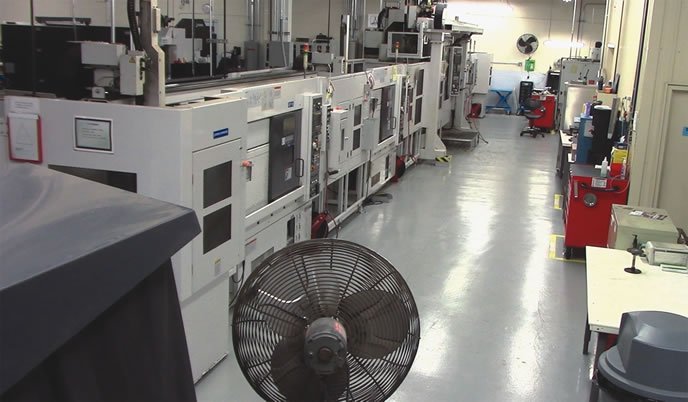
Yet…Lycoming has confronted the seemingly insurmountable challenge of so-called high-mix, low-volume manufacturing with a careful, if modest, program of re-investment in a factory whose origins date to the 19th century. Even as the market it depends on flattens or shrinks, the factory has reduced its physical footprint and become measurably more efficient. Twenty years ago, it was outsourcing raw manufacturing at such a rapid clip that it seemed it would evolve into an assembly business with a specialty in drop shipping parts.

Didnt happen. Today, thanks to rapid advances in flexible, computer numerical machine tools and a determination to adapt high-volume quality control methods to trickle volume, Lycoming is bringing vendor work back inhouse.

Now, Lycoming produces many parts that it used to outsource at prices competitive with vendors and at what it says is potentially higher quality. This could be an MBA case study in turnaround management, but its more accurate to describe it as a survival story in an industry worn down by declining markets and escalating costs. Last fall, I spent nearly three days touring and filming the plant for this report and an accompanying video. Heres what I learned.


Read More »

Continental Thielert Buy: Aiming for Dominance

If Continental Motors ever had any doubts about the aerodiesel market, it erased them in July with the stroke of a pen with the company’s acquisition of the bankrupt assets of Thielert aircraft Engines GmbH. Despite a rocky ending for Thielert culminating in the jailing of its founder, Thielert (and Diamond) put aircraft diesels on the map during the last decade. With its own in-house Jet A TD300 and the addition of Thielert, Continental instantly becomes the market volume leader in aircraft diesel.

Read More »

Letters: August 2013

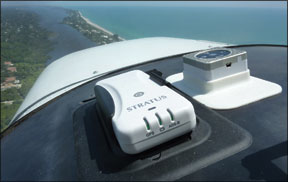
ADS-B For EFIS I enjoyed reading your evaluation of the three most prominent ADS-B EFIS products in the June issue. I received my Stratus II about three days before reading your article. There is one, important negative feature of the Stratus II: It will only show the horizon in the landscape mode. If one has an iPad on a yoke mount, it will most likely be in the vertical position, so the horizon will be 90 degrees off. Otherwise, the iPad has to be taken off the yoke mount and held in the horizontal position, not easily done.

Read More »

Cessna Engine Upgrades: Wide Market Choice

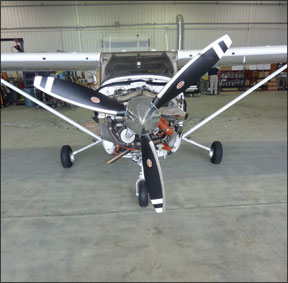
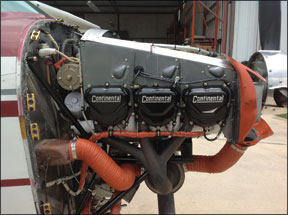
No replacement for displacement. There’s no substitute for horsepower. The clichés have been stuck in your head for a few months. You own a single-engine Cessna and you want more performance, but you don’t want to buy more airplane. You want to know if you can drop more engine in your airframe, how much it will increase performance, what it will cost and whether you’ll get the investment back when you sell the airplane. We’ll walk you through the answers to those questions while providing a sampling of some of the amazing number of engine mods available for single-engine Cessnas. We’ll also discuss how to look at the cost-benefit evaluation of a conversion.

Read More »

First Word: August 2013

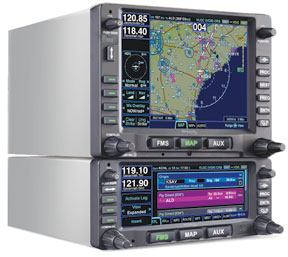
At Aviation Consumer, our job is to sift through marketing hype and conduct impartial evaluations of products and services. Sometimes this includes products that aren’t yet to market, creating uncertainty regarding the product’s future. That was the case nearly a year ago when we covered Avidyne’s IFD540 and IFD440 GPS navigators (September 2012). We recommended the IFD series as an easy way to modernize a stack of aged Garmin GNS navigators. The major attraction is the IFDs plug-and-play design, which slides into a Garmin GNS530W and GNS430W installation.

Read More »

Gear of the Year: Cirrus Aircraft

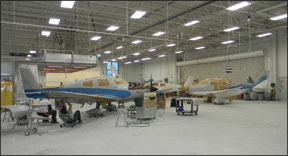
When we visited the Cirrus Aircraft factory in Duluth, Minnesota, last month, we couldn’t help notice the positive vibes that echo throughout the operation. There’s reason for boardroom fist pumps. Production slots for the new G5 SR22 are sold out through October, the SF50 Vision Jet is we’ll on the way toward certification and delivery in 2015, and the competition is struggling to sell half as many aircraft as Cirrus did last year. Cirrus built a total of 253 aircraft last year alone. Unlike other manufacturers, Cirrus doesn’t distribute aircraft to a dealer network, so production is based on customer orders.

Read More »