










Industry News

Speed: Buying 180 Knots for $180,000

Speed matters. Ask any pilot. Frustratingly, speed costs money and lots of speed, as the warbird set says, costs cubic money. In the single-engine piston world, we’d each love to blast across the sky over 230 knots in a Cessna TTX, yet for most, the exchequer doesn’t quite stretch to the nearly three-quarters of a million dollars needed to buy one. In this day and aviation market age, a $180,000 purchase price isn’t out of line, especially if it’s split a few ways. Moving through the air at 180 knots is cooking along nicely, so in keeping with our general fascination with symmetrical numbers, we decided to create the 180 for 180 club and then find out what airplanes are qualified to join—those that have a real-life cruise speed of at least 180 knots and a Bluebook value of $180,000 or less. It turns out that a nice selection of airplanes qualify for the club. Naturally, our research lead to a number of caveats—few of the airplanes in the speed and price range were built in this century, and every single one of them is of sophisticated design with complex systems, so a careful pre-buy carried out by a maintenance technician who knows the type of aircraft is essential if you are going to avoid purchasing yourself a financial nightmare.

Read More »

First Word: January 2013

The unpleasant concept of a thinking computer taking over when we’re the pilot in command has been wrestled in literature until it’s a cliché, but technology has reached the point where we may have to face it.

Read More »

Letters: January 2012

Rick Durden’s advice to use a pulse oximeter at altitude (November 2012 Aviation Consumer) and to start oxygen early is excellent, but oxygen saturation is only part of the picture. What really counts is your body’s ability to carry oxygen and release it when needed. The carrying capacity is a product of how many red cells you have, and release is increased when you acclimatize to altitude.

Read More »

King Katmai Mod: Safe STOL

With a stall speed of 31 knots, climb rate of more than 1500 FPM and no handling vices, the King Katmai is at home in the bush or on the pavement.

Read More »

First Word: December 2012

I just received an e-mail from an acquaintance outlining the stunningly bad experiences he had with airplane rental at an FBO near his new home. He loves to fly but according to more than one pilot, the only FBO near him is utterly indifferent to its rental fleet and customers. He’s about to take his considerable discretionary recreation money and spend it on something else.

Read More »

FSS Revamp: Web Access, Hazard Alerts

Lockheed Martin Flight Services (LMFS) has created a website for flight planning, filing flight plans and adverse condition alerting. It’s mostly easy to use, we like what we see and are looking forward to planned increased capabilities.

Read More »

Letters: December 2012

I maintain 13 airplanes for a flying club averaging 500 hours monthly. We have transitioned to Tempest plugs, having used Champions for 50 years. The reasons are exactly as you outlined. Center electrode cracking was getting annoyingly significant, but the real straw on the camel’s back was the resistance issue. Both have been completely solved by changing plug brands.

Read More »

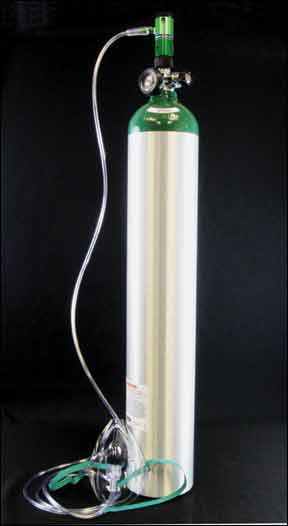
Portable Oxygen: Basic Purchase Advice

For decades, we’ve more or less complied with the FARs requiring oxygen use above certain altitudes on good faith. But the advent of cheap, easy-to-use medical pulse oximeters has revealed a troubling fact: Even at altitudes below the FAR-required values, many of us are oxygenated poorly enough to benefit from supplemental oxygen. Mild hypoxia—say at 10,000 feet—may very we’ll be debilitating enough to cause judgment errors.

Read More »

First Word : November 2012

I continue to be impressed with the ability of LSA designers to meet the strange and arbitrary weight limit for the category and still carry a reasonable amount of fuel. At the same time, I am hearing more and more questions about the crashworthiness of the airplanes and whether the manufacturer of such a flyweight machine can incorporate some degree of protection against a quick, unplanned stop for those who fly in them.

Read More »

Letters: November 2012

I am not clear about the options for interfacing ADS-B portable receivers (September Aviation Consumer) with various software and platforms. Do the receivers output a standardized string, be it by cable, Wi-Fi or Bluetooth, that can be received and utilized by any software and platform as long as the software contains ADS-B receiver support? Or is data output unique to each manufacturer? For example, as far as external GPS receivers are concerned (most of them use Bluetooth), as long as the software supports external GPS (via Bluetooth in this case), one should generally be able to use any GPS receiver, regardless of software publisher or platform.

Read More »

First Word: October 2012

During my brief time as a freight pilot in the mid-1970s, there were almost no turboprops to be seen. In my corner of the world, it was either piston equipment where, loaded, you sagged into the air and clawed your way to about 8000 feet. That put you in midst of whatever weather was along your route. The only turbine option in those days was 20-series Learjets with their addictive rates of acceleration and climb and the pleasure of looking down at most of the weather. About the time I was moving on to other endeavors, the first turboprop conversions of the Beech 18 were showing up on the ramp. The big power in a small package of those turbines fascinated me, but how the shoestring operators I knew could afford them was beyond me.

Read More »

GAMIjectors: Precision Fuel Injection

Back in 1996, when General Aviation Modifications, Inc., (GAMI) of Ada, Oklahoma, announced that it had developed tuned fuel injectors called GAMIjectors, we were skeptical of claims that these gadgets made the engine smoother and more economical through lean of peak EGT (LOP) operation. After all, we’d seen our share of bolt-on engine devices that promised to enhance engine performance, longevity and cut fuel use than we liked to recall. Few if them worked. But GAMI was persistent and it published detailed engine operational data which helped sell the product to a pilot community accustomed to “trust-us, it-works” marketing. GAMIjectors developed a strong following, with more than 1000 selling in the first year. Loyal acolytes praised them to the skies, insisting that they were burning less fuel and their engines were running cooler. A devoted core of skeptics took the opposite view, arguing that owners were going to burn up their engines, cylinder life would be measured in double digits and the engine manufacturers would deny warranty claims on modified engines.

Read More »