










Industry News

Letters: August 2013

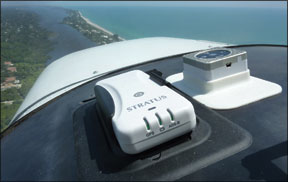
ADS-B For EFIS I enjoyed reading your evaluation of the three most prominent ADS-B EFIS products in the June issue. I received my Stratus II about three days before reading your article. There is one, important negative feature of the Stratus II: It will only show the horizon in the landscape mode. If one has an iPad on a yoke mount, it will most likely be in the vertical position, so the horizon will be 90 degrees off. Otherwise, the iPad has to be taken off the yoke mount and held in the horizontal position, not easily done.

Read More »

First Word: August 2013

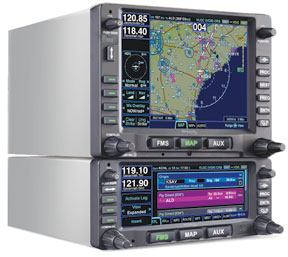
At Aviation Consumer, our job is to sift through marketing hype and conduct impartial evaluations of products and services. Sometimes this includes products that aren’t yet to market, creating uncertainty regarding the product’s future. That was the case nearly a year ago when we covered Avidyne’s IFD540 and IFD440 GPS navigators (September 2012). We recommended the IFD series as an easy way to modernize a stack of aged Garmin GNS navigators. The major attraction is the IFDs plug-and-play design, which slides into a Garmin GNS530W and GNS430W installation.

Read More »

The Engine Overhaul Crapshoot

Approaching the close of the last century, I owned a twin with a good friend. After flying it for some time, a costly AD plus the fact the engines were we’ll past TBO meant it was time to send them out for overhaul. We sent them to a shop I thought was a good one and paid in advance for a one-month turnaround. We got them back six months later. They were junk. The FAA got involved and I found out the FAA has a criminal division. The owner of the overhaul shop spent a year in the federal slam for forging logbook entries on our, and other, engines.

Read More »

Letters: July 2013

Thank you for the article on the Turbonormalized P210 in the May issue. I had my P210 converted by Vitatoe Aviation in early 2012 and now have over 200 hours on the engine. I’m very pleased with the result—it performs as you described in the article: it’s much faster at all altitudes, including cruising at over 200 knots above FL180; climbs to the flight levels in about half the time as before; and most importantly, does all this without cooling problems. Engine management is much simpler than before and fuel consumption has dropped by about 3 GPH because I can reliably run lean of peak.

Read More »

First Word: June 2013

Even with the aviation economy only crawling along, I’m constantly amazed by the technological changes. Cessna has hung a diesel engine on a production airplane, Rotax engines are mainstream, lean of peak operations—largely forgotten since the 1940s—have been rediscovered and are saving owners thousands on fuel and maintenance costs. And those aren’t even new.

Read More »

Start Holding Up Your End, FAA

It’s always interesting talking with the creative folks who develop major aircraft modifications and conversions about going through the process of getting STC certification from the FAA. I don’t know how many times I’ve heard a new STC-holder comment that had he known of the hassles, conflicting instructions, interminable delays and costs he’d face in dealing with the FAA, he’d have never sought an STC.

Read More »

Letters: May 2013

Your article on pulse oximeters in the March issue correctly pointed out that they increase safety, however, there is one situation where they do not and can give a pilot a false sense that all is well. The symptoms of carbon monoxide (CO) poisoning are the same as the symptoms of low blood oxygen—hypoxia—a feeling of well-being.

Read More »

Range Extenders: Going the Distance

Being able to make a trip nonstop is more than just convenience—it can be a safety of flight issue as the risk of an accident is highest during takeoff and landing. The reality is that most flights of four- and six-place airplanes are conducted with only one or two of the seats occupied and at something below gross weight. For many owners, that means that some sort of auxiliary fuel tanks can give their airplanes more range and potentially increase safety.

Read More »

Insurance for Seniors: 70 is the New 65

The insurance market cycle has come a full 180 degrees from where it was in 2003, from very hard to very soft. The number of insurers competing for every GA insurance dollar has never been higher. As a result, rates are historically low. Underwriting guidelines are more relaxed than they have been in years.

Read More »

First Word: March 2013

In the December 2012 issue, I commented on what renters had a right to expect at an FBO when they make the decision to exchange their money for flying time. The feedback I received ranged from recitations of unpleasant experiences at unscrupulous or indifferent FBOs to pilots trying to find the right place to rent. What struck me was that number of the pilots looking for a place to rent weren’t so much trying to find an FBO that had well-maintained airplanes with reasonably clean interiors as they wanted a place where they could not only fly, but spend time with others who shared their passion for the sky. They were in aviation for the fun of it, had a budget to pay for it and socializing with other pilots meant they flew more.

Read More »

Letters: March 2013

Nice article by Larry Anglisano on ADS-B in the January issue (Which Traffic Now?). I agree with Larry that the portable solution for ADS-B in should be given good marks over the installed solutions. One point that I feel is important is that I don’t think the geographic limits of the weather information available is understood by users. A friend was returning from Florida to the D.C. area and when he could not get TAFs and METARs more than 250 NM from his position, he thought there was an equipment problem, not realizing that low-tier stations have a 250 NM look-ahead range. I guess I am spoiled by XM Radio, but I like to look at the METARs and TAFs in my destination area when the weather may be marginal and I’m still we’ll over 250 miles away so that if things start to go south, I can land early or take other appropriate action. As a general rule, 250 NM is not a satisfactory look ahead.

Read More »

Rotax 912 iS Flight: Economy, Premium Price

If avionics move forward at the speed of light—well, sound anyway—aircraft engine progress is rather more glacial, but it is progressing as we reported last spring with Rotax’s rollout of the new 912 iS. Although a few months late, the new engine is finally delivering in volume and we flew one in a Flight Design CTLSi, a new version from the leader in LSA sales. To speed the uptake, Rotax intended the 912 iS to be a bolt-up option for manufacturers and it basically is that, although some minor airframe mod requirements mean it’s not exactly an afternoon swap-out project. Just as Rotax predicted, the engine delivers better fuel economy over the 912 ULS used in many LSAs and its operation is somewhat simplified. (Not that the ULS exactly required a flight engineer.) But you’ll pay for the privilege of knocking the fuel burn down by a half a gallon. The asking price of the CTLSi is nearly $13,000 higher than the standard model with the 912 ULS Rotax. Presumably, there will be some payback in lower maintenance costs, but that’ll be for the future to prove.

Read More »