









Register

Misc

Letters: 03/09

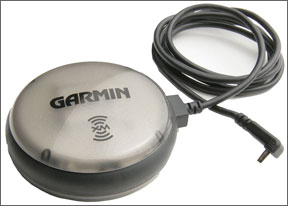
Nice article on the Garmin 330ES. I strongly agree on not jumping to ADS-B technology right now. The FAA is working with an Aviation Rulemaking Committee (ARC) to figure out what to do with the universally opposed ADS-B NPRM from last year. Things could change. If you have a WAAS navigator, the Garmin 330ES is probably the cheapest way to comply with the ADS-B mandate. Add the 330ES and you have “ADS-B out” (which is what is required in the NPRM), plus the 330ES suffices for the transponder that you still have to keep after complying with the NPRM. One thing that keeps getting forgotten with ADS-B is the VFR aircraft or the low-end IFR aircraft. If you don’t have a WAAS navigator-and there is zero reason to spend the money to put one in a VFR aircraft-then you are talking some big bucks to comply with the NPRM with the 330ES. Youll have to get a WAAS navigator and the 330ES, plus installation of a GPS antenna. The 330ES can give you TIS traffic, but it wont give you TIS-B traffic from ADS-B aircraft transmitting their position to you. With the UAT, you can purchase Garmins GDL-90, which includes a WAAS chip and the equipment for sending and receiving ADS-B signals. You still need to keep your transponder unless you buy some kind of display. Nonetheless, complying with the ADS-B-out NPRM would be cheaper with the UAT for the VFR or low-end IFR aircraft, since you don’t have to buy the WAAS navigator.

Read More »

Cataract Options: LASIK Plus Intraocular

As the pilot population ages, one medical condition afflicts everyone and a second afflicts many. Presbyopia-the inability of the eye to accommodate for close-in focus-is a curse of middle age, setting in for most people between the ages of 40 and 50. The second condition-cataracts-afflicts most of the population, but not everyone requires treatment for it. In our October 2008 issue, we covered the leading choices for pilots facing cataract surgery. Generally, the FAA has no problem with cataract surgery, although the procedure must be reported. Longtime reader, eye surgeon and AME Dr. Steven Siepser wrote us recently to note that our October article overlooked some options for pilots facing cataract procedures. “The fourth option for cataract surgery,” he writes, “is the use of an accommodating intraocular lens combined with laser vision correction for unencumbered maximum visual performance.” Laser vision correction isn’t a treatment for cataracts, but it does reshape and change the focusing power of the cornea, usually resulting in improved vision without glasses. As with cataract surgery, the procedure passes FAA muster, requiring a report to the FAA to explain the outcome. Barring any complications, it has no impact on medical issuance. The most common form of laser correction is laser in-situ keratomileusis or LASIK. The surgeon uses a microkeratome to lift a thin flap of corneal tissue, then an excimer laser is used to reshape the underlying corneal tissue. Cataract patients can also be candidates for laser correction, according to Siepser.

Read More »

Letters: 02/09

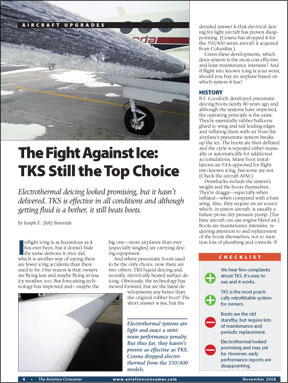
I would like to provide some corrections and clarification to the “Deicing Dissent” letter in the January 2009 issue of the The Aviation Consumer. It is true that the TKS system is not intended to be used as a deice system. However, the correct classification is anti-ice, not ice prevention. The correct usage of any anti-ice system is to activate the protection in anticipation of icing conditions. Surface anti-icing keeps the airframe clear of ice accretion, eliminating the performance loss from pre-activation and inter-cycle ice accretion associated with deice protection systems. This is not to say a TKS system cannot deice the airframe. FAA regulations for known-icing-certificated anti-ice components state that “tests should be conducted that simulate inadvertent icing encounters in which the pilot may not recognize that the airplane is about to enter an icing condition and the anti-ice component may not be activated until actual ice build-up is noticed”. TKS leading-edge panels are required to demonstrate the ability to deice after a two-minute delayed ice accumulation resulting from the most severe icing conditions found in the FAA certification envelope. The modern known-ice certificated TKS ice protection systems now have three fluid flow settings: normal, high and maximum. The maximum setting provides the best deice performance and has a pre-selected two-minute activation mode to eliminate forgetting to turn it off.

Read More »

Letters: 01/09

I just received the November 2008 issue of The Aviation Consumer and read the article on deicing. I have a TKS system on a Mooney 262 (a 231 modified firewall forward to 252 specs). From my experience, don’t trust estimates. The original installation cost was estimated at just over $25,000. By the time we were done, it was over $35,000. This kind of price escalation is nothing new to people with experience in aircraft maintenance and upgrades. More important, I was disappointed in what the article failed to disclose about TKS. Your article clearly pointed out the critical deficiencies of Thermawing and pneumatic boots, but failed to state the TKS is ice prevention and is not deice. While most people and even the manufacturer talk about it as a deice system, it will not deice light rime ice nor will it deice clear ice once it has frozen into the pores.

Read More »

Are Sales DOA? Hardly, But Buyers Rule

You know the world has changed when your financial advisor calls gushing about what a great day the market had. It lost only 300 points on moderate trading and hes certain the bottom is near. (Until, that is, investors find a way to tap yet deeper negative stratas.) In days of yore, stock market fluctuations far more benign than what weve seen since August have tended to spook airplane buyers into slamming their wallets shut. It stands to reason, then, that the current blood bath on Wall Street should have sent buyers burrowing deep underground, right? Not really, according to our recent survey of aircraft brokers we know. No one would describe the market as booming, but our interviews with brokers revealed less softness than we would have expected and, more important, there are some surprisingly good opportunities for buyers seeking deals on late-model used aircraft-prices are reasonable, inventory is high and sellers are adapting to this new reality. The world is less rosy for owners trying to sell run-of-the-mill, average airplanes, but these airplanes can still move, if the seller is willing to get the price right. (Thats another way of saying if youve got an average airframe tending toward the beater side of the spectrum, don’t expect to get a price anywhere near Bluebook value.)

Read More »

Letters: 11/08

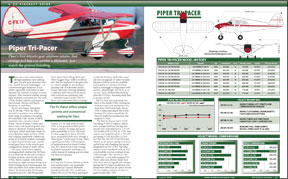
A friend lent me his August issue of Aviation Consumer because he knew Id enjoy reading your article on Tri-Pacers. Actually, I own a 1962 Colt, pretty much stock, although it was recovered for the second time five years ago. The previous recover was in 1973, before I owned it. With fabric still airworthy, my concern, as you pointed out, was what lay beneath it. We actually found very little structural rust and corrosion, so the restoration was a picnic and I enjoy flying it once again. Two things pop out in your article. First is the disparity in the current price range for airworthy Tri-Pacers, which your article stated as between $15,000 and $20,000. Ive been seeing prices between $25,000 and $30,000-plus. A little more research might be in order. Second is the phone number to contact Eleanor Mills, membership officer of the Short Wing Piper Club, who has recently moved to Springfield, Missouri. The number is now 417-883-1457 or e-mail swpn@sbcglobal.net. I heartily recommend the group. Their bimonthly news magazine alone is worth the price of admission.

Read More »

Letters: 10/08

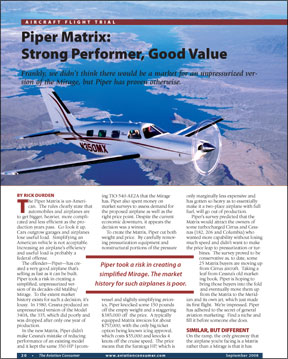
I am very surprised that the Piper Matrix is selling so well. I suppose glitz, fancy new paint and a glass panel supersede the pragmatic need for a very important element: pressurization. The Malibu is relatively slow below 10,000 feet; the wing with its high aspect ratio being designed to shine in the upper teens and flight levels. Piper should have compelled Lycoming to reconfigure its Matrix engine for LOP operations. In my TCM Malibu, I burn 6 GPH less for comparable speed (205 knots) than a Lycoming Mirage. I strongly suspect that Matrix owners, after a year or two of wistfully watching Malibu/Mirages climb above them into on-top blue skies while they bump along in the clouds sucking on the oxygen tube, may come to rue the day they rejected pressurization. Six thousand hours, including 4000 hours in a pressurized Malibu, have told me that I would rather give up flying than go back to a non-pressurized airplane.

Read More »

Letters: 09/08

I appreciated very much your report on the Tri-Pacer. It really took me back to when I did my flight training in my flying clubs Tri-Pacer in 1969 at an hourly rate of $8 wet. I will never forget the thrill of my first flight in the “milkstool,” with its amazing performance, stability and sink rate compared to the 150. It was a nice flying airplane, faster than the 172 and good for short hops with a load of three or four folks. You forgot to mention its signature, airliner-like trim crank which was mounted on the ceiling over the power quadrant…way cool!

Read More »

Forming a Corporation: Works Well For Groups

Prospective aircraft buyers must decide how to structure the ownership of the airplane. For an individual, the options are to put it in the owners name or to form a corporation to own the airplane. with the individual as the sole shareholder. (An L.L.C. is so nearly identical that we’ll use the word corporation to cover both.) If there is to be more than one owner, the aircraft may be owned as a partnership, with each owners name showing on the registration, a limited partnership (so rare in general aviation that we’ll ignore it here) or as an asset of a corporation with the owners being shareholders. The quick and dirty advice for which is best is simple: For an individual, a corporation does not provide any advantage unless the owner/pilot is doing significant charitable flying (medical mercy, environmental, etc.) and wants to use the available tax deduction for renting the airplane to him or herself. For group ownership, a corporation provides benefits that are worth exploring if the owners are willing to do the paperwork, reporting and file the required tax returns.

Read More »

Letters: 08/08

Just picked up the June issue of The Aviation Consumer and saw that you have a write up on the Aspen. I took delivery of my airplane (BE35) with its new avionics stack on May 12. Aspen was 12 days late in delivery. All up, the bill was about $45,000. I am blown away by the Aspen. There are some things left undone, which we hope will be added in later software revisions. Most important, everything promised is there and it works! Most impressive. In the last month, I have been torturing the Aspen trying to make it foul up, but havent managed to make it do so. It certainly has revitalized the autopilot!

Read More »

Letters: 07/08

Your report on ELTs, PLBs and the SPOT was useful. But I think you didnt give SPOT a fair assessment. Allow me to augment what you printed on the subject. SPOT does not rely on the unit surviving and operating correctly after an accident in order to summon help. I was heavily involved in the search for Steve Fossett and I couldnt figure out why his ELT had not led us to him. From Web research, I soon discovered that ELTs get destroyed, drowned, detach their antenna or battery, or arent working even before the crash. If Steve had a SPOT on board, it would have tracked him to the scene of the accident, with a recorded trace readily available. It would have summoned help instantly if he was physically able to press the button. Even if he couldnt do that, the alarm would have been sounded within the hour of his being overdue.

Read More »

The Hangar Market: Rent, Buy or Build?

Alongside what really happened to Amelia Earhart and whether shock cooling is mythical or not, the third great aviation mystery is this: If every airport has a hangar waiting list, why are there still so many airplanes roasting in tiedowns or buried under snow drifts? Clearly, given the choice, any aircraft owner wants a hangar-its just a better way to do business. But when the list grows short and its time put up or shut up, some owners balk at paying the $200 or $500 or whatever a month for sheltered storage. Its simple supply and demand versus not-so-simple cost versus value. This leads to these obvious questions: Whats the best way to pay for a hangar? Should you just rent one? Should you buy or build one and pay the airport for the leasehold? Or pay for a group hangar and risk hangar rash while someone else worries about maintaining the big metal box?

Read More »