Register

Misc

Trouble atThielert: Will It Kill Diesels?

We sometimes think the entire edifice of new aircraft engine development is like a beachfront house built a little close to the surf. The view is great for awhile, then the tide rises and foundation crumbles. That analogy works for Thielert AG, whose stunning initial success with aerodiesel engines has devolved into insolvency and an investigation into potentially fraudulent financial reporting on the companys fiscal health. The owners of some 600 diesel-powered Diamond aircraft are less worried about the financial niceties than they are this overarching question: Is the engine itself technically and economically viable or is it just too maintenance hungry to survive in the market? And if so, is that what dragged Thielert into this mess? Based on our interviews with owners, sales people and Diamond officials, our conclusion is that this may be unknowable at the moment. As we go to press this month, Diamonds senior management is huddling in Europe with Thielerts new management and insolvency overseers to bring clarity to this situation. It may be weeks before we learn anything useful, if we ever do.


Read More »

Letters: 05/08

I found your article on affordable panel upgrades a realistic and refreshing alternative to the “We Fly The Latest Glass!” articles appearing monthly in the aviation glossies. For unfortunate souls whose budget for goodies has been depleted by the price of avgas, your functional and affordable GPS options for IFR operations make a lot of sense. I fly a light twin with a variant on your Option 1: a panel mount IFR-certified GPS (Apollo GX 50) complemented by a panel-mounted Flight Cheetah 210-a bigger screen cousin of the Garmin 496. With this arrangement, I handle frequent hard IFR with confidence, weather smarts and situational awareness that I couldnt even imagine while earning my instrument rating an avionics generation ago in an aircraft with nothing more than two VORs and an ADF.

Read More »

Letters: 04/08

When I was researching the purchase of an airplane a few years ago, I was immediately drawn to the prospect of an airplane with FADEC. The benefits seem so obvious to anyone who has observed the advances in automotive technology over the past three decades. With the Continental IOF-240B in my Liberty XL2, I achieve truly modern powerplant management. Advantages, some of which you covered in your article, include single-lever power control, automatic mixture and spark timing, perfectly calibrated fuel injection and storage of thousands of hours of data on a memory card, which is then easy to analyze. I picked up my XL2 about 1 1/2 years ago and now have we’ll over 300 hours on the Hobbs. TCM has stood solidly behind the product and Steve Smith of Aerosance has personally visited with me to iron out some early difficulties. TCM has changed the FADEC boxes twice-we are now on the third iteration of the software and I couldnt be happier.

Read More »

Letters: 03/08

Im sure youre familiar with Joseph Juptners nine-volume U.S. Civil Aircraft series. Given all the aircraft that he lovingly writes about, you might wonder why he called the Luscombe the finest and most beautiful light aircraft ever made. He owned one. Paul Berge is my favorite-and certainly the wittiest-person writing about aviation today, or yesterday, or at any time perhaps. But the judge must recuse himself in cases such as this unless he has owned all of the aircraft judged.

Read More »

Aircraft Loan Choices: Specialty Lenders

Lately, good news in the world of general aviation has been scarce, but heres some: The aviation financial markets are so liquid as to have been left intact by the subprime lending crisis that has tanked the housing industry. Further, the aircraft loan business remains competitive enough to offer various loan products at reasonable interest rates. Nonetheless, the savvy buyer can make the loan process more painless by doing some prep work before picking up the phone or surfing the Web for money sources. As with a house purchase, both the buyer and the object of his financial affections must pass certain tests-not the least of which is a competent pre-buy on the airplane, having your financial house in order with the documents to prove it and knowing about any credit surprises before the bank finds them.

Read More »

Letters: 02/08

In his editorial in the January 2008 issue, Paul Bertorelli asks us to look at 100LL “rationally” and then follows with “avgas represents such a tiny slice of the worlds refined fuel supplies that the volume of lead is miniscule.” I suggest that it is therefore irrational for anybody to spend as much as a femtosecond worrying about the environmental effects of the tetraethyl lead from 100LL. So right off the bat, were trying to please irrational people. I further suggest that these same irrational people will not be appeased by a switch from low lead to no lead, because of the man-made global warming implications of using any carbon-based fuel. The miniscule amount of CO2 produced by general aviation piston aircraft is no more a man-made global warming hazard than the lead from 100LL, but weve already conceded that none of the debate is rational in the first place, right?

Read More »

Letters: 12/07

Im a little late responding to the top 10 safety investments article (see July 2007 Aviation Consumer), but I was surprised at the omission of autopilots. How many of all the judgment-type accidents might have been avoided if pilot workload were reduced by an autopilot to let the pilot actually check the weather, be less fatigued, understand the maps or maintain flight in IMC? The most important criteria-which is impossible to determine-is how many accidents have been avoided because of a safety investment. I think autopilots would rank very high on that list, even though the Nall Report will never cite “failure to have or use autopilot” as the cause of an accident.

Read More »

Letters: 10/07

I think your comments about EFIS in the September 2007 issue (First Word, page 2) miss the point. The current EFIS design as replicated across many vendors products provides a consistent human/computer/airplane interface in much the same way that a six pack of steam gauges provided a consistent interface that allowed a pilot to go from one airplane to another without a lot of retraining. Right now, the pilots of light aircraft are in the process of retraining from steam to EFIS, so now we have to know how to fly two rather different systems of displaying the same information. If every vendor had a different representation of the data, then who knows how many systems we would have to learn? When mistakes can lead to safety issues, some degree of standardization is actually a good thing.

Read More »

Letters: 10/07

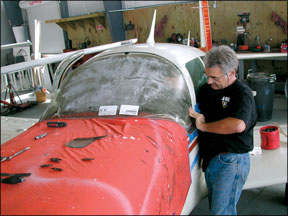
With reference to your article on thicker windshields being quieter in the August 2007 Aviation Consumer, there is a very good reason you could not perceive a reduction in sound after installing a thicker windshield in your Mooney. The human ear cannot perceive a sound level change of less than about 3 dB and [IMGCAP(1)]you were only getting that much reduction in one location. The inability to remember the previous sound level accurately is also a reason, so your measurements are the only way to really tell. By the way, the cockpit noise in a 747 at the ear next to the side window is about 85 dB at cruise.

Read More »

Letters: 09/07

I read with interest your report in Junes issue comparing various ANR headsets. Your conclusions about the new David Clark ANR X11 were spot on. I have been a supporter of David Clark and their products, having been the owner of a pair of H10-13.4s for a number of years. Recently, a buddy and I bought a Nanchang CJ-6A-not the quietest of warbirds to say the least. After a few hours of flying, we found that a passive headset wasnt going to work. Hearing one another over the push-to-talk intercom and calls from the tower were difficult and potentially dangerous due to missed communication. In order to wring out the maximum enjoyment from our ride while staying safe, we knew we had to invest in a good pair of ANR headsets.

Read More »

Oshkosh Diary: A Watershed Year

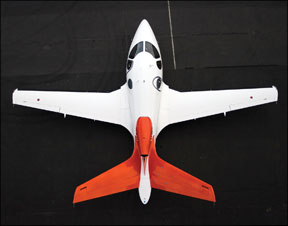
If Oshkosh is to airplane companies what Wall Street is to investors, the mood in the world of general aviation is upbeat bordering on ebullient. At EAA AirVenture 2007 we saw a bumper crop of new product introductions-major and minor-at a well-attended show that may signal a turning point of sorts. Thats especially true for the emerging Light Sport Aircraft category, thanks to both Cessna and Cirrus announcing full-blown LSA programs which send the unmistakable message that they finally take this idea seriously. There were lots of hey-did-ya-see-that moments at AirVenture, but the biggest came from Eclipse, which flew in an intriguing single-engine “concept” personal jet that it claimed to have built in about 200 days in an off-site skunk works in Virginia. We werent entirely surprised by this, given persistent rumors of Eclipses plans before the show. But the fact that Eclipse CEO Vern Raburn actually taxied the thing up to the Eclipse exhibition was a stunner that were sure got the attention of Diamond, Cirrus and Piper, all of whom are toiling away on single-engine jets of their own.

Read More »

Letters: 08/07

I am a long-time user of the Swampy products including the IM30 that you reviewed and the IM20 all-in-one unit that you did not. In the seven years that I have used their products, I have been very satisfied and have had good results from both units-far better than your review showed. Out of curiosity, I did a temperature and CFM test on a 12-volt IM20 that I currently own. I tested the unit in two areas: in the hangar and in a car that had been parked in the sun for several hours. Unfortunately, my airplane is currently in for annual and several mods so I could not test the unit in the airplane. I also measured the air temperature of the cars air-conditioning unit for comparison. The chart below lists the outlet air temperature at high and low fan speeds and the cubic feet per minute of air moved. I used the excellent portable Mannix DCFM-8906 CFM Master II to do the measurements.

Read More »