Training

Back To School: Garmin Avionics Training

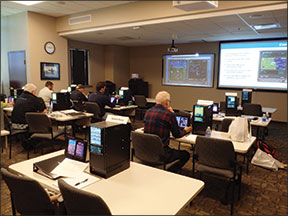
in the Garmin GTN navigator owner survey (March 2013 Aviation Consumer), some respondents dinged the product for having a steep learning curve. Moreover, we heard from owners who took Garmin’s factory training course, commenting that it was too short—and fell short—when it came to mastering some of the subtleties of the system’s feature set.

Read More »

Flight Training Cockpit: Roll Your Own Sim

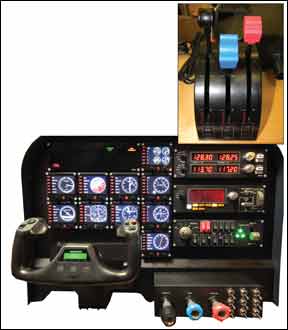
You can retrofit instruments and avionics in your aircraft panel, so why not custom retrofit your own simulator to match the layout? That’s the concept behind the new Flight Training Cockpit Advanced Panel, which is sold by PilotMall.com. The tabletop simulator—which uses Saitek ProFlite electronic instruments, avionics and controls—allows for a custom layout, thanks to a modular and interchangeable design. The simulator’s instrument panel is made of 14-gauge steel and mimics a real panel, which even includes a glare shield.“We’ve been selling the Saitek flight training instruments and avionics panels for years, but customers have recently been asking for an easy way to mount the instruments to make the suite look and function like an actual aircraft panel,” said PilotMall’s Neil Glazer. The Advanced Training Cockpit is appealing to owners who might rearrange the instrument and avionics panel in their own aircraft and want to practice flying the new layout.

Read More »

Recurrent Training: Bang for the Buck

If you are flying a high-performance single, piston twin or turboprop, particularly if you use it for business trips, there is an increasing probability that you will get a notice from your insurer or employer requiring that you take annual recurrent training.

Read More »

iPad Ground School: Plenty of Options

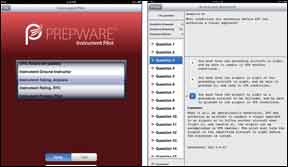
With new iPad apps appearing every day, it was inevitable that ground school, written prep and aviation reference materials would hit the tablet market. And sure enough, there’s plenty out there for someone looking to add a new rating or to just have a convenient reference library. We limited our app search to the instrument rating because it’s a popular and useful rating. We looked at the one app that’s available, Sporty’s, two online instrument written courses, ASA’s Prepware app and two e-Books. Overall, Gleim and King Schools got good marks for their online courses, and while we felt Sporty’s app was good, it needs improvement. We liked ASA’s inexpensive Prepware for final brushup for the written and the two e-Books we reviewed.


Read More »

Redbird’s Bold Move: Sim-Centric GA Training

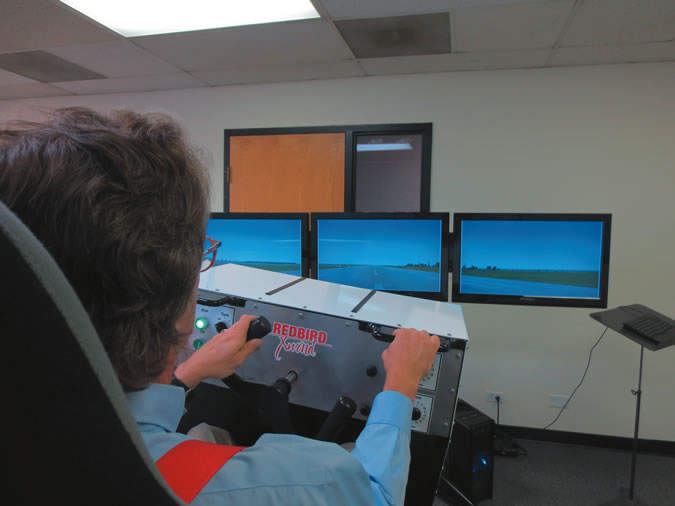
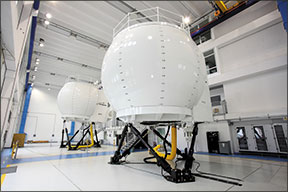
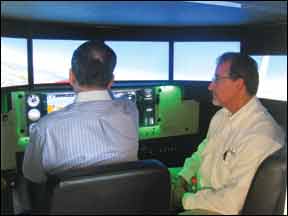
In 2007, Redbird Flight Simulations had a prototype flight simulator that basically consisted of Microsoft Flight Simulator on several screens and a moving cockpit enclosure. We flew it for two minutes before it broke. Things have improved since then. Today the company ships better than one a simulator a day, if you count both their tabletop version and full-motion enclosures. Most are reconfigurable, GA sims, but they also build custom simulators for specific aircraft such as the King Air C90. With over 430 units in the field now (223 full-motion), Redbird is the largest simulator company in the world in terms of devices sold.

Read More »

Redbird’s Bold Move: Sim-Centric GA Training

In 2007, Redbird Flight Simulations had a prototype flight simulator that basically consisted of Microsoft Flight Simulator on several screens and a moving cockpit enclosure. We flew it for two minutes before it broke. Things have improved since then. Today the company ships better than one a simulator a day, if you count both their tabletop version and full-motion enclosures. Most are reconfigurable, GA sims, but they also build custom simulators for specific aircraft such as the King Air C90. With over 430 units in the field now (223 full-motion), Redbird is the largest simulator company in the world in terms of devices sold.

Read More »

G1000 Training: Garmins PC Sim Excels

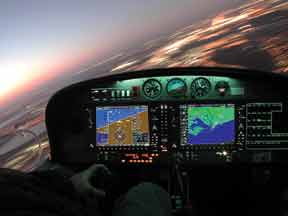
Garmins G1000 electronic flight display has so dominated the market that its spun off its own cottage industry of products meant to teach people how to use it. And believe us, given the G1000s complexity, the need is hardly overstated. Indeed, some flight schools charge several thousand dollars just to check out pilots transitioning into the G1000, and thats after theyve done computer-based orientation. The idea behind the training products is to give the would-be G1000 pilot the lay of the land before actually getting into the airplane. All of them-there are about a half dozen-do that to varying degrees at varying price points, each driven by a particular training doctrine. Depending on how you learn, there’s a product for every purpose.

Read More »

Flight Schools That Work: Top Service for Top Dollar

If youre looking a feel-good piece about how flight training is on the rebound and were on our way back to viable flight schools running side-by-side with every mom-and-pop FBO, youre reading the wrong article. (Actually, youre probably reading the wrong magazine.) Flight training never had a reputation as a cash cow, and the current economic climate hasnt helped that situation. But there have always been, and still are, flight schools that run in the black. In fact, in just the past few months, we came across a couple not just getting by but expanding despite all the dire numbers of the current economy. We decided this was worth a critical look. Did these folks have some secret formula for success, or were they dumping resources into a temporary bubble that will collapse under its own economic impossibility before the year is out?

Read More »

LSAs for Training: It Works for the Wary

Part of the grand promise of Light Sport aircraft and the Sport Pilot license was it would reinvigorate flight training, bringing busloads of new pilot starts attracted to cheaper flying with fewer requirements (like a medical certificate). Soon after the dream of LSAs in the hands of students made some hard landings in reality we started seeing complaints that light sport designs were too lightly built for the rigors of flight training. Now that were several years into the process and have some real numbers to work with, weve decided to give this a closer look.

Read More »

APSs Upset Training: Practical Survival Skills

In a 2007 study going back more than 50 years, a Boeing safety group identified inflight loss of control as the number one source of airline fatalities. The 2008 Nall Report tells a similar story for general aviation. Loss of control inflight, or LOC-I in the argot of those who study aircraft accidents, includes a host of hazards ranging from garden-variety stalls to control surface hardovers and encounters with wake turbulence. LOC- I accidents happen to the spectrum of civilian pilots, from students to airline veterans. The stubbornness of LOC-I as the single largest cause of fatal accidents has a great deal to do with the way that we train. While the airlines have incorporated a number of loss-of-control scenarios in their training, general aviation hasnt really addressed the issue.

Read More »

Better Hypoxia Training: Rob Bests a Chamber

We sometimes think that another word for hypoxia ought to be denial or, at the very least, the phrase “false sense of well-being” should morph to “self-delusion.” In the aviation press, we have beaten the hypoxia topic to a pink pulp, because it lends itself so readily to the pointing of a boney finger at the profoundly stupid things pilots sometimes do. In this regard, hypoxia is the multi-headed beast-we can be dumb about ignoring its dangers, dumb about ignoring training meant to mitigate the risk and really dumb when it actually happens. And how often is that? We don’t really know, because even if an accident is caused by hypoxia, the post-mortem may offer only speculative conclusions. In many GA accidents, the true cause may drift downwind with the smoke from the wreckage simply because light aircraft forensics are so inadequate.

Read More »

Online CFI Renewals: Jepp/AOPA is Top Pick

Heres a surprising statistic: Of the just under 600,000 pilots listed on the FAAs records 90,000-or about one in six-are flight instructors. How many actually actively teach? Probably under 50 percent, but instructor certificates are perishable items and the poor slugs who own them must renew them every 24 months. There are various ways to do this, but the most popular seems to be the flight instructor refresher clinic, or FIRC. For decades, these courses meant a three-day weekend sitting in a stuffy conference room with a bunch of other renewing CFIs in a ritual butt-numbing marathon. The dawn of the internet brought the option of grinding through 16 hours of online training sitting alone in front of a computer. All the drudgery without the camaraderie. Aint technology grand? But are these courses any good? Are they even tolerable? We looked at courses offered by American Flyers, Gleim Publications and a collaboration between Jeppesen and AOPA. Each approaches the online challenge differently, but they can be compared in three key areas: content, organization and price.

Read More »