










Training

Back it Up

One of the bugaboos of operating most seaplanes is that once the engine is running, the seaplane is moving forward. To stop moving, you have to either shut the engine off or hit something-neither of which may be desirable. Maneuvering a seaplane in tight quarters, especially when there is a wind blowing or current flowing, can be challenging at the least and expensive if things get out of hand.

Read More »

MEANWHILE, IN KERRVILLE…

If the all-metal, high-build-hour M20 series is a sunset product, Mooney figures it will find some sales in the twilight. In addition to investing heavily in M10T/J design and production, the company has poured at least $1.4 million into its Kerrville, Texas, plant, where Mooneys have been built since 1946.

Read More »

First Word: May 2015

That was proven at this years National Training Aircraft Symposium held at Embry-Riddle Aeronautical University in Daytona Beach, Florida. The annual event gathered alphabet group leaders, aircraft and avionics manufacturers, and educators from many major aviation colleges and universities. The major focus at this years NTAS event was addressing the challenges of equipping the training fleet for the 2020 ADS-B mandate. But it was also an opportunity for a sales pitch.

Read More »

Multi-Engine Trainers: A Strong Field

Acquiring a multi-engine rating is a rite of passage for any pilot who dreams of flying for a living. There’s no denying the feeling of power you get on first grabbing a fistful of throttles and shoving them up to the stop. There’s also no denying that, unless you pay for a type rating yourself, its the most costly rating you’ll get on a per-hour basis. With the market offering three production twins being regularly used as trainers, we were curious as to how they stacked up. We flew each one, spoke to several instructors at flight schools that did a significant amount of multi-engine instruction and used an out-of-production twin thats still used for training for comparison. After all the Vmc demos and engine-out simulations, we came away of the opinion that all of the airplanes have some weaknesses, but none that are crippling-although someone who learns in a Twin Star will need significant additional training to fly anything other than a jet-and that the Tecnam P2006T has the potential to take over the multi-engine training market.

Read More »

What About the Apache?

Affectionately known as the worlds largest flying sweet potato or Da Pop, because all Apache N-numbers originally ended in Papa, the Apache and Geronimo conversions of it, are still seen on training school flight lines.

Read More »

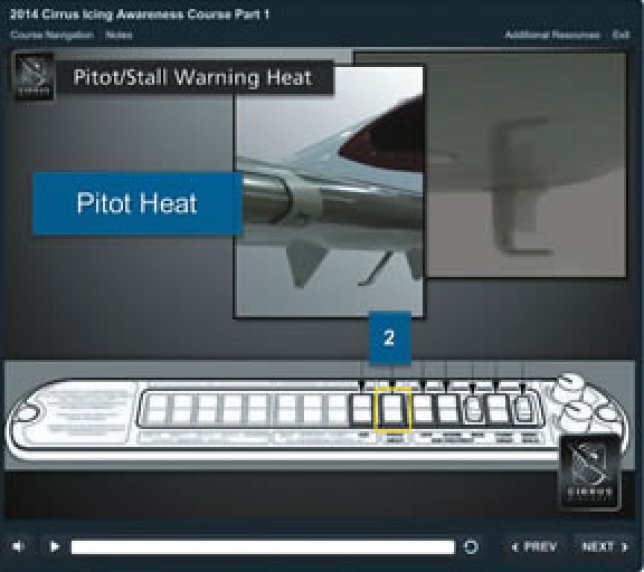
Cirrus: Smart Fiki Icing Training

As we researched icing training for owners of non-FIKI airplanes, we generally found that owners of FIKI airplanes could get training in actual icing conditions without too much trouble. Organized courses are not common-although instructors and organizations sometimes include training in actual icing conditions as a part of the checkout process. Also, owners who took recurrent training in their airplanes sometimes worked with their instructors to pick up some ice while doing so.

Read More »

In-Flight Icing Training: Ground Only for Most

Training to handle in-flight icing is one of aviations worst Catch-22s: Most pilots fly airplanes that arent certified for flight into known icing-therefore its illegal to take dual to get experience in ice in those airplanes-so the first time a pilot gets into icing conditions, he or she is all alone in of the most complex situations in aviation. The FAAs just say no to flight into icing approach is not rational given that, according to an AOPA study of NTSB data, icing accounts for 10 percent of all weather-related accidents and 22 percent of fatal weather-related accidents. With those kind of odds, it would seem that a pilot who flies IFR where there’s a risk of airframe icing would do his or her utmost to get hands-on experience in dealing with ice in the type of airplane she or he normally flies.

Read More »

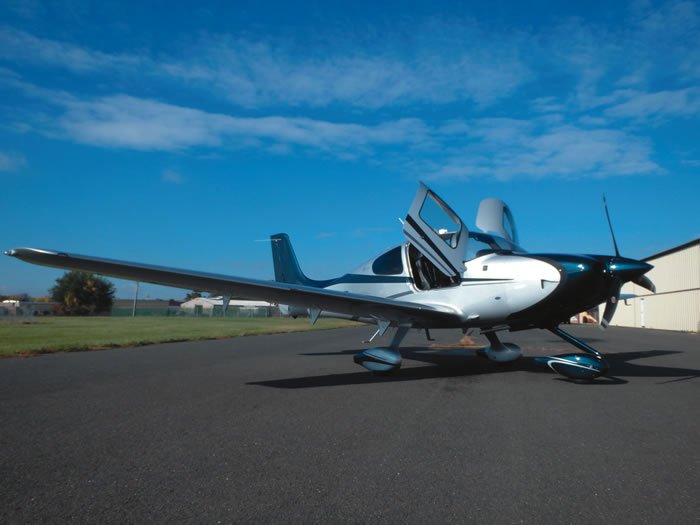
Cirrus SR20: Training, Traveling

According to GAMA sales numbers, the Cirrus SR22 outsold every other piston single in 2013, including the entry-level SR20.Whats interesting is that the SR20 arguably has a broader mission profile than the SR22. Cirrus even markets the SR20 as a dual-role aircraft that can function as a trainer and distance traveler. Perhaps that is why SR20s are more likely to end up on flight school ramps than in personal hangars.

Read More »

Field Certs Need Fixing, Too

Since many aftermarket products are certified under AML STC (thats blanket approval for a large number of aircraft models), the demand for FAA field approvals has lessened over recent years, but the process is complex. Field approvals require sizable amounts of paperwork and coordination on the part of the installer, while the aircraft owner absorbs the cost and downtime. Shops we talked with are frustrated with the process.

Read More »

Redbird Xwind Sim: Conquering Crosswinds

There aren’t any magic bullets for eliminating general aviation accidents—but I’ve just run across a dedicated, reasonably priced simulator training program that has a lot of potential for reducing the most common type of GA accident, runway loss of control (RLOC).

Read More »

Turbine Upgrades: Training Required

Despite an overall slow market, there is a steady growth in owner-flown turboprops and jets. TBM has no shortage of buyers for its hot new 900, Maibu owners are stepping up into JetProps and Meridians, Baron pilots are buying King Airs, Cirrus owners hold delivery slots for Vision SF50 jets, turboprop owners are looking at under $1 million price tags for nicely equipped Citation IIs and writing checks, and everyone seems to be salivating over Eclipses.

Read More »

PilotWorkshops.com: Excellent for Proficiency

Life keeps getting in the way of flying. We know that the best way to keep our skills and judgment level high is to fly frequently and take recurrent training every six months—just like the pros. But with seven-dollar avgas, we certainly aren’t flying nearly as frequently as we would like, and few of us schedule recurrent training more often than required by the FARs.

Read More »