










Cockpit Accessories

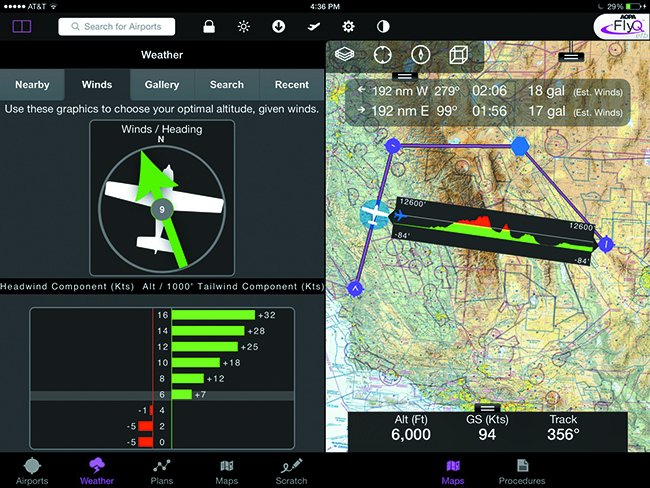
FlyQ EFB 1.4 for iPad: Alive and Improved

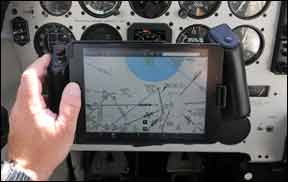
Although there was some pushback when AOPA offered its fee-based tablet navigation app, FlyQ EFB, there was enough to like, including an intuitive and shallow feature set and large onscreen characters. While Seattle Avionics owned all of the rights to the FlyQ EFB, AOPA was criticized for competing in the crowded app market.

Read More »

Cheap Flight Timers: No Frills Functionality

Given today’s avionics and RNAV approaches, do you really need a timer? Truth is, many of the devices in our panels and on our portable gadgets already have a timer built in. Using that timer, however, can be a challenge as the sequence of commands to access it in the Garmin G1000, for instance, might not be something you’re going to always remember or find sufficiently convenient. So, we think a dedicated, standalone timer is still useful. Sure, you could use the timer function in your smartphone, on the Pebble Smart watch or the one in Garmin’s D2 pilot watch, but we think timers are best placed within the instrument scan.

Read More »

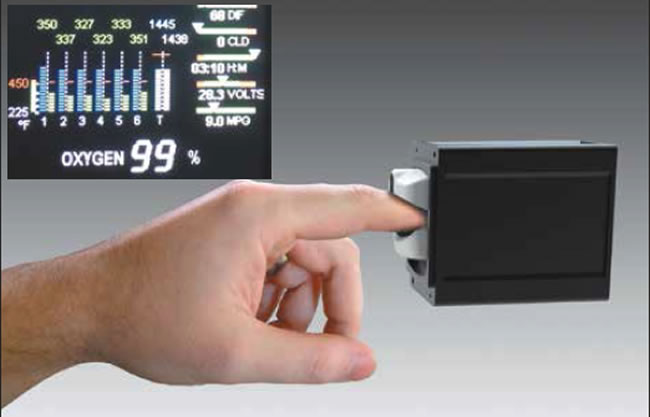
Life Guardian Aero455: Panel-Ox, CO Minder

The Guardian Aero455 panel oximeter might not have been invented if company founder Ash Vij didn’t find himself crossing the Rockies in his Cessna 206 without a pulse oximeter. He knew the status of his oxygen supply, but was pretty interested to know his blood saturation. Vij is convinced that his panel oximeter is the cure-all for misplaced portables.

Read More »

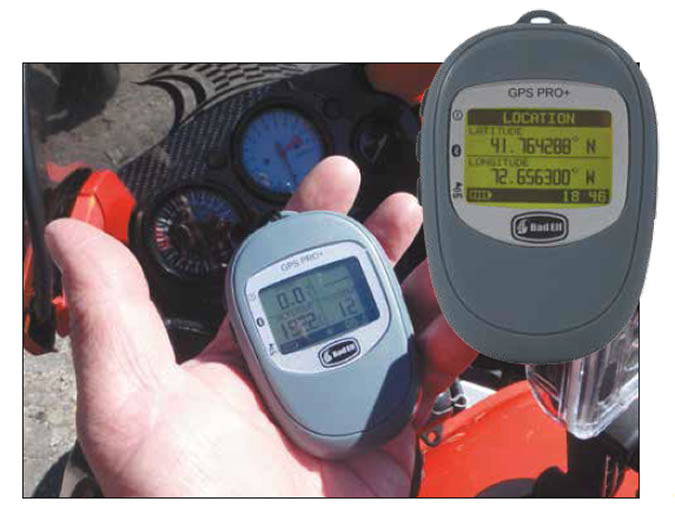
Bad Elf GPS Pro+: Barometer, GLONASS

Navigation apps require reliable GPS position input for georeferencing, which is the ownship data that’s displayed on electronic charts and maps. The built-in GPS on many tablets might not be reliable enough without cell phone tower assist, especially in the cabin at higher altitudes. That’s why a wireless GPS receiver remains an integral component for cockpit tablet use.

Read More »

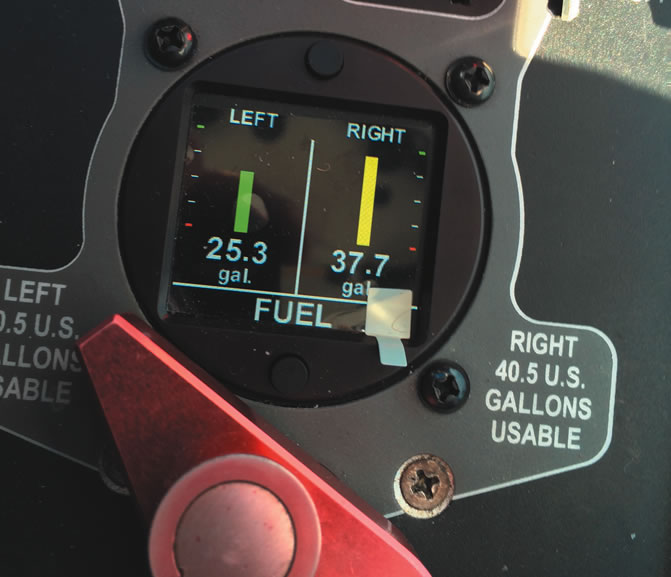
Cirrus Fuel Sender Mod: G1/G2-Challenged

Last winter we reported on the CIES digital fuel sender retrofit for earlier Cirrus models. To recap, the modification is intended to better the accuracy of the original analog float-type fuel quantity senders used in first and second generation SR20 and SR22 aircraft.

Read More »

Letters: November 2014

I have a single-screen Aspen Avionics EFD1000Pro installed in my Piper Arrow since July of 2012 and it is amazing. Unfortunately, I learned that if the system loses pitot input (if it’s clogged, for example), you completely lose most all critical data, even non-pitot-sourced data. This results in a black screen with two red Xs covering the upper and lower halves. This means no attitude, airspeed, altitude, heading, HSI or GPS overlay from an external navigator, like a Garmin GNS530 or 430.

Read More »

BRS Parachute Retrofits: A Cost-Benefit Analysis

Weight kept the whole-airplane parachute idea in the world of fantasy for the first 70 years of powered flight. It took a terrifying ride to earth aboard a broken hang glider and new materials technology to allow Boris Popov to found Ballistic Recovery Systems and develop a viable arrangement that could successfully deploy a parachute and lower an aircraft and its occupants to earth. BRS products (BRS, as “Systems,” is the company; as “System,” is the device) began saving lives in the ultralight world and expended successfully into FAR 23 airplanes with the Cirrus line and a retrofit for the Cessna 150/152. The number of lives saved as a result of BRS deployment is approaching 300, according to BRS company numbers. (Our research shows 48 deployments, of which 36 were “saves,” with 76 lives saved in Cirrus aircraft—most, but not all, of the other saves were in ultralights.)

Read More »

Gear of the Year: Cirrus Aircraft

When we visited the Cirrus Aircraft factory in Duluth, Minnesota, last month, we couldn’t help notice the positive vibes that echo throughout the operation. There’s reason for boardroom fist pumps. Production slots for the new G5 SR22 are sold out through October, the SF50 Vision Jet is we’ll on the way toward certification and delivery in 2015, and the competition is struggling to sell half as many aircraft as Cirrus did last year. Cirrus built a total of 253 aircraft last year alone. Unlike other manufacturers, Cirrus doesn’t distribute aircraft to a dealer network, so production is based on customer orders.

Read More »

Flight Training Cockpit: Roll Your Own Sim

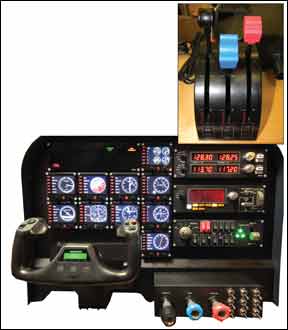
You can retrofit instruments and avionics in your aircraft panel, so why not custom retrofit your own simulator to match the layout? That’s the concept behind the new Flight Training Cockpit Advanced Panel, which is sold by PilotMall.com. The tabletop simulator—which uses Saitek ProFlite electronic instruments, avionics and controls—allows for a custom layout, thanks to a modular and interchangeable design. The simulator’s instrument panel is made of 14-gauge steel and mimics a real panel, which even includes a glare shield.“We’ve been selling the Saitek flight training instruments and avionics panels for years, but customers have recently been asking for an easy way to mount the instruments to make the suite look and function like an actual aircraft panel,” said PilotMall’s Neil Glazer. The Advanced Training Cockpit is appealing to owners who might rearrange the instrument and avionics panel in their own aircraft and want to practice flying the new layout.

Read More »

iPad Mount Options: No Slam Dunk

We thought switching to Apple’s iPad mini for cockpit use would be the cure-all for the shortcomings of the bulkier, full-size iPad. As it turned out, it created a new set of problems. While the smaller mini is less obtrusive, the little sucker just won’t stay put if you plop it in your lap. On a recent trip, ours slipped under the seat, dropped on the floor and became wedged between the seat and the circuit breaker panel in a Pilatus. We thought it was gone for good.

Read More »

Fixing Old Avionics: Think Long Term

Considering that a major avionics upgrade could outprice the aircraft, it makes sense to consider repairing—instead of replacing—your existing equipment. While this might seem like a good short-term solution, you might be throwing good money after bad. The repair versus upgrade decision might depend on your mission and whether the unit will be used for primary or backup. Consider three questions: How much does a like-exchange cost? How much serious IFR do you fly? Does the manufacturer still support the equipment? Be careful of using the excuse that you might sell the aircraft soon—selling with old radios works in the buyer’s favor.

Read More »

ForeFlight Mobile 5.0: Terrain, Runway Advice

It seems that tablet apps are looking more like advanced GPS navigators. That’s certainly the case with ForeFlight’s Mobile release 5.0, with high-end terrain mapping and a slick runway advisory feature that guides you into the traffic pattern. ForeFlight’s new Hazard Advisor is a terrain and obstacle awareness system that highlights hazardous terrain and obstacles, based on the aircraft’s GPS altitude. We tested the terrain feature using position acquired from the Bad Elf Pro remote GPS receiver and noted accurate terrain painting. The obstacle warning is dynamic, meaning terrain and obstacle features seamlessly appear on screen as they become threats, in real time.

Read More »