









Cockpit Accessories

New iPad Hardware: Lots of Potential

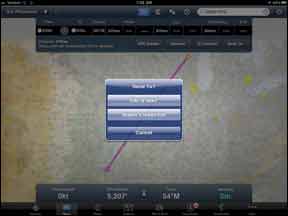
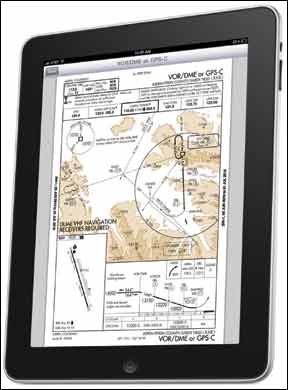
The iPad has taken such a hold of GA that we could easily turn into Apple Pilot Monthly if we weren’t careful. The iPad’s entré was really as a document reader (charts, approach plates, etc.) and preflight briefing tool. But it’s expanded into more of a cockpit resource equal to or surpassing portable avionics. That trend pushes the limits of what we think about an iPad doing, but also relies on expanded hardware beyond the iPad itself. Here’s a look at what’s new on the hardware side. We’ll take a look at what’s new on the app side in a separate article.

Read More »

Matchbox FC-1: Smart and Simple

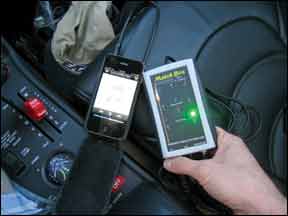
In a marketplace of electronic gadgets that do everything short of sump the gas on preflight, it’s refreshing to find something as simple and task-focused as Matchbox’s Flight Companion. With five buttons and six lights, you don’t need a training video just to turn it on. In fact, the owner’s manual is one page. And the other side is blank. Plug your headset into the FC-1, plug the FC-1 into the ship’s audio system and push the on button to start. That’s enough to get a fuel tank reminder every 30 minutes, both through your headset and with a flashing light on the FC-1 itself.

Read More »

iPad Kneeboards: Waiting For Perfection

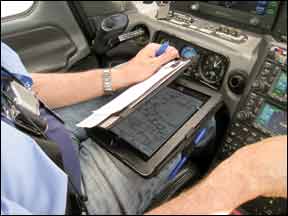
Fly with an iPad lying in your lap for about 15 minutes and you’ll wonder if there is a better way. The thing is basically terrific in the cockpit, but its, how shall we put this, big. Or at least big enough it covers the paper pad youre used to having on your thigh, or big enough in flops off your knees when you want it to stay put.But big also means you might want it out of your lap, and thats the drawback with most of these iPad kneeboards. Sometimes you want a screen thats ready for the glancing, such as when flying an instrument approach, and other times you just want it out of the way where it wont get its screen scratched. To that end, any consumer case that wont slip off your lap could be all you need. (We have a $25 Bear Motion case that does the trick just fine.) A bit of Velcro may be handy if you want it to stay just so on top of your current kneeboard.

Read More »

Gear of the Year: iPad Apps Rule

That not-so-faint hissing sound you hear is us reacting at the slightest suggestion that we are Mac fanboys. We are, if anything, washed-in-the-blood cynics when it comes to the great bloated gust of hype that surrounds everything to do with Apple computers and products. But were also realists and fair to a fault, so when we see practical, meaningful products of any kind, we think the nod is due. So this year, we are naming aviation applications for the iPad as our products of the year. Please just shoot us if we use the phrase “game changer” applied to anything, most of all a computer. We prefer to think of the iPad and the dozens of useful aviations apps it has spawned as a substantial and useful contribution to cockpit information management.

Read More »

Flight Guide iEFB 3.0: Airport Info to the Max

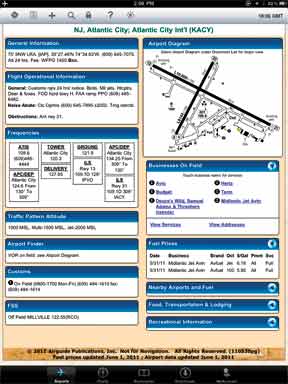
Airguide Publications Flight Guide has long been to airport information what Jeppesen is to approach plates: Much of the same information you could get from government or other sources, all collected in a neat package with superior layout and design. It was inevitable Flight Guide would come out for the iPad. The latest version adds the features required to be a contender in the field, such as georeferenced approach plates and a moving map. It also adds integration with Flight Guides own GPS receiver, which paves the way for ADS-B or XM weather integration into the app.

Read More »

Avidyne TAS600: Still a Top Choice

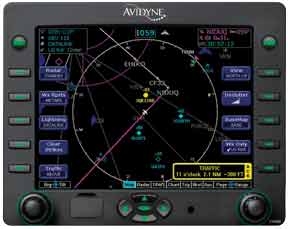
Weve flown and installed enough Avidyne TAS systems to confidently hail them as top values in active traffic alerters. We even proclaimed it the best traffic system in our 2008 Gear of the Year award. It was Ryan that engineered and birthed the twin-antenna 9900-series TCAD back in the 90s. When Avidyne and Ryan merged, the popular 9900BX became the TAS600. With a liberal display potential, its been a brisk seller and popular option for active traffic alerting.The latest evolution in Avidynes TAS logically promises ADS-B functionality, a refreshingly lower price tag and retains a notoriously complex and critical installation process that will make or break performance.

Read More »

Dynon DX15: Compact, Capable

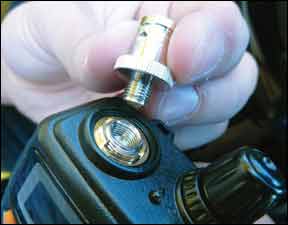
Its more or less a given that carrying a handheld VHF transceiver in the airplane is a good idea, for ground frequency monitoring, pre-start clearance getting and as a back-up comm. The market hardly lacks for choice and now it has one more to pick from. At Sun n Fun, Dynon Avionics announced the DX15 VHF air band transceiver to compete with Icom, Vertex and Sportys at a price point of $156 that we think is competitive with other radios. The DX15 itself is a compact and credible product, in our view. Its the smallest, lightest VHF portable weve tried, but that size comes with compromise. It doesnt have some of the higher end features that the Sportys SP-400 or Icom products do, such as built-in VOR or localizer/CDI capability.

Read More »

Bluetooth Audio Panel PM8000BT Does It All

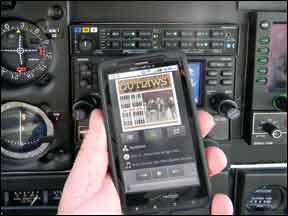
PS Engineering is compulsive when it comes to perfecting and adding new features to otherwise well-engineered aviation audio products. The result is a product line that remains cutting edge and a step above the competition. The newest talent of the line is the PM8000BT.The six-seat-capable PM8000-series audio system earned top-dog status in our audio panel review (Aviation Consumer, August 2009), and that status has held up under long-term testing. We didnt think it could get any better until company founder Marc Scheuer took it to the next level with the logical addition of Bluetooth connectivity-an industry first.

Read More »

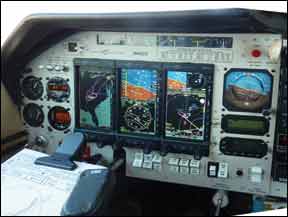
Choosing Retrofit Glass Aspen Takes the Prize

If youre committed to the account-draining task of a major avionics upgrade, your sights are likely set on either of the two most sought-after systems for the aftermarket: Garmins G500 and the Aspen EFD1000-series. We think buyers go into the decision-making process smitten by the G500s bigger size, and for bigger, more valuable airplanes, its easy to label the G500 a logical fit. But our experience is that Aspen wins the install bid more often than Garmin. Why? Its the install complexity that ultimately rules the decision even when a buyers heart is set on the G500 from the get-go. That said, keep in mind that to compare apples to apples, you need two Aspens to equal a single G500.

Read More »

Portable ADS-B WX: Free Data with Limits

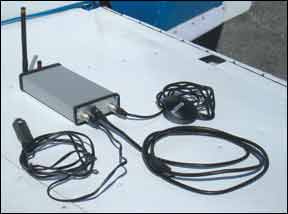
In the formative days of ADS-B, the FAA had a carrot-and-stick plan. Youd have to invest in equipment to comply with the FAAs new traffic system. But youd get free datalink weather in the cockpit as part of the bargain. Unfortunately, that “bargain” requires a $10,000 Universal Access Transceiver (UAT) to transmit and receive your traffic data (called TIS-B) and receive the free weather (FIS-B). Cheaper solutions meet the ADS-B mandate, but without weather. Thats all stick and no carrot. The free weather data is still out there, however, and it was only a matter of time before someone built a receiver to paint that data on a portable display. To be clear: None of these comply with the ADS-B mandate for traffic data. They just provide weather data similar to XMs satellite-delivered weather.

Read More »

Lightspeeds New Zulu: Clearer, Quieter, Comfier

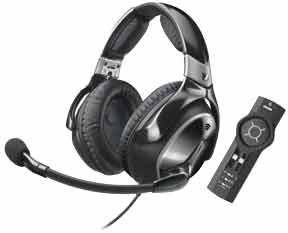
For years, Lightspeeds Zulu was our favorite headset for its winning combination of comfort, quiet and features, like Bluetooth cellphone connectivity. Last year, at Oshkosh AirVenture, Bose leapt into the 21st century with their new A20, improving their ANR and comfort, as we’ll as adding Bluetooth for cell phones and a jack for external audio. We tried an A20 at Airventure, on the long ride home and beyond. Our verdict was that head-to-head, we preferred the Bose, but werent sure it was worth the $200 price delta.

Read More »

Letters: March 2011

I was interested to read your article on in-the-ear headsets in the February 2011 issue as I converted to an ITE system 3 1/2 years ago. I fly a turbonormalized Cirrus SR22. At Sun-n-Fun 2007 I bought both the Quiet Tech Halo and the Clarity Aloft with the intention of testing them to evaluate them against my Bose headsets. Going into my test I felt the Bose would be superior and the Clarity Aloft would beat the Halo, based on appearances.

Read More »