










Cockpit Accessories

Add-on Bluetooth: BluLink Works Flawlessly

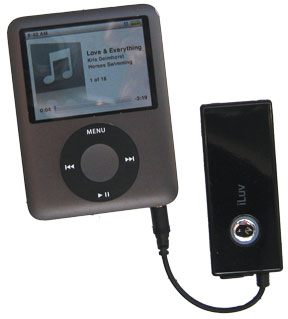
Its refreshing to review a product that makes a modest claim on what it can do and then delivers completely. Thats exactly what happened with our flight tests of the Pilot Communications USA BluLink Bluetooth headset adapter. BluLink adds Bluetooth connectivity to any headset. You simply plug your headset into the BluLink unit and then plug that unit into the intercom. It can be ordered with cables for traditional two-plug intercoms, helicopter plugs or Lemo-powered plugs used in many Bose X headsets. If you fly more than one setup, the same BluLink controller can use any of the cables interchangeably. The cabling for BluLink is the most cumbersome part of the whole setup as it makes your headset cords even longer. This annoyance is about our only beef with the system.

Read More »

Aspen MFD: Cost- and Size-Effective

Once upon a time in a galaxy not far away and not that long ago, there was no such thing as an EFIS. The aviation world was guided by spinning iron gyros on jeweled bearings. Then, overnight it seems, you could practically buy one of these things in the electronic department at Walmart. Okay, so thats an absurd exaggeration, but there are still a bunch of aftermarket EFIS choices out there and Aspen, Garmin, Avidyne and, soon, Bendix/King continue to offer more. Most recent is an expansion of the Aspen line with new approvals for the EFD500 and EFD1000 in the multifunction role. As weve reported previously, Aspen has essentially invented its own niche market by engineering a compact, easy-to-install PFD that fits electronic gyros into the space normally occupied by the AI and DG/HSI. Even in an anemic market, Aspen has enjoyed brisk sales, evidently because the installation does less violence to the basic panel and because the price is right.

Read More »

Aerous ITE Headset: Audiophile Performance

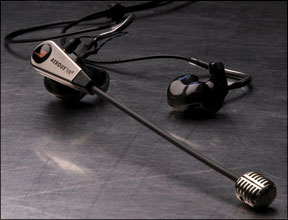
Ever wonder where can you could get a lightweight in-the-ear headset made with the utmost attention to fidelity, designed for serious audiophiles who happen to be pilots? Someone, it turns out, has actually thought of this. In 1995, Jerry Harvey created a high-fidelity in-the-ear earphone and started a company called Ultimate Ears. These appealed to performing musicians who liked their in-ear monitors, but it quickly spread to include more casual users. Harvey left Ultimate Ears in 2007 and started JH Audio to build the Aerous-no-nonsense audiophile earphones with a mic-designed for pilots.

Read More »

E-Reader for Plates: Kindle DX Gets Close

Getting approach plates to play on portable electronic devices has proven to be a round peg in a square hole. Several companies have tried to crack this nut, but it seems to defy an elegant why-didnt-I-think-of-that solution that resonates with everyone. The latest effort is to adapt Amazons much hyped Kindle e-reader to the task of being a chart library, something it was never designed to do but can actually manage with a reasonable degree of grace. A company called Gold Seal Ventures through its Web outlet www.airbrief.com will launch this product formally at EAA AirVenture in July. They sent us an advance unit for a first look and although were favorably impressed, perfection still eludes. Amazon has made ripples in the publishing world with its Kindle e-reader, a device thats sold as being so-called electronic paper. Kindles are among a class of products that have electrophoretic displays that use minutely charged particles re-arranged on a plastic substrate to produce readable images and text. The process is somewhat like the old Etch-A-Sketch toys we had as kids, but instead of a couple of X-Y knobs, the process is done rapidly by applying selective voltages to the screen to rearrange ink particles into type and rudimentary images.

Read More »

Gear of the Year: Super SportCub

When Thomas Paine was writing about times that try mens souls, he was actually referring to the American Revolution, but thats nothing compared to GA sales figures for the first quarter. No ones jumping out of buildings yet. But then again, hangars don’t have second stories. Okay, so 2009 hasnt been so hot thus far, but like everyone involved in aviation, were optimists and we sense a turnaround in the wind. In any case, pilots and owners are still buying things so its time for our annual review of the best products and services weve seen during the past calendar year. When we reviewed our reviews for the past 12 months, we were surprised to find more new stuff than weve typically seen in a year. Heres our roundup of the most recommended things we tried this year. Were normally cautious about effusing too much about products with no market history, but were making an exception for this one. CubCrafters Super SportCub merits this treatment because in the LSA world, its truly innovative. It has a true ASTM engine-at 180 HP, a big one-and the concept of an uncompromised, hotrod LSA hasnt been offered by anyone else. The trouble with the LSA segment is that one white plastic airplane with high wings looks like any other white plastic airplane with high wings and we see a new one of them every week. The Super SportCub is thus in a league unto itself and deserves notice for that. For more, see www.cubcrafters.com

Read More »

Buying Used Glass: Beware the Pitfalls

Last month we looked at buys on late-model, four-seat singles (“Late-Model Cruisers: Cessna, Cirrus Are Tops,” Aviation Consumer March 2009) and were shocked at how many good deals there were on used aircraft with glass cockpits. How about a 1300-hour 2005 Cessna 172SP with a G1000 and autopilot for $157,000? We found similarly-equipped 2005 and 2004 Diamond DA40s with about 1000 hours on them for $165,000 and $159,000, respectively. Tipping the scales a bit further was a well-kept 2003 Cirrus SR22 with 1251 hours, TKS de-ice, Skywatch, Stormscope, XM-weather, digital charts, TAWS and the latest revision of the PFD software for $210,000. Looking up the food chain to Mooneys, Columbias, Barons and the like, the deals are less dramatic, but they are still huge discounts from the new prices for relatively low-time aircraft. A good example is the 165-hour 2006 Mooney Ovation 2 with a G1000, known ice and most every option for $350,000. With the economy pulling the rug out from more and more people, repossessed aircraft are hitting the market as well. Were even seeing still-new 2007 models that have been wallflowers waiting for an owner with their sticker price sinking lower and lower.

Read More »

Reader Plates: Close, No Cigar

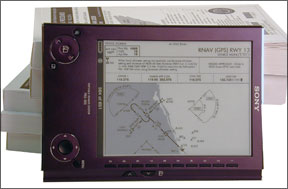
Blame it on Elrey Jeppesen: If he hadnt invented what has become the modern approach plate as a means of saving his own hide, we wouldnt be up to our shoulder harnesses in paper charts today. Approach plates from the FAA alone occupy 24 bound volumes averaging an inch thick for full U.S. coverage. And even if we can display approach plates on panel-mounted avionics, the Luddites among us also carry some paper charts, guarding against the day (or night) that all that expensive equipment soils the bed. And still, the industry toils mightily to devise the perfect electronic solution to allow us to ditch the paper. Thats the easy part. Choosing from among the many hardware and software options for displaying electronic charts and picking the best one is tough and no one has hit the jackpot yet. A recent entry is what we’ll call the inexpensive electronic flight bag or EFB and its called Reader Plates. It uses a Sony electronic paper platform, the idea being to keep costs low. Reader Plates uses Sonys PRS-505 e-book hardware to display the entire collection of more than 13,000 approaches, arrivals, departures and other pages in the FAA/NACO instrument approach procedures database. Reader Plates converts the charts into a downloadable format for either Windows or Macintosh and the user can then transfer it to the e-book reader via USB. Youll need a solid broadband Internet connection to be able to download the data file from Reader Plates, which amounts to 1.3GB. Every 28 days, when charts are updated, users have the option of paying $9.95 for the most current data or skipping the download altogether. Its all or nothing. You cant obtain, say, procedures for a single state or region. Thats by design, since one of the main ideas of doing away with paper plates is the ability to have all the procedures at your fingertips. And, unlike some other EFB solutions, the charts don’t expire or otherwise become unusable after a period of time. If you already own a PRS-505-sorry, Reader Plates isn’t available for other e-readers-youre golden.

Read More »

Top Flightbags: Sporty’s, Brightline and SkyHigh

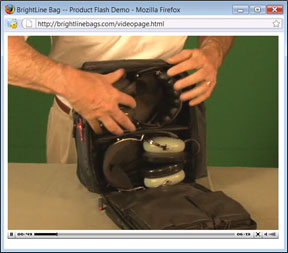
Our first impression of the Brightline bag was that it looked like an escapee from a zipper factory. It had so many pockets it seemed to venture beyond basic organization and cross into obsessive-compulsive disorder. Then we used the bag for a few flights … and ended up buying it. The coup performed by Brightline wasnt simply adding a bunch of pockets-in fact, we don’t think it needs quite so many-it was how it used space. For example, the center compartment was designed primarily with a headset in mind, but headsets come in many sizes. The Brightline solution is just the right size for one bulky headset, such as a Lightspeed 3G upright or two David Clarks on their sides. Pull out one DC headset and you’ll find a complete bag for a GPS also fits in that spot. We even fit the new Garmin 696 and a DC headset in that space. If youre only using one headset, there is empty space in that compartment, so there are pockets on the inside of the compartment to take advantage of it. The whole bag is ripe with clever arrangements of pockets and space. In fact, when we loaded up the bag with a bunch of typical pilot supplies we were surprised by how heavy it was given that its not that big dimensionally. Then we realized it had somehow swallowed as much stuff as we fit in another bag nearly one-third larger in size. A cell-phone pocket and, separate, sunglass pocket are on the top of the bag for easy access. There is a two-part chart area that lets you keep all of your charts in a library area, but keep todays charts, or a thin kneeboard in an outer pocket.

Read More »

Ailing Instruments: Replace Them If You Can

Despite the hoopla that has surrounded modern glass cockpits, round dial steam gauge instruments still represent the majority of the fleet. Plus, theyre still required for backing up glass panels. Eventually, the costly prospect of dealing with failed flight instruments must be addressed. The common question is this: Should the instrument be repaired or simply replaced with a new or newly overhauled unit? The short answer is that it depends on the instrument’s vintage, its complexity and what you expect for its longevity. There are a few factors that should help make the decision: your expectations for aesthetics, the shop’s warranty period and whether the instrument is primary and critical or used as a backup. Consider that primary instruments could be worth your life. Heres a look at some of the tricky details that come into play when instruments need service. Be forewarned that quality repairs wont come cheaply. The old saw of getting what you pay for certainly applies to instrument work. In fact, if an instrument repair or replacement cost seems excessively low, quality is likely being sacrificed somewhere in the process. For once, the FAA can actually be accused of offering a level of leniency when it comes to instrument overhaul-at least according to practice versus manufacturers definition. A shop can legally represent an instrument as overhauled (abbreviated OHC for “overhauled condition”) even if none of the internal components are actually replaced. One shop told us that a simple inspection of the instrument’s internal components might be enough to stamp the instrument as overhauled. But when it comes to satisfying the criteria spelled out in a given instrument’s maintenance and overhaul manual, this practice wont cut the mustard.

Read More »

Reader Headset Survey: Bose and DC Best Bets

One thing from our survey was crystal clear: Most pilots love their current headset. An astounding 90 percent of the over 900 pilots who answered our survey considered their headset to be a good value after using it in the field for some time. Considering the majority of respondents had their headset for more than four years, thats saying something. When asked if, knowing what they know now, would they go out and buy the same headset again, 86 percent said they would. Several of the “no” votes were just because they wanted to upgrade to active noise reduction (ANR), Bluetooth or a cell phone interface. Such rosy-cheeked satisfaction isn’t what we usually see on these surveys. Does it mean you’ll be happy with whatever you buy? Hardly. Performance is largely in the eye of the beholder. If there’s one takeaway from this survey, its that the best headset for you depends on your mission, your wallet and, most importantly, your head.

Read More »

Datalink Weather: WSI Beats XM By a Hair

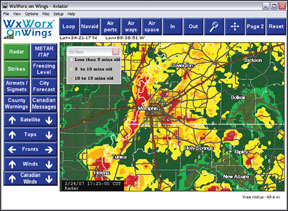
Datalink weather from WSI (Weather Services International) or through XM-based WxWorx, are far more alike than different. Even the pricing is identical for the basic and second-tier service, at $29.99 and $49.99 a month respectively. But close examination reveals a few key differences. Remember that vendors, such as Avidyne or NavAero, decide how to display the data from either service in any manner they choose, and even what data to display. WSI (WSI InFlight) and WxWorx (WxWorx on Wings) both provide their own software that displays all of their broadcast products, so thats what we’ll use for our head-to-head comparison. Ground-based radar is the cash cow of both services. Its high glance-value is the reason why pilots justify the fixed $30 or $50 monthly subscription. There is no clear-cut winner since both vendors broadcast a nearly identical ground-based radar product thatll tell you where you are likely to spill your coffee.

Read More »

Complete O2 Systems: Aeromedix is Top Value

Its no secret serious use of a personal airplane requires climbing far above pattern and practice altitudes where the air is thinner and true airspeeds peak. That, more than anything else, may explain the veritable explosion in complete, state-of-the-art portable oxygen systems and the accessories that go with them. If your airplane doesnt have built-in oxygen, and the time and money to add it isn’t in the cards, youre a prime candidate for a portable system. Total cost for a two-user system? Under $500. But if you usually carry more people or need a few bells and whistles, things start getting complicated: The choices available from some vendors can be almost as dizzying as five hours in the teens without O2. In the January 2008 issue, we examined in detail new accessories such as regulators and cannulas, but we skipped discussing full systems. So in this article, were considering the whole enchilada, so to speak-complete, in the box systems. Since we last examined this topic five years ago, the market has become more competitive and there are some excellent values out there.

Read More »