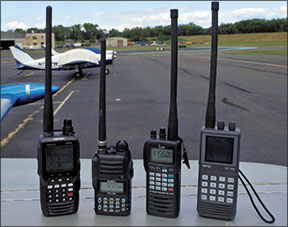
Portable Transceivers: ICOM and Sportys Win
Back in the day, King’s KX99 handheld transceiver ruled the roost. It was a big, heavy and solid performer. Today, portable transceivers are far more advanced, but their purpose hasn’t changed.
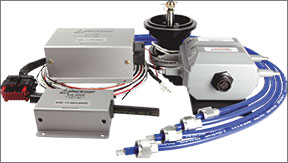
There have been a number of attempts to bring electronic ignition to the piston general aviation world—with varying rates of success. One we have been following is Electroair, a Howell, Michigan, company that developed an electronic ignition system (EIS) originally for homebuilts, and went on to get an STC for production airplanes—four-cylinder engine models first, then six-cylinder machines. It’s in the application process for turbocharged engines and may have that approval soon after this article appears.
In an age of shameless navel gazing and epidemic self-absorption, how do you know if something really happened if you don’t have a clip of it on your YouTube channel? Thus, the profusion of so-called point of view (POV) cameras that can grab video from perches unimaginable a decade ago—including airplane wings and cockpits.
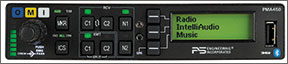
An impressive trait of audio maker PS Engineering is its drive to improve and advance products that would otherwise remain cutting edge for years to come. It seems every time I evaluate one of its feature-packed audio panels, a new model with more capability comes along a year later.
in our August report, we were impressed with Lightspeed Aviation’s new Zulu PFX headset, but had issues with consistent ANR performance. At press time this month, Lightspeed sent us a new headpad that improved its fit and performance, transforming the headset.
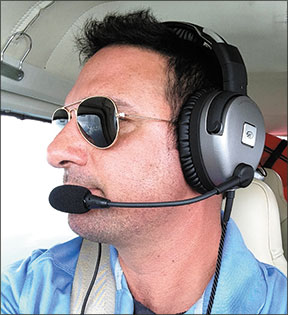
The market for high-end noise-cancelling aviation headsets has become crowded over the last few years. At $1100, high-end aviation headsets are expensive, but in inflation-adjusted dollars, they’re half what they cost when Bose introduced them in 1988.
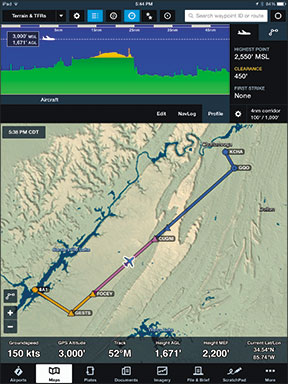
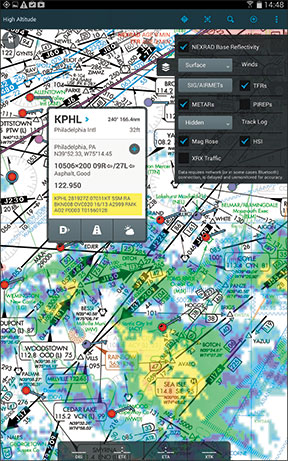
Feed the machine. That’s what app maker ForeFlight needs to do to maintain its 75 percent share (by its own estimation) of the GA cockpit app market. ForeFlight’s popularity creates a tremendous task of adding new features and improvements on a regular basis because the nature of the app market is such that the more features you add, the more users will demand. There’s also stiff competition from other companies, including Hilton Software with its WingX Pro 7 app, and Garmin, with its Pilot app, to name a couple. There’s also a growing Android market. It’s a vicious cycle that we think is spinning out of control, but that’s a different matter.
While number four for takeoff on a 95-degree day, windows and doors open to catch any puff of moving air, every pilot ever minted has wished for air conditioning. With installed units starting at over $4500 and eating up at least 50 pounds of useful load, most owners are willing to sweat a bit and then climb to cooler air.
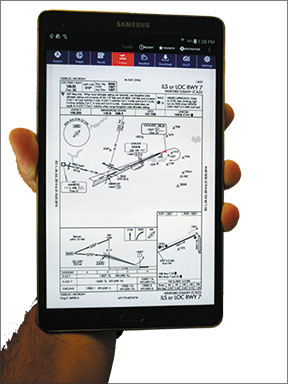
In a flight planning app market that’s been dominated by Apple iOS, it’s easy to overlook apps designed specifically for the Android platform, but we think that’s changing. Tablets from Samsung, Google and others are proving to be just as capable as Apple’s offerings for less money.
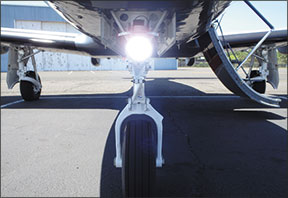
It takes a while for otherwise common technologies to filter down to aircraft applications. And so it went with LED lighting, with welcomed advantages.
It’s no news to anyone that general aviation airplane cabins are loud. After all, the engines have minimal mufflers, the thin aluminum skins vibrate like a drum, the exhaust exits ahead of the cabin, the tail cone is shaped like a loudspeaker aimed at the occupants, the windows are thin, the prop tips are moving at a high percentage of Mach and the manufacturer’s sound insulation is minimal.
Whether you use a tablet for navigating, backing up flight instruments or fetching information on the fly, you know there are compromises. The reflective screen on the iPad doesn’t do we’ll in direct sunlight, full-size models are bulky when mounted on the control yoke and resting the device on a leg or kneeboard creates distracting heads-down time.