









Industry News

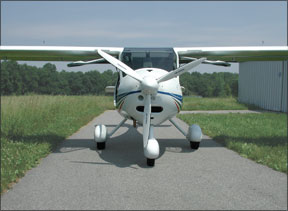
Top Five LSAs: Best Bets are the Refined Designs

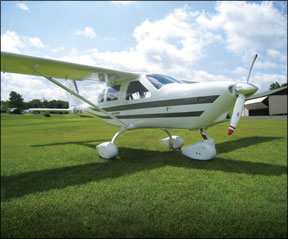
Lets be clear right away as to our criteria here. We only looked at new aircraft, as classic LSAs were covered in our January 2008 issue. We also looked for aircraft that suited the fat part of the bell curve of pilot interest. Amphibious aircraft and open-cockpit breezers were put aside for now. We demanded predictable handling with positive stability. Points were awarded for comfort, crashworthiness, durability for training, ergonomics, baggage capacity, maintenance and our assessment of the company behind the aircraft. While your perfect bird might not be on this list, wed wager that 80 percent of the folks searching for a new LSA would find one of these five aircraft the right LSA for them.

Read More »

OSH Diary: The Year of the Engine

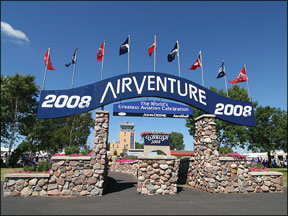
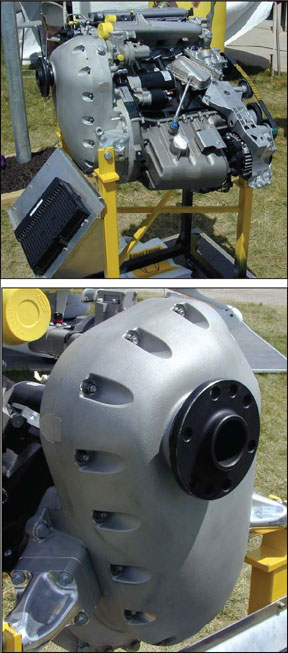
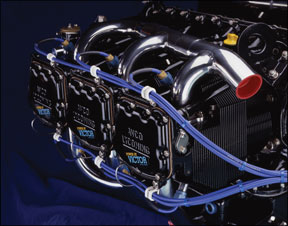
Although we didnt expect to see it, that great summer sweat-fest that is EAA AirVenture yielded some powerplant developments that were both eye catching and encouraging. (And neither did the sweat materialize; Oshkosh was unseasonably cool and dry for the entire week-at least by our standards.) We saw three significant developments that are worthy of note: Lycoming came out of the ground with not just a new engine, but an entire suite of new developments that represents a fundamental sea change for a company that has been technologically somnolent for at least a decade. Diamond says its serious about its Austro engine project and it meant to show it with a production mock-up of the new AE 300, which its driving forward to certify in Europe before the end of the year. Austro is essentially looking to become the next Thielert-but without the financial implosion-and its doing so at a breakneck clip. We got our first detailed look at the engine.

Read More »

Letters: 09/08

I appreciated very much your report on the Tri-Pacer. It really took me back to when I did my flight training in my flying clubs Tri-Pacer in 1969 at an hourly rate of $8 wet. I will never forget the thrill of my first flight in the “milkstool,” with its amazing performance, stability and sink rate compared to the 150. It was a nice flying airplane, faster than the 172 and good for short hops with a load of three or four folks. You forgot to mention its signature, airliner-like trim crank which was mounted on the ceiling over the power quadrant…way cool!

Read More »

Forming a Corporation: Works Well For Groups

Prospective aircraft buyers must decide how to structure the ownership of the airplane. For an individual, the options are to put it in the owners name or to form a corporation to own the airplane. with the individual as the sole shareholder. (An L.L.C. is so nearly identical that we’ll use the word corporation to cover both.) If there is to be more than one owner, the aircraft may be owned as a partnership, with each owners name showing on the registration, a limited partnership (so rare in general aviation that we’ll ignore it here) or as an asset of a corporation with the owners being shareholders. The quick and dirty advice for which is best is simple: For an individual, a corporation does not provide any advantage unless the owner/pilot is doing significant charitable flying (medical mercy, environmental, etc.) and wants to use the available tax deduction for renting the airplane to him or herself. For group ownership, a corporation provides benefits that are worth exploring if the owners are willing to do the paperwork, reporting and file the required tax returns.

Read More »

First Word: 08/08

Sometimes it seems like success in this industry is about finding the niche market within the niche market. Or perhaps its about creating niche markets where they didnt even exist. Heres one Im coming to believe exists, but I don’t see anyone aggressively hunting: The LSA for serious transportation. The idea practically runs afoul of the whole point of light sport, which is primarily recreational flying, but this idea makes sense down in the trenches. Im seeing it with my local flight club that owns a 30-year-old Cessna 172 thats in need of some significant refurbishment. Putting a pencil to the numbers, we realized we could dump a bunch of bucks in the Cessna, buy a late-model steam-gauge Cessna to replace it, or buy a new LSA. We looked hard at what the plane was used for and found it rarely had more than two people aboard and was used for training, local breakfast flights, and short-haul visits for family or business.

Read More »

Letters: 08/08

Just picked up the June issue of The Aviation Consumer and saw that you have a write up on the Aspen. I took delivery of my airplane (BE35) with its new avionics stack on May 12. Aspen was 12 days late in delivery. All up, the bill was about $45,000. I am blown away by the Aspen. There are some things left undone, which we hope will be added in later software revisions. Most important, everything promised is there and it works! Most impressive. In the last month, I have been torturing the Aspen trying to make it foul up, but havent managed to make it do so. It certainly has revitalized the autopilot!

Read More »

First Word: 07/08

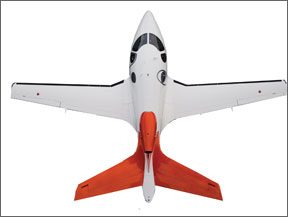
Like most aircraft manufacturers trying to build a community of customers, Eclipse Aviation sponsored an open house/homecoming event for Eclipse owners in May. The company used the event-cleverly called E-rrival-as a backdrop to announce that its officially taking orders for the Eclipse 400 single-engine concept jet that made for some interesting buzz at Oshkosh in 2007. At the same time, Eclipse CEO Vern Raburn wrote position holders still awaiting their Eclipse 500 twinjets that the company was again raising the price of the airplane. And the escalation was hardly nickels and dimes. Raburn told buyers-in-waiting that the 500s new price would be $2.15 million, up a whopping $450,000 or 25 percent over the last quoted price. Hard to believe that when this airplane was announced, it carried a price tag of $837,000-less than the cost of a Piper Mirage at the time. Of course, everyone knows how the game is played. Prospective owners buy early positions, help fund the development of the airplane and even if they don’t accept it in so many words, they assume substantial risk. Buyers also know-or at least should know-that come-on prices will escalate. The risk is how much.

Read More »

Boutique Engines: Ego or Performance?

There is no shortage of aircraft engine overhaul purveyors out there appealing to a number of aircraft owners who are interested in engines with something special-something that says, “My engine is better than the run-of-the-mill overhaul.” Extras may mean outside flash, special parts, alleged attention to detail or tighter measurement tolerances. Plain, factory engines regularly make TBO, and problems en route to TBO are not often those that a custom engine build would address. Those are long times between overhauls and low utilization that cause corrosion, a cracked cylinder from a metal defect, or improper leaning technique leading to burned valves. Custom overhauls come with claims for more horsepower, greater reliability, smoothness or all three. In our view, the validity of these claims depends on the integrity of the shop, the size of your pocketbook and the seat-of-your-pants feel.

Read More »

Aftermarket AC: New, Lighter Options

A few minutes of roasting in the summer sun on a hot ramp will leave most any pilot wishing for air conditioning. Unfortunately, three problems stand in the way: weight, power and cost. Light aircraft AC systems have been around for some time, but recent advances in technology are making the project more reasonable. You can add AC to almost any aircraft you want via several STCs or by field approval. Expect to lose between 40 and 90 pounds of useful load and send the aircraft to the shop for north of 100 hours. But it will give a new meaning to being cool on the ramp. The trouble with AC is that compressing the refrigerant takes serious power, either directly from the engine via a driveshaft and clutch or via an electrically-powered compressor. The engine-driven option is usually used for small aircraft. They work passably on the ground at a high idle, but don’t really pack a punch until the aircraft is flying and the engine is turning faster. The compressor must fit somewhere under the cowl but you don’t need a high-output alternator.

Read More »

The Hangar Market: Rent, Buy or Build?

Alongside what really happened to Amelia Earhart and whether shock cooling is mythical or not, the third great aviation mystery is this: If every airport has a hangar waiting list, why are there still so many airplanes roasting in tiedowns or buried under snow drifts? Clearly, given the choice, any aircraft owner wants a hangar-its just a better way to do business. But when the list grows short and its time put up or shut up, some owners balk at paying the $200 or $500 or whatever a month for sheltered storage. Its simple supply and demand versus not-so-simple cost versus value. This leads to these obvious questions: Whats the best way to pay for a hangar? Should you just rent one? Should you buy or build one and pay the airport for the leasehold? Or pay for a group hangar and risk hangar rash while someone else worries about maintaining the big metal box?

Read More »

Letters: 07/08

Your report on ELTs, PLBs and the SPOT was useful. But I think you didnt give SPOT a fair assessment. Allow me to augment what you printed on the subject. SPOT does not rely on the unit surviving and operating correctly after an accident in order to summon help. I was heavily involved in the search for Steve Fossett and I couldnt figure out why his ELT had not led us to him. From Web research, I soon discovered that ELTs get destroyed, drowned, detach their antenna or battery, or arent working even before the crash. If Steve had a SPOT on board, it would have tracked him to the scene of the accident, with a recorded trace readily available. It would have summoned help instantly if he was physically able to press the button. Even if he couldnt do that, the alarm would have been sounded within the hour of his being overdue.

Read More »

Led Lighting Upgrades: Easy, Reliable, Expensive

Few pilots are going to replace all of their older lighting with new LED technology on a whim, simply because of the expense. If it is just a bulb, bulbs are cheap; hardly ever over $20, or even $100 for a strobe bulb. Its when other components start to fail that changing to LEDs becomes an option. Corrosion and simple age ruin bulb fixtures, sockets, connections and power packs on strobes. The flashers on Cessnas are a particular bugaboo. Even then, do you replace just the bad light with an LED unit or do you replace all of them at the same time? Know that with LEDs you cant just change a bulb. LEDs arent bulbs as we know them. Switching to LEDs for an existing light means replacing the entire lighting fixture, hopefully matching what you already have. If thats Whelen, then your chances are pretty good. If not, there may be some jury rigging or paint touch up.

Read More »