Industry News

A Heavenly Wedding: Pilots and Paper

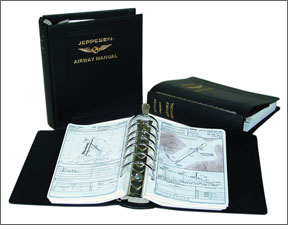
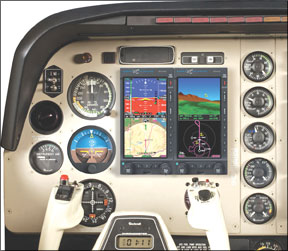
This months review of Garmins new GPSmap 696 once again raises a perennial conundrum. The bones of it are sketched in Joseph Matalons letter on the opposite page. Why, in an age of instant wireless communication where half of us have Blackberries surgically implanted in our skulls, do we persist in being so hopelessly wedded to paper in the cockpit? We say we want electronic charts, but many-probably most of us-haul around big bags full of paper charts, just in case. Charts that require constant revisions, or so we have convinced ourselves to believe. Whats going on here? You could argue that its belt-and-suspenders syndrome. The electronics are great, but what if they go dark? Ill be stuck, right? Viewed through the prism of risk management, this is a silly argument. First of all, the likelihood of one of these systems failing to produce a chart at a moment when it really matters is slim to none. “Really matters” means you absolutely couldnt survive without the paper chart.

Read More »

Are Sales DOA? Hardly, But Buyers Rule

You know the world has changed when your financial advisor calls gushing about what a great day the market had. It lost only 300 points on moderate trading and hes certain the bottom is near. (Until, that is, investors find a way to tap yet deeper negative stratas.) In days of yore, stock market fluctuations far more benign than what weve seen since August have tended to spook airplane buyers into slamming their wallets shut. It stands to reason, then, that the current blood bath on Wall Street should have sent buyers burrowing deep underground, right? Not really, according to our recent survey of aircraft brokers we know. No one would describe the market as booming, but our interviews with brokers revealed less softness than we would have expected and, more important, there are some surprisingly good opportunities for buyers seeking deals on late-model used aircraft-prices are reasonable, inventory is high and sellers are adapting to this new reality. The world is less rosy for owners trying to sell run-of-the-mill, average airplanes, but these airplanes can still move, if the seller is willing to get the price right. (Thats another way of saying if youve got an average airframe tending toward the beater side of the spectrum, don’t expect to get a price anywhere near Bluebook value.)

Read More »

Letters: 12/08

I am a subscriber to Aviation Consumer and ravenously enjoy each issue. I am sure that the Garmin GPSmap696 will receive unmitigated praise, as it probably deserves. I am an owner of a 496 and think it is an excellent product. The 696 seems exponentially better. However, in all the reviews of GPS I have seen, scant attention is paid to the ongoing cost of keeping the databases up to date. The 496 has several different databases-terrain, AOPA data, navigation/Jeppesen and so on. I believe that if a user were to get every update, it would easily cost more than $1000 a year. More alarming is the caveat in the 696 sales literature that if the IFR plates are not kept up to date (every 28 days, I think), they become inaccessible. Putting aside the questionable legality of this marketing approach (no one takes away my printed approach plates when they are outdated), I urge you to explore this issue from a pure cost perspective. Its probably inaccurate to say that the 696 has approach plates-its more truthful to say that it has the ability to display approach plates if one were to incur an ongoing expense of several hundreds of dollars annually.

Read More »

First Word: 11/08

To the sheltered masses, the words “safety” and “skydiving” might not seem to belong in the same sentence, but skydivers are the ultimate self-preservationists. You don’t get to try it again if you get the first jump wrong. (Please spare me the utterly original clever comment involving perfectly good airplanes.) There are a handful of technological aids that help in trimming the risk, such as audible altimeters and a gadget generically known as an automatic deployment device. All it does is deploy your reserve parachute for you if you forget to do it yourself, youre injured or otherwise incapacitated. These devices cost about $1200 and I have always used one in my skydiving, while a friend of mine never has. He says its irrational to spend that much money to mitigate a tiny slice of risk. Hes right. Heres why.

Read More »

Insurance Meltdown, Too? Not Exactly

The depressing drone of bad economic news yielded one little nugget that especially caught the attention of many owners last month: AIG, the insurance giant, was overleveraged and on the ropes. Deemed too big to allow to fail, the federal government engineered a hasty bailout package that has since ballooned in cost. What does this have to do with the AIG policy on your Skyhawk? Or your USAIG policy on your Bonanza? Is the insurance business about to tank along with the stock market? Not exactly, but thats not the same as saying AIGs well-regarded aviation insurance division hasnt been nicked by the credit crisis. It has, but only as a result of a general loss of confidence in certain businesses in general. For a detailed report on this, click on the podcast link at right, which appears on our sister publication, www.avweb.com. In that audio segment-no MP3 player required, by the way-you can hear an explanation from our aviation insurance guru, Jon Doolittle.

Read More »

Finding Affordable Gas: AirNav vs. 100LL.com

Ten years ago, when avgas prices soared to the point of being noticeably painful, fuel costs were still the smallest percentage of total operating costs. In an era of $5-plus avgas, thats less true for owners who operate airplanes burning 8 GPH or more. So now, the question is no longer how to find cheap avgas-there isn’t any-but how to avoid getting your eyes gouged out on a typical fill-up. An unpleasant reality is that avgas prices have become wildly spiky from airport to airport-its not unusual to see a $1.50 or $2 difference between airports in the same region or even across town. Our favorite example is the poster child for high gas prices-Jet Aviation in Teterboro, New Jersey, which was charging a salty $8.68 at press time. Yet 21 miles away, Greenwood Lake Airport was asking $5.36 for a difference of a whopping $3.32. For a modest fill-up of, say, a Cessna 172, that amounts to $116 total. For a big single, its more like a $250 and a total charge of $650. Owners who travel with their airplanes by necessity have to plan around high fuel prices-forget winds and weather; find an airport with affordable fuel. But whats the best way?

Read More »

Pre-Production Airplane Deposits: Must Buyers Risk Them?

Somehow, encoded into the very DNA of many would-be aircraft owners is an utter inability to apply normal standards and cautions when it comes to making money decisions about airplanes. Its undeniable that some airplane people go woozy and weak in the knees when a new aircraft purchase is afoot. Example? One entrepreneur contemplating launching a new jet was confronted by an investor who insisted on writing a six-figure check to be first in line for the new airplane. Never mind that not so much as a cocktail napkin sketch existed of the new airplane-he just wanted to be first in line if the project came to fruition. We cant venture a guess if this is blind faith or unbridled enthusiasm run amuck, but it supports an established trend in the airplane business that lives on to this day: Owners who want a new airplane are often asked to invest in it by writing large deposit checks which, in fact, make them both investors and customers whether they like it or not. The practice is so common that it has become the unquestioned way of doing business. We don’t have a score card on this, but owners have lost bundles of money on position-holder deals and Eclipse Aviations troubles with its EA500 jet have left an unknown number of position holders waiting for refunds. Given this development, does it make sense to continue this practice? Isnt there a better way? What should owners do to protect themselves against companies that don’t deliver on the deposits?

Read More »

Logbook Software: AircraftLogs.com Rocks

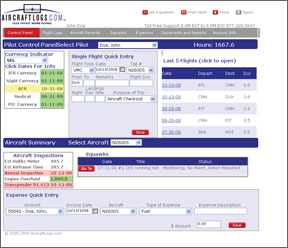
Task one in looking at logbook software is figuring out what you want to log and why. If youre not detail-oriented and only care about when your last BFR or IPC was, then anything more than a Post-It on the corner of your computer monitor is probably a waste. If you need to track duty time, watch the numbers for pilots and aircraft in a school or business, track time for tax reasons or are in the grind of pursuing higher ratings, logbook software can be a godsend. We reviewed over a dozen systems to keep the numbers in the right columns. Here are our top picks to meet the variety of needs out there. This website is geared mostly to corporate users and flight departments, but has a lot of utility for private aircraft owners as well. Its strength is in tracking aircraft time as it meets all the FAA requirements for electronic logbooks for aircraft-including electronic signatures. Why is this useful? First, if your shop is willing, they can access any of your aircraft records at a glance and cut down their admin time by signing you off electronically. Second, part of the service is scanning in all your aircraft documents and backing them up (you can also upload more on your own at any time). Also, ADs and Service Bulletins are automatically retrieved by the system, warnings flags for time-limited parts and inspections pop up automatically … the list goes on.

Read More »

Letters: 11/08

A friend lent me his August issue of Aviation Consumer because he knew Id enjoy reading your article on Tri-Pacers. Actually, I own a 1962 Colt, pretty much stock, although it was recovered for the second time five years ago. The previous recover was in 1973, before I owned it. With fabric still airworthy, my concern, as you pointed out, was what lay beneath it. We actually found very little structural rust and corrosion, so the restoration was a picnic and I enjoy flying it once again. Two things pop out in your article. First is the disparity in the current price range for airworthy Tri-Pacers, which your article stated as between $15,000 and $20,000. Ive been seeing prices between $25,000 and $30,000-plus. A little more research might be in order. Second is the phone number to contact Eleanor Mills, membership officer of the Short Wing Piper Club, who has recently moved to Springfield, Missouri. The number is now 417-883-1457 or e-mail swpn@sbcglobal.net. I heartily recommend the group. Their bimonthly news magazine alone is worth the price of admission.

Read More »

First Word: 10/08

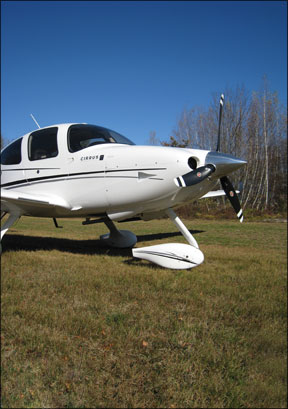
Not that long ago, I was introducing some folks from Cirrus Design to the Maine delicacy known as the lobster roll, having just finished a flight in their new Cirrus SR22 Perspective. We were talking about growth of our industry called general aviation and how niche projects usually work and grand visions almost always crash and burn. Ive flown most iterations of the Cirrus from the vacuum-system SR20 through the SR22 Perspective. An SR20 in 1999 was billed as Lexus quality, but it had the fit and finish of a 1979 Toyota Corolla. Those days are long gone and the Perspective is every bit a Lexus. The thing is: Whos buying these things and will they keep doing so? The SR22 is a capable machine, but starting at $590,900, with another $70K in options, its an exclusive club even within a niche. A clue came from a friend of mine who just flew the Perspective and is likely to buy one-just as soon as he can sell his MU-2. A Mitsubishi MU-2 to a Cirrus is a big step down, especially considering his usual trip is more than 1000 miles. But the savings in fuel, insurance and training make it worth the hit for him.

Read More »

Letters: 10/08

I am very surprised that the Piper Matrix is selling so well. I suppose glitz, fancy new paint and a glass panel supersede the pragmatic need for a very important element: pressurization. The Malibu is relatively slow below 10,000 feet; the wing with its high aspect ratio being designed to shine in the upper teens and flight levels. Piper should have compelled Lycoming to reconfigure its Matrix engine for LOP operations. In my TCM Malibu, I burn 6 GPH less for comparable speed (205 knots) than a Lycoming Mirage. I strongly suspect that Matrix owners, after a year or two of wistfully watching Malibu/Mirages climb above them into on-top blue skies while they bump along in the clouds sucking on the oxygen tube, may come to rue the day they rejected pressurization. Six thousand hours, including 4000 hours in a pressurized Malibu, have told me that I would rather give up flying than go back to a non-pressurized airplane.

Read More »

First Word: 09/08

In the busy run-up to OSH, we routinely get snowed under by pre-show press releases, so this year, we wised up and began covering the show a week before it started. I produced a bucket of podcasts for our sister publication, www.avweb.com and during these interviews, one question came up repeatedly: What are you hearing? Implicit in this query are two others: Is GA about to crump because of high gas prices and the soft economy and will show attendance evaporate as a result? Going into the show I didnt think that would be the case and it wasnt. EAA now reports that attendance was only slightly below the 2007 gate and the number of international attendees actually showed a healthy increase.

Read More »