Register

Accessories

ForeFlight Mobile 5.0: Terrain, Runway Advice

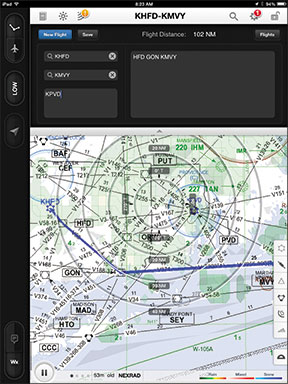
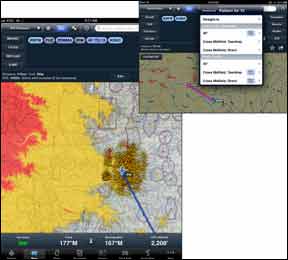
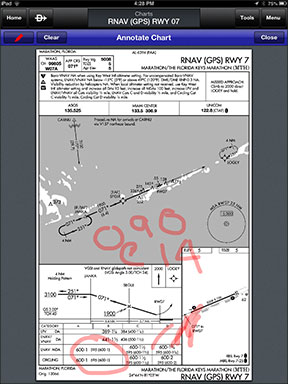
It seems that tablet apps are looking more like advanced GPS navigators. That’s certainly the case with ForeFlight’s Mobile release 5.0, with high-end terrain mapping and a slick runway advisory feature that guides you into the traffic pattern. ForeFlight’s new Hazard Advisor is a terrain and obstacle awareness system that highlights hazardous terrain and obstacles, based on the aircraft’s GPS altitude. We tested the terrain feature using position acquired from the Bad Elf Pro remote GPS receiver and noted accurate terrain painting. The obstacle warning is dynamic, meaning terrain and obstacle features seamlessly appear on screen as they become threats, in real time.

Read More »

Flight Training Cockpit: Roll Your Own Sim

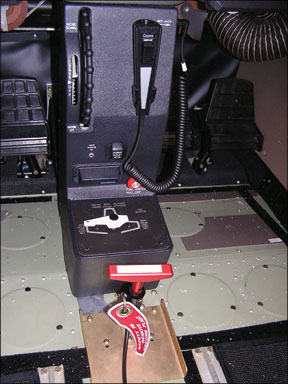
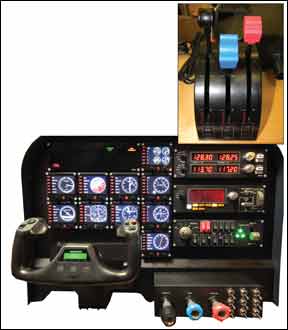
You can retrofit instruments and avionics in your aircraft panel, so why not custom retrofit your own simulator to match the layout? That’s the concept behind the new Flight Training Cockpit Advanced Panel, which is sold by PilotMall.com. The tabletop simulator—which uses Saitek ProFlite electronic instruments, avionics and controls—allows for a custom layout, thanks to a modular and interchangeable design. The simulator’s instrument panel is made of 14-gauge steel and mimics a real panel, which even includes a glare shield.“We’ve been selling the Saitek flight training instruments and avionics panels for years, but customers have recently been asking for an easy way to mount the instruments to make the suite look and function like an actual aircraft panel,” said PilotMall’s Neil Glazer. The Advanced Training Cockpit is appealing to owners who might rearrange the instrument and avionics panel in their own aircraft and want to practice flying the new layout.

Read More »

Fixing Old Avionics: Think Long Term

Considering that a major avionics upgrade could outprice the aircraft, it makes sense to consider repairing—instead of replacing—your existing equipment. While this might seem like a good short-term solution, you might be throwing good money after bad. The repair versus upgrade decision might depend on your mission and whether the unit will be used for primary or backup. Consider three questions: How much does a like-exchange cost? How much serious IFR do you fly? Does the manufacturer still support the equipment? Be careful of using the excuse that you might sell the aircraft soon—selling with old radios works in the buyer’s favor.

Read More »

Garmin Pilot App: Dynamic Mapping

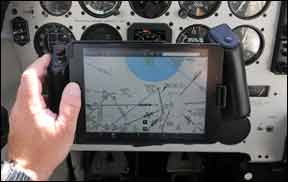
Any pilot who’s operated a Garmin aviation portable GPS will be familiar with dynamic navigation maps. Now, Garmin brings the familiar dynamic mapping to the latest version of the Pilot app.

Read More »

Oil Filter Rejoinder: Champion Takes Issue

Champion has taken exception to our report comparing oil filters in the March 2013 issue and we’re giving the company space this month to offer a rejoinder. Recall that our article in the March issue concludes that we would have no problems installing either the Champion or the Tempest filters in any engine, but we think because it’s $5 cheaper, the Tempest is the better value.

Read More »

Turbonormalized P210: Fast, Efficient, Quieter

Vitatoe Aviation’s turbonormalized P210 conversion may just have turned the Cessna P210 into the airplane it should have been all along. I’ve liked the P210 ever since I first flew it in 1979. It’s fast, carries a good load, has honest handling and the pressurization spoiled me.

Read More »

Range Extenders: Going the Distance

Being able to make a trip nonstop is more than just convenience—it can be a safety of flight issue as the risk of an accident is highest during takeoff and landing. The reality is that most flights of four- and six-place airplanes are conducted with only one or two of the seats occupied and at something below gross weight. For many owners, that means that some sort of auxiliary fuel tanks can give their airplanes more range and potentially increase safety.

Read More »

GPS For iPad: Garmin GLO a Good Fix

The performance of the internal GPS in Apple’s iPad can be hit or miss when used in many aircraft cabins. Some earlier flavors of the iPad don’t have GPS at all. For apps that offer navigation, you’ll need to ensure an uninterrupted GPS position fix. A remote GPS is the answer.

Read More »

Paper VFR Charts: Good Options and Prices

Despite all the developments in the world of electronic charts, many pilots still like paper. Reasons include avoiding what can be pricey electronic device updates, a perceived ease in keeping track of the geographic “big picture” beyond the magenta line and not being quite convinced that electronics are infallible, are infallible, are infallible.

Read More »

Engine Heaters: Probes, Bands or Pads?

Unless you operate your aircraft in a warm climate, we think fixed engine heaters are essential accessories. Even if you store the aircraft in a heated hangar, there could be times when you’re faced with an engine-stressing cold start. Not all systems are alike and the one you choose might depend on climate. We took advantage of a harsh New England winter and evaluated the performance of three systems.

Read More »

Pulse Oximeters: Inexpensive Safety

Ever since the price of personal pulse oximeters dropped out of the stratosphere, we’ve owned one because it is a fast and easy way check to see if we are at risk of doing something foolish because the lungs aren’t delivering enough oxygen to the brain. Now that the selection of pulse oximeters is confusingly large, with prices from about $25 to over $200, we decided to examine a cross section. We found that the lowest priced units worked pretty well, the others under $100 weren’t necessarily much better, and the most expensive was worth the money if you are going to be using it frequently, want a warranty and may subject it to a rough environment.

Read More »

Oxyfly: Good Concept, Poor Execution

An oxygen concentrator is a way to have a supply of oxygen without having to deal with bottles or worry about whether they can be filled. We definitely like the concept, especially as we’ve “been there, done that” when it comes to getting an oxygen fill. Durr Technik developed Oxyfly and Oxyfly Light, two oxygen concentrators that will provide oxygen for up to six people at altitudes up to 18,000 feet. The units automatically compensate for altitude. They are designed to be portable, rather than installed equipment—although the Oxyfly weighs 55 pounds and the Oxyfly Light weighs 48.5 pounds—so they do not have to comply with FARs or equipment guidelines, just like your portable GPS. For our evaluation of the unit, we worked with two experienced A & P maintenance technicians, Terry Shafer, head of the shop at Vector Air on the Erie, Colorado Airport, and Michael Maya Charles.

Read More »