Register

Accessories

Five Top Apps: WingX is a Standout

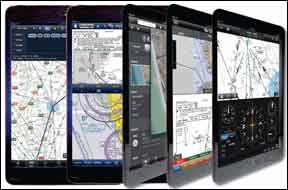
Aviation tablet apps, of which there are dozens, have become like the proverbial streetcar. If you don’t see one you like, hang around; another will be along shortly. Or at least the one you’re considering will morph into something unrecognizable if you wait long enough. Pity the would-be buyer trying to sort through the clutter and claims. In this review, we’ll attempt to do just that with what we consider to be the five top apps for flight planning, navigation and chart handling: Bendix/King’s myWingman, AOPA’s FlyQ EFB, ForeFlight, Garmin’s Pilot and WingX. Yes, there are others, including Anywhere Map’s Freedom and Jeppesen’s Mobile FD, to name two. We’ll get to these in a future issue, but to keep the topic contained, we’ll examine only the apps we deem most popular based on sales and expressed reader interests. For our evaluation, we ran the apps on an iPad mini and although we’ve tried accessories such as Bluetooth ADS-B boxes, the only peripheral we used for this evaluation was Garmin’s GLO remote GPS receiver. Two of the apps are available for the Android OS, but we’ll save a review of those for a future report, too.


Read More »

Connected Panel: Aspen’s WiFi Gateway

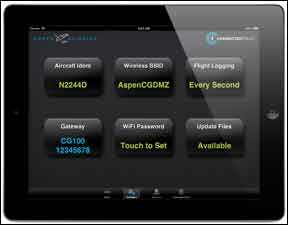
The thought of a wireless tablet computer interfacing with IFR-certified, panel-mounted avionics is enough to make an FAA inspector squirm in his polyester. Aspen Avionics—who has a knack for obtaining product certifications in short order—recently slid this concept and its CG100 WiFi hardware through FAA certification channels and earned STC approval. Connected Panel is an interface that’s sparking interest from a growing list of avionics manufacturers and app designers who are committed to joining Aspen’s open architecture. Could this be the start of WiFi-driven avionics? We think the system has serious growth potential and is worth considering when installing a multiscreen Aspen suite. The $2499 Connected Panel is essentially a communications network for flowing data­ from mobile devices—mainly Apple, for now, into compatible panel-mounted avionics. This data can include flight plans and comm radio frequencies, for loading into a GPS navigator, mainly Garmin’s GNS400W/500W and the future Aspen KSN770. Thanks to the wireless gateway, data can flow both ways—to or from the mobile device. For example, if you’ve ever wanted to send engine and fuel data into your iPad, Connected Panel could be the avenue for doing so, as long as there’s a compatible app designed for the task.

Read More »

Connected Panel: Aspen’s WiFi Gateway

The thought of a wireless tablet computer interfacing with IFR-certified, panel-mounted avionics is enough to make an FAA inspector squirm in his polyester. Aspen Avionics—who has a knack for obtaining product certifications in short order—recently slid this concept and its CG100 WiFi hardware through FAA certification channels and earned STC approval. Connected Panel is an interface that’s sparking interest from a growing list of avionics manufacturers and app designers who are committed to joining Aspen’s open architecture. Could this be the start of WiFi-driven avionics? We think the system has serious growth potential and is worth considering when installing a multiscreen Aspen suite. The $2499 Connected Panel is essentially a communications network for flowing data­ from mobile devices—mainly Apple, for now, into compatible panel-mounted avionics. This data can include flight plans and comm radio frequencies, for loading into a GPS navigator, mainly Garmin’s GNS400W/500W and the future Aspen KSN770. Thanks to the wireless gateway, data can flow both ways—to or from the mobile device. For example, if you’ve ever wanted to send engine and fuel data into your iPad, Connected Panel could be the avenue for doing so, as long as there’s a compatible app designed for the task.

Read More »

FlyQ EFB for iPad: Intuitive, Full-Featured

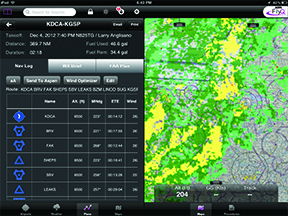
AOPA may take the attaboy for the organization’s FlyQ app, but it’s really Seattle Avionics Software that’s done we’ll with the latest FlyQ EFB. FlyQ EFB evolved from the AOPA member-freebie FlyQ flight planning resource for desktop and smartphones. We’ve always been fond of Seattle Avionics’ approach to flight planning and their design of well-thought-out apps for the Android market. Their handiwork continues with FlyQ EFB for iPad.

Read More »

Which Traffic Now? ADS-B a Worthy Option

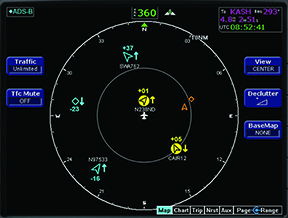
For those shopping for a traffic system upgrade, the selection has never been more complicated. Judging by the frequent calls and letters we get from confused buyers, it’s ADS-B that’s creating the confusion. The buying decision might be easier once you understand the theory behind ADS-B traffic and in particular, its limitations. You’ll also need to assess your flying mission and decide if the growing ADS-B system suits your mission better than active traffic alerting, known as TAS.

Read More »

iPad mini: Size is Right

Apple’s insanely popular iPad has become the cockpit digital tool of choice for the pilot masses, but not without complaint. It’s a little too big and a little too heavy for convenient cockpit mounting and wouldn’t it be nice if it were a tad smaller? And that’s what the new iPad mini is—a smaller, more cockpit friendly version of the iPad.

Read More »

ANR on a Budget: Lightspeed, Telex Tops

Got $1200 to spend on a headset? That’s what you’ll have to pony up for a Bluetooth-equipped Bose A20—a high-end model that easily ranks at the top of the ANR food chain. Don’t get us wrong—we think the flagship Bose A20 continues to set the standard by which all other aviation headsets are judged. If we had the dough, we’d buy a set for every seat.

Read More »

myWingMan For iPad: Bendix/King Simplicity

Bendix/King sees its potential market slice as building avionics that are easier to use than a Garmin. While it has yet to deliver any clean-sheet designs of its own since announcing its comeback over a year ago, the newly introduced myWingMan tablet app could be the launch pad for a fresh product line.

Read More »

Piper Matrix: Speed Sans Complexity

As of 2012, the Matrix is in its fifth model year and although sales for all the OEMs have tanked, the Matrix and its pressurized stablemate, the Mirage, continue to be strong sellers for Piper, accounting for more than a third of its total sales by units. In 2008, the introductory year, the Matrix outsold the Mirage five to one because, dealers say, it had a substantially lower price. So much for price sensitivity.

Read More »

Portable Oxygen: Basic Purchase Advice

For decades, we’ve more or less complied with the FARs requiring oxygen use above certain altitudes on good faith. But the advent of cheap, easy-to-use medical pulse oximeters has revealed a troubling fact: Even at altitudes below the FAR-required values, many of us are oxygenated poorly enough to benefit from supplemental oxygen. Mild hypoxia—say at 10,000 feet—may very we’ll be debilitating enough to cause judgment errors.

Read More »

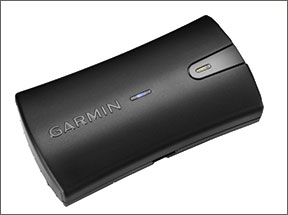
Garmin GLO: Dual-System Remote GPS

The GPS chips found in consumer-grade products like the iPad seem to suck less than they did two years ago, but there’s still a bustling little market for external or remote receivers like the new GLO just introduced by Garmin. It’s called GLO, we surmise, because it’s the only remote we know of that receives both the U.S. GPS constellation and the Russian GLONASS system, both of which have 24 satellites on orbit. Garmin says this gives GLO a 20-second faster lock-on compared to a GPS-only receiver and the position update is 10 times per second and 10 times faster than the GPS chips used in most consumer electronics.With that many satellites in view, marginal position geometry is about impossible, so GLO’s signal calc sticks like glue. Whether this really matters or not is debatable, but if you’re relying on a smartphone or tablet to navigate, a better GPS engine makes sense if it’s cheap. And at $99 suggested retail, the GLO certainly is.

Read More »