










Industry News

Letters: March 2011

I was interested to read your article on in-the-ear headsets in the February 2011 issue as I converted to an ITE system 3 1/2 years ago. I fly a turbonormalized Cirrus SR22. At Sun-n-Fun 2007 I bought both the Quiet Tech Halo and the Clarity Aloft with the intention of testing them to evaluate them against my Bose headsets. Going into my test I felt the Bose would be superior and the Clarity Aloft would beat the Halo, based on appearances.

Read More »

Biofuels Take Flight: But Its No Slam Dunk

While the world of piston general aviation wrings its collective hands over an unleaded replacement for 100LL, the turbine market is caught up in a vast, breaking wave of biofuel activity. Even though heavily subsidized biodiesel is already finding a niche market, it looks like demand from the airlines, but especially from the military, is driving an explosion of so-called advanced biofuels development. As we reported in the December 2010 issue of Aviation Consumer, the ASTM approvals for bio-derived turbine fuels are already in place or soon will be.

Read More »

First Word: February 2011

“Governments view of the economy,” wrote the oft-missed Ronald Reagan, “could be summed up in a few short phrases: If it moves, tax it. If it keeps moving, regulate it. And if it stops moving, subsidize it.” The last nugget of that quote, government subsidies, accurately encapsulates the alternative fuel industry and especially ethanol. Yet it was Reagan, that stalwart of small government and free enterprise, who signed bills extending loan guarantees for the then-nascent ethanol industry. What does this have to do with aviation? We may be about to do it again in the name of preventing aviation from fouling the air with carbon dioxide and turning the planet into a hot house that will melt the polar icecaps.

Read More »

Letters: February 2011

Sunglasses (see December 2010 Aviation Consumer) are always a great subject. I purchased Veldalo Titanium sunglasses a few years ago after reading about them in Aviation Consumer. This was my first encounter with copper-rose (Blue Blockers) sunglasses and I loved them. They worked best at twilight, amplifying contrast. A problem I had was my glass cockpit displays, which had a washed-out look. I got a pair of free glasses at the last Consumer Electronics show in Las Vegas. While the glasses look funky to my friends, they work great, are comfortable and let me view my glass panel with no problems.

Read More »

Smile, This Flight is Being Recorded

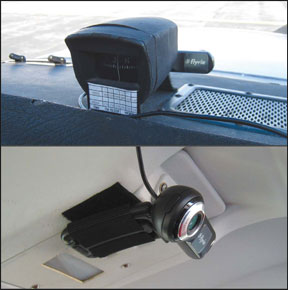
Its easy to pick out a couple of pilots talking: Look for the folks bending their hands through the air trying to recreate a visual for that death-defying turn to final immediately followed by three consecutive touchdowns from one landing attempt. Technology can now put more fact into these fish stories or offer a better way to debrief exactly what happened right before the CFI hollered, “My airplane!” These three solutions hit different, but overlapping, missions. None are cheap, but all do the job they set out for. The NFlightCam is small and to-the-point, so we will be too: The thing works great. The camera is actually a ContourHD 1080 wearable camcorder thats less than four inches long and weighs about five ounces. NFlightCam replaces the standard mic with a circuit and cable to record cabin audio from the intercom. Thats plugged into any headset jack and can be connected inline so you can use a headset in the same outlet.

Read More »

Why Is Two-Fuel DOA? It Works in Europe

As general aviation moves bumpily along toward a replacement fuel for 100LL, there’s a backlash brewing. Why, ask the owners of low-compression, low-output engines, do we have to settle on a single fuel? Why cant there be two unleaded fuels, a less expensive one for some users and a high-octane version for the rest? And why cant one of those fuels be mogas, which enjoyed wide popularity during the 1980s? Two-fuel systems are in place throughout western Europe, although not every airport has dual fueling. Some-usually smaller grass and club fields-have only one fuel available, while others have a 91/96 (the equivalent of 94UL) and conventional 100LL. A handful even have three fuels, since mogas has a tiny presence in Europe.

Read More »

First Word: December 2010

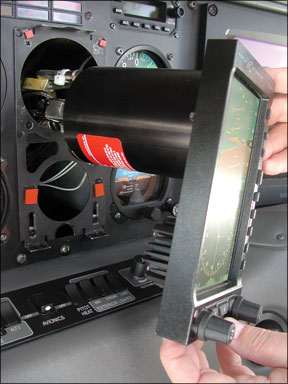
As we report on page 18 of this issue, those days arent just behind but are rapidly receding. While we werent looking-and it seems like were always looking-the market hit an inflection point for glass panel upgrades. Weve hit the perfect mix of price, capability, demand and customer preference to ignite a downturn in the desirability of mechanical needles in legacy airplanes.

Read More »

Letters: December 2010

Your recent article titled, “LED Landing Lights: Worth the Expense,” was a disturbing article to me. In it, the author suggests to consumers that they can simply replace their current landing lights with LED lights without any additional approval. This could not be further from the truth. In order to install any component, light bulb or otherwise, on a U.S. registered certificated aircraft, it must be shown that the part, when installed on the given aircraft, still meets the requirements of FAR 23.

Read More »

How the Jet Guys Did It (A New Fuel, That Is)

Money talks, goes the standard street wisdom, and [expletive of choice] walks. That more than anything describes the state of play when comparing the alternative jet fuel industry to the rather more stalled effort to find an unleaded replacement for 100LL. This should be no surprise. Thanks to serious industry support from the military, turbine engine manufacturers, the airlines and even the FAA, the alternative jet fuel industry is on a virtual gallop to have in place the regulatory approval standards to allow use of bio-derived or synthetic jet fuels by next year or at least 2012. The economics remain untested so far, but the regulatory hurdles havent proven as difficult or at least as time-consuming as they have for finding a 100LL replacement. Is there a lesson here?

Read More »

First Word: November 2010

This months coverage on the Electronics International MVP-50 reveals an inflection point in glass upgrades for older airplanes. This is it: Even three years ago, if you really wanted to deck out a legacy airframe in full glass, you couldnt quite get there. You still had to fool around with analog or steam gauges for the power and system instruments or, if you didnt, the digital replacement choices were limited.

Read More »

Letters: November 2010

I have read your article on aircraft diesels, but am a bit puzzled since I cannot relate to our reality in Europe. For example, here in northern Sweden, the price of avgas 100LL is roughly about double that of Jet A. This means that in our club, we fly our very fine and powerful Cessna 182 SMA for about the same price per hour as our old PA-28-161.

Read More »

Aircraft Loans Market: Rates Never Better

In 2003 when we looked at the aircraft loan market we said, “If rates go much lower, the money will be free.” Well, theyre lower. And though the money isn’t free yet, its cheap to those who can qualify. The recent financial chaos means there’s no wink-wink, nudge-nudge approval, but it also means that the surviving lenders are looking for those qualified buyers. There’s less competition in the loan market and some big players, like Sovereign Bank, have pulled out. Reselling and securitization of loans isn’t the market it once was. This means a greater reliance on equity lending-borrowing against the value of the aircraft-and tougher standards for the borrower.

Read More »