










Industry News

First Word: October 2010

Owners of older Garmin GPS devices who live near our nations capital got a bit of a surprise recently: The ADIZ boundaries disappeared from their moving maps. While thats not exactly an aerial emergency (the D.C. ADIZ doesnt move around) it would come as a bit of a shock to someone who just launched on a VFR flight expecting to use the map to stay out of the F-16 zone. Whats more disturbing, though, is the “why” behind the disappearance. It seems the FAA, and subsequently Jeppesen, changed the way the ADIZ was coded in their master database.

Read More »

GPSMap 696 vs. AERA: No Slam Dunk Winner

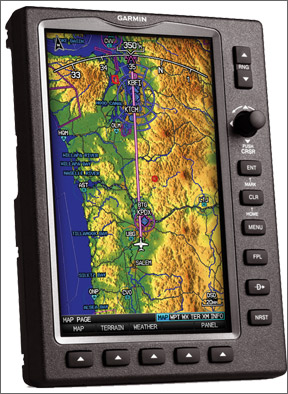
Although there’s plenty of portable GPS out there, the market isn’t as competitive as it once was, with Garmin dominating…well, the world. Two of the hottest products are both from Garmin, the GPSmap 696 and the aera series, Garmins first aviation touchscreen. These represent a conundrum for buyers in that they have nearly the same capability, but at different price points. And “nearly” isn’t the same as “exactly.” The 696 has some features the aera doesnt and vice versa. One outlier in this equation is whether Apples large-screen iPad can step in for either one of the Garmins.

Read More »

Trainer Bargains: Go For Four-Seaters

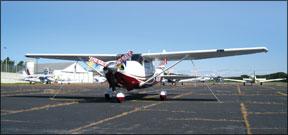
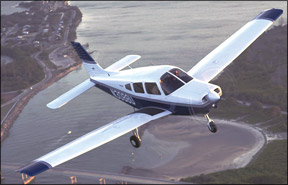
Once a upon a time in aviation, trainers were always two-seat aircraft that wedged instructor and student into near-intimate proximity. But things have changed and its not uncommon for student pilots to pony up over $300,000 for four-seat cruisers they plan to use for private and instrument training. Thats nice for the well-heeled; those of us who missed the last economic bubble but not the pop that followed need another plan. It can still make sense to purchase an aircraft you plan to train in. We looked at purchase and operation with an eye toward owning the machine for a while, or having a good chance at selling it for less than a catastrophic loss.

Read More »

LED Landing Lights: Worth the Expense

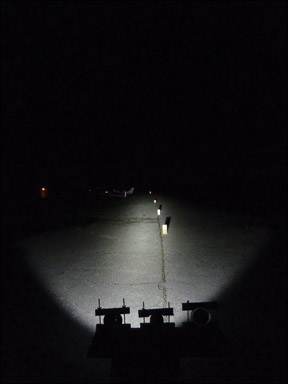
In case you havent noticed, the compact fluorescent bulb-once the darling of the green energy set-is dead meat. Its soon to be displaced by cheaper, brighter and more efficient light emitting diode technology. The same has happened in automotive lighting and many new light sport aircraft have LED nav and landing lights. Legacy certified aircraft would probably have more LED technology too, if the FAA hadnt worked so hard to chill the market by raising expensive certification hoops. Nonetheless, a few hardy companies have created LED products-landing and taxi lights and nav lights-for the aftermarket. The market has actually expanded slightly since we last examined these products a year-and-a-half ago.

Read More »

Letters: October 2010

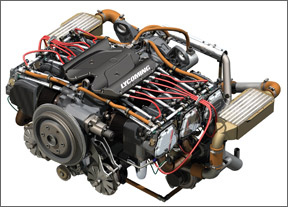
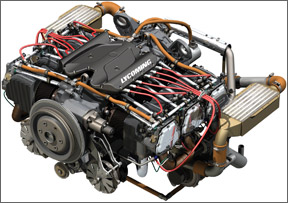
Two articles, plus several letters, in the August issue might be summarized as “electrical vs. mechanical.” The description of the Lycoming IE2 system again raises the question of why most of us are still flying behind antiquated mixture, ignition and engine control systems, when even the most economical compact car sports electronic ignition, fuel injection and variable spark advance.

Read More »

First Word: September 2010

In my continuing quest to assure a fatal overdose of information about avgas, Ive been doing wider reading on the oil and energy industries in general. Ive plowed through several volumes, but the most intriguing is The Bottomless Well: The Twilight of Fuel, The Virtue of Waste and Why We Will Never Run Out of Energy by Peter Huber and Mark Mills. Notwithstanding the ridiculous subtitle no doubt written by some publishing marketer trying to sex up a dense topic, the book challenges basic assumptions about energy and how we use it. Its theoretical stuff, but with reams of production data as factual underpinning.

Read More »

Letters: September 2010

Ive been following the EFB debate for years-often considering but never committing to buy a device to take with me on IFR trips, yet reading everything available on the subject. I was amused by your “Gear of the Year” awards (July 2010 Aviation Consumer) in which you awarded fully three different devices to do the job of plate reading, flight planning and enroute EFB. It seemed as if my own reservations were validated by your conclusions: There just isn’t any one device that does the whole job well.

Read More »

Aircraft Diesels: Still No Slam Dunk

When Continental announced in May that it planned to develop a diesel engine for the light aircraft market, it was boldly going where many have gone before. Unfortunately, the many have had their diesel entries ground to a bloody pulp by a fickle market more interested in speed than economy and unconvinced that diesels supposed longevity is worth the higher purchase price. A historical fact: Depending on how you define commercial success, there has never been a commercially successful diesel engine for aircraft. The Thielert/Centurion line launched in 2005 comes closest, but the company went belly-up and although its building engines again, it remains insolvent

Read More »

First Word: August 2010

Ive been doing some reading on the rapid evolution of digital and electric drive technology in the automotive segment and was not too surprised to learn that the typical cars build budget now allows more for integrated circuits than it does for steel. This evolution is accelerating to the point that it may not be many years before the traditional cam and valve train is replaced by digital actuators to manage the fuel/air charge. The implications for weight, performance and economy are obvious and significant.

Read More »

Lock and Key Navajo: Updated Classic

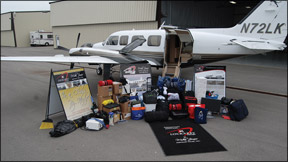
For anyone who needs to haul a lot of stuff and fly fast while doing it, the choices are limited. Unless you have a million-dollar -plus turbine budget, legacy piston twins are the top contenders. And in that group, Pipers Navajo will survive to the short list and thats why it remains a brisk seller on the used market, despite the cratered economy. Aircraft dealer and modifier Mike Jones, a Navajo specialist, gets that and thus: the Lock and Key Navajo. This mod treads ground thats been broken before, which is essentially to pick a reliable, robust airframe and remanufacture it to new standards, tossing in some state-of-the-art technology where appropriate.

Read More »

Gear of the Year: Aspen is Our Top Pick

You cant imagine how difficult it is for us to keep a straight face when we ask a company for an estimated delivery date of some new airplane or widget. We dutifully report what these companies tell us and when theyre out of earshot, we allow the sniggering and eye rolling to begin unabated. But there are exceptions. Some companies do what they say theyre going to more or less when they said they would. One of these is Aspen Avionics, which we are selecting as our company of the year.

Read More »

First Word: July 2010

It sure seems like it to me. Just in the past couple of months, I m seeing a scramble of activity, including major initiatives from both Continental and Lycoming, a new engine idea from South Africa, a new model from Cirrus pitched to burn low-octane fuel and a rising fish-or-cut-bait sense from aircraft owners and pilots.

Read More »