Industry News

Product Support: There’s a Limit

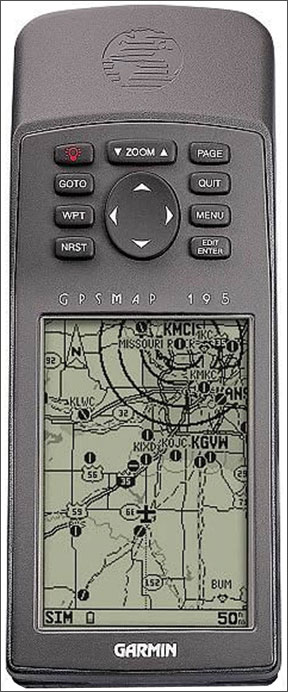
The term “product support” means different things to different people. For example, someone in the market to buy a new aircraft may worry about whether the local FBO has personnel trained to maintain it. Meanwhile, a renter pilot buying a new headset wonders what will happen if an earcup cracks five years from now. Both pilots may also be in the market for a handheld GPS: Will database updates for it still be available in a few years? Perhaps because of the relatively high prices we pay for these and other products, there’s often the expectation of manufacturers supporting them forever. And Jeppesen should continue offering custom database updates long after the memory space required outstrips that available in the hardware. Good luck with both. So, how long can we expect to receive a manufacturers support for their products? What factors into a manufacturers decision to discontinue support of a product? Are our expectations unrealistic? If so, why?

Read More »

First Word: March 2010

True or false: You are required to have current charts in the aircraft with you. The answer is “false,” youre only required to have the right data. So that 2002-vintage sectional is fine so long as you know the CTAF for your destination was changed three years ago to 123.05. Howie Keefe built a business on this premise with his Air Chart Systems. These were spiral-bound books with the sectionals and en route charts for the entire lower 48. You got the book once and then subscribed to the updates-delivered via mail with stickers you could put in the chart atlases as needed. This system was far cheaper than buying all those charts every time they were revised, and it was far more convenient to use if you regularly traversed wide swaths of the U.S.

Read More »

SMA Diesel Revisited: The Numbers Are Solid

Think of it: If you had an aircraft engine that burned two to three gallons less than the competition, delivered the same horsepower, weighed more or less the same and burned fuel that isn’t threatened with extinction, as 100LL is, wouldnt you sell the hell out of it? Youd think so. But while SMA, the French daughter of aerospace giant SAFRAN, has such an engine in the SR305 aerodiesel, buying one is at best a rarified experience. There arent many of these engines flying, so judging their merits has been largely a paper exercise. So when the Paramus Flying Club, a long established New Jersey co-operative, invited us to examine their SMA-converted Cessna 182, we realized it represented a rare opportunity to take the measure of this engine in the wild. The club has been operating it for nearly a year and while its too soon to declare it a walk-away success, the airplane has proven to be the most popular among the clubs 46 members, its dispatch reliability has been excellent and the engines initial operating costs look promising.


Read More »

First Word: February 2010

As a child, I was not we’ll behaved. In fact, I was an excruciating pain in the ass to my parents, my teachers and all my little friends. (Stick with me, you’ll see where this is going.) When my mother died some years ago, all of this came rushing back when, much to my surprise, I discovered that she had saved all my report cards.

Read More »

GPS Survey Favorites: Garmin, Anywhere Map

Portable GPS devices are arguably the most useful cockpit tool since the invention of the E6B. Or aeronautical charts. So it was no surprise when our reader survey on portable GPS generated we’ll over 1000 responses. There were comments from pilots still flying trusty, monochrome Magellans to ones using the newest Garmin aera. We saw dozens of poetic waxings about most every major supplier and surprisingly few complaints. That said, no company or product escaped with no complaints and we saw some direct conflicts: Pilot A had such a dismal time with Anywhere Map that he went to Garmin and is much happier, while Pilot B finally got so sick of Garmin troubles he bought an ATC and now flies in a state of bliss. To each his own.

Read More »

TCMs Lifter Crisis: Reclaimed Parts Rule

Owners buying engine overhauls have more or less adjusted to the idea that cylinders, cams and crankshafts have become a crap shoot. But valve lifters, too? These got added to the list of problem parts last fall when TCM announced that a massive batch of faulty lifters made it into the supply chain. Some showed failure wear in as little as five hours of operation. Although only engines built after June 19th, 2009, appear affected, the sudden demand has disrupted the supply chain for lifters to the extent that the industry-and the FAA-are relenting on the standard recommendation that lifters be replaced. Further, the market for overhauled lifters has become red hot and, at least we’ll into 2010, they may be hard to come by. Only owners who had engines built after the June date need be concerned about bad lifters and not all of them may be affected.

Read More »

New Cockpit Lighting: Options for All Budgets

It was close to midnight and after a long day of flying we were cooked. A couple miles out something just didnt look right. If not for the landing light reflecting off the trees, we might not be here to review cockpit lighting upgrades. The instrument-panel lighting in that 70s-vintage Arrow was so poor we cranked in the wrong altimeter setting-misreading a two for a three in the Kollsman window. There’s no reason to live with (or risk death due to) substandard cockpit lighting. Panel upgrades require skill and a decent budget. The good news is there are several options to light up your night.

Read More »

Letters: February 2010

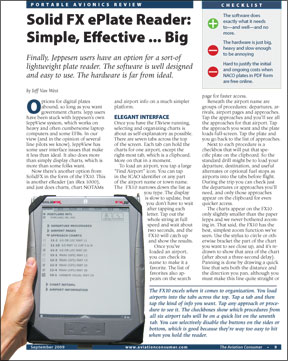
I have read with interest your comments on the SolidFX. (See Aviation Consumer, September 2009.) I was able to see this in person at Oshkosh and would have bought it save the price. I was very impressed by the unit. To me, it seemed fast enough and the zoom feature was very clever and easy to use. However, I did find your comment about the size somewhat confusing. On the one hand, Ive noticed that you complain when the full chart cant be seen (AV8OR ACE, October 2009), and you complain when the unit is large enough to see the whole chart!

Read More »

Aircraft Insurance Industry – A Buyers Market: But Its About to Swing

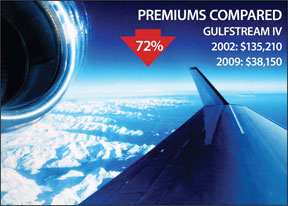
The good news about aircraft insurance is that for most owners, insurance has never been more affordable or more available. The bad news is that most people in the business think that the pendulum is about to swing back the other way. What got us here? Ironically, the 911 attacks had something to do with it as does the current economic malaise. Demand is slack, there are more providers than ever and companies are willing to deal. But, as always, it wont last. Following the 9/11 attacks, insurance rates for most aircraft increased dramatically. The amount of the increases depended upon the market segment, with many big iron operators seeing their rates double overnight. Most light aircraft owners saw less of an impact, but as a result, 2002 and 2003 were some of the most profitable years for the industry in recent history.

Read More »

SheepSkin Seat Covers: DIY Comfort

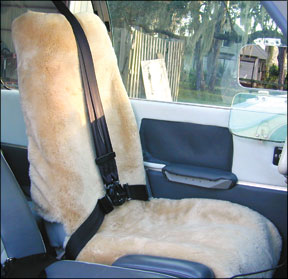
Most airplane seats are poor places to park your keister for a few hours. After a decade or so of the temperature extremes found on the typical airport ramp, their foam deteriorates, eliminating any resilience in the cushions and creating a permanent sag. The vinyl and fabric-or, if youre lucky, leather-has long since started to rip apart at the seams, snagging shirts and trousers as you shift and squirm. A good interior shop can fix this for a grand per seat, but there are less-expensive options, including ready-made upholstery you install yourself. One often-overlooked option is to do nothing at all with the seat itself but simply hide the ugliness and discomfort with a custom-fit cover. A wide variety of materials are available-especially if you don’t mind installing something from the automotive market. One of the more popular options is the made-to-fit sheepskin seat cover. Installing one automagically resolves several issues, among them eliminating the hot/cold seat, sticky vinyl and unsightly, worn and torn upholstery. They trap air between you and the seat itself, so theyre cooler in the summer and warmer in the winter, plus they wick away moisture, like the sweat from your next flight review.

Read More »

Aircraft Partnerships: Find the Right People

On the surface, co-owning an aircraft just makes sense. Most airworthy privately-owned light singles fly less than 100 hours a year-in many cases far less. Regular use is better for the aircraft and better for amortizing the fixed costs (hangar, insurance, databases) per hour of flight. More users should mean more bang for everyones buck. Unfortunately, several owners also mean more opportunities for conflicts in time, resources, flying style, opinion and even personality. Being connected to anyone by your checkbook can put a strain on the best relationship. There’s no magic formula for creating the right partnership. But our survey results hit the same key points with metronome-like regularity: Good partnerships have clear expectations between partners of similar economic standing, and they have written rules or bylaws to settle disputes.

Read More »

Next Dimension Mod: Cirrus Upgrades

Operating on the premise that good airframes are forever, companies have, from time to time, offered major upgrades and mods that turn the old into the new. Some have been successful, such as RAM Aircrafts twin Cessna engine upgrades or Rocket Engineerings Malibu turbine redo, but many have not. Its not that the upgrades don’t perform, but that buyers just don’t sense an obvious price/value connection. This conundrum frames the challenge that a new company called Next Dimension Aircraft will face in introducing whats one of the most ambitious mod projects weve seen to date. We define “ambitious” as a modification whose costs come close to or exceed the value of the airframe.

Read More »