









Register

Commentary

Letters: August 2013

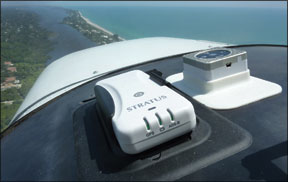
ADS-B For EFIS I enjoyed reading your evaluation of the three most prominent ADS-B EFIS products in the June issue. I received my Stratus II about three days before reading your article. There is one, important negative feature of the Stratus II: It will only show the horizon in the landscape mode. If one has an iPad on a yoke mount, it will most likely be in the vertical position, so the horizon will be 90 degrees off. Otherwise, the iPad has to be taken off the yoke mount and held in the horizontal position, not easily done.

Read More »

Letters: July 2013

Thank you for the article on the Turbonormalized P210 in the May issue. I had my P210 converted by Vitatoe Aviation in early 2012 and now have over 200 hours on the engine. I’m very pleased with the result—it performs as you described in the article: it’s much faster at all altitudes, including cruising at over 200 knots above FL180; climbs to the flight levels in about half the time as before; and most importantly, does all this without cooling problems. Engine management is much simpler than before and fuel consumption has dropped by about 3 GPH because I can reliably run lean of peak.

Read More »

Letters: March 2013

Nice article by Larry Anglisano on ADS-B in the January issue (Which Traffic Now?). I agree with Larry that the portable solution for ADS-B in should be given good marks over the installed solutions. One point that I feel is important is that I don’t think the geographic limits of the weather information available is understood by users. A friend was returning from Florida to the D.C. area and when he could not get TAFs and METARs more than 250 NM from his position, he thought there was an equipment problem, not realizing that low-tier stations have a 250 NM look-ahead range. I guess I am spoiled by XM Radio, but I like to look at the METARs and TAFs in my destination area when the weather may be marginal and I’m still we’ll over 250 miles away so that if things start to go south, I can land early or take other appropriate action. As a general rule, 250 NM is not a satisfactory look ahead.

Read More »

Letters: January 2012

Rick Durden’s advice to use a pulse oximeter at altitude (November 2012 Aviation Consumer) and to start oxygen early is excellent, but oxygen saturation is only part of the picture. What really counts is your body’s ability to carry oxygen and release it when needed. The carrying capacity is a product of how many red cells you have, and release is increased when you acclimatize to altitude.

Read More »

Letters: December 2012

I maintain 13 airplanes for a flying club averaging 500 hours monthly. We have transitioned to Tempest plugs, having used Champions for 50 years. The reasons are exactly as you outlined. Center electrode cracking was getting annoyingly significant, but the real straw on the camel’s back was the resistance issue. Both have been completely solved by changing plug brands.

Read More »

Letters: November 2012

I am not clear about the options for interfacing ADS-B portable receivers (September Aviation Consumer) with various software and platforms. Do the receivers output a standardized string, be it by cable, Wi-Fi or Bluetooth, that can be received and utilized by any software and platform as long as the software contains ADS-B receiver support? Or is data output unique to each manufacturer? For example, as far as external GPS receivers are concerned (most of them use Bluetooth), as long as the software supports external GPS (via Bluetooth in this case), one should generally be able to use any GPS receiver, regardless of software publisher or platform.

Read More »

Letters: October 2012

Flying a Piper Archer II, I drooled over the gas mileage of your best LSA pick, the Pipistrel Virus. So I flew to the SLA showcase in early 2012 at Sebring, Florida airport to get a closer look at the Virus. Once I got into the pilot’s seat, I wondered who would buy this airplane? To me, it is downright dangerous, as the main wing spar intrudes into the cockpit, crossing just a little bit in front of and above your head. (I am only 5 feet 9 inches.) In a not-too-perfect forced landing, your head could easily be crushed by the impact with the main spar. I mentioned my concern to the salesman who responded that, “You lean forward in front of the spar just before impact”… then I surmised the back of my head could be crushed as the indeterminate G forces toss my body and head around in milliseconds, seatbelts notwithstanding.

Read More »

Letters: August 2012

I was really taken with your article on VGs in the June 2012 issue. I put them on my first Cessna 310 over 25 years ago. Checking them out, I feathered the right engine, put full power on the left and pulled into a steep climb. Pulled until the airplane stalled at about 5 knots slower than before. I still had positive aileron and rudder control. The stall was smooth, straight ahead. Next, restarted the right engine, let it warm up, shut down the left and repeated the process with the same results. I was really impressed and pleased with my decision to install them. Since then, I’ve been a real advocate and have even proposed that there be an AD to require them on all light twins. I still feel that way. I hope your article makes a believer out of more people. Could save a lot of lives.

Read More »

Letters: September 2012

When considering the viability of electric-powered aircraft, it’s important to note the huge difference between the internal combustion (IC) engine that burns hydrocarbon fuels and an electric motor that relies on a battery energy source. The ratio of air mass to fuel mass at efficient combustion (stoichiometry) is about 14.6. That is, for every pound of fuel burned, 14.6 pounds of air are consumed. But you don’t have to carry the air since it is available in the atmosphere. Fuel weighs about 6 pounds per gallon, so 16 gallons of fuel weigh about 100 pounds. Over 1400 pounds of air will be consumed in burning that amount of fuel. An electric motor requires that all of the energy be contained in the battery. Since the energy density of lithium batteries is about 26 times less than the energy of gasoline, there is nowhere for electric propulsion to go. It is interesting to note that gasoline has 10 times the energy density of TNT that needs to carry its oxidizer within.

Read More »

Letters: July 2012

I think you have a typo in your article on the Diamond DA42 VI in the May 2012 issue in describing the performance of the current DA42 NG. In one part of the article, you said that the NG model at 8.3 gallons per side (about 90 percent power) could only do 167 knots. It was capable of speeds as high as 184 knots at 14,000 feet­—the highest altitude 90 percent power was available from the Austros in the NG.

Read More »

Letters: June 2012

Your article on lightning detectors (see Aviation Consumer, April 2012) underplays how good Insight’s Strike Finder is and how good a value it is. I cut ‘em closer than recommended, but my Strike Finder never steers me wrong. Your article suggests that downloaded radar images can be 30 minutes old. With most storms going through a 20- to 40-minute cycles from birth to death, I consider this worthless. I’ve been trusting my life to Strike Finders since about 1990 for nine years and then a new one in 2002 (with internal gyro stabilizing and the super-bright display) when I got my Arrow. They never steer me wrong and I’ve never had the slightest problem with either of them.

Read More »

Letters: March 2012

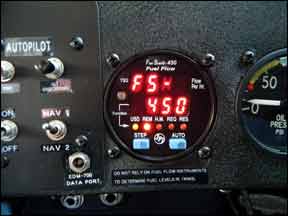
In spring, I had a new Garmin GTN750 installed in my 1983 Mooney 201 and was amazed by the unit’s performance. The only thing missing was fuel management capability and as a result, I had the fuel flow option added to the existing EDM-700 and wired into the GTN. Since this was my first exposure to fuel flow monitoring, I didn’t know what to expect in terms of reliability and accuracy. And what I experienced in the field blew me away. I was expecting a reporting accuracy rate of perhaps 96 percent, but was pleasantly surprised to find the accuracy greater than 99 percent. At each fill-up, I compare the fuel loaded onboard with what the unit stated as actually having been used and the numbers are always within a few ounces.

Read More »