









Industry News

Letters: January 2012

I read your article on navcomms in the December 2011 issue with interest. However, I think there is a bit of a slant toward the all-in-one avionics box with your magazine and I don’t really agree with it. While I admit that glass is wonderful to replace the attitude and heading indicators (electronic HSIs are even better), I’m not a big fan of GPS-only navigation data. GPS can be jammed, even if it hasn’t happened yet. There is no backup to GPS if the system goes down.

Read More »

Free FAA charts: The Party’s Over

A green oasis in the bleak landscape of data is the availability of government charts for cheap on portables like the iPad (ForeFlight, WingX) or for free on the internet (RunwayFinder, SkyVector, Airnav). The fuel for this micro industry has been digital charts and other products free for the downloading from the FAA’s Aeronautical Navigational Products Directorate, a.k.a., Aeronav. But after April 5, 2012, the products will cease to be free. Initial reports were that this decision stemmed from concerns about safety. We spoke at length with Abigail Smith, Manager of Business Development for Aeronav, concerning this policy change.

Read More »

Free FAA charts: The Party’s Over

A green oasis in the bleak landscape of data is the availability of government charts for cheap on portables like the iPad (ForeFlight, WingX) or for free on the internet (RunwayFinder, SkyVector, Airnav). The fuel for this micro industry has been digital charts and other products free for the downloading from the FAA’s Aeronautical Navigational Products Directorate, a.k.a., Aeronav. But after April 5, 2012, the products will cease to be free. Initial reports were that this decision stemmed from concerns about safety. We spoke at length with Abigail Smith, Manager of Business Development for Aeronav, concerning this policy change.

Read More »

American Champion: State of the Art Classics

For as bad as the aviation boom-bust cycle is for companies that make airplanes, it’s just as bad for the people who buy them. The euphoria that goes with pocketing the keys to a brand new airplane has to be tempered by the reality that the company that built it maybe teetering toward bankruptcy. Is there a better business plan, one that envisions modest production and flexible size and that can survive the test of the worst economic downturns? There are at least a couple of examples that suggest this can work. The family-owned Maule Air is one, shipping 30 or 40 airplanes a year to Cessna’s 500, but lately a lot less.

Read More »

A Tale of Two Engines

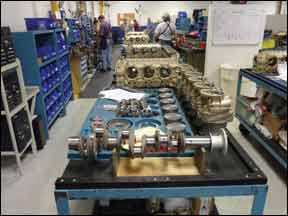
After a fashion, our reader surveys are sometimes like collective scab picking. That’s certainly the case for this month’s reader feedback project on owner experiences with factory rebuilt and overhauled engines. The results proved illuminating, but also highly polarized. In other words, we hear from the outer bands of the spectrum—those pleased and those not so pleased—but not from the broad middle ground of people who are mildly satisfied or maybe just not thrilled.

Read More »

Buying Into NextGen: Piecemeal May Be Best

If you have an IFR-certified GPS with WAAS in your panel, you’re already equipped to take advantage of the bulk of what NextGen has to offer GA today. There, don’t you feel better? The reason is that NextGen is a fat catch-all for a host of technologies that mostly target airlines and major airport ground ops. Biz jets will reap some of the airline-focused bennies, but for the bulk of GA, NextGen boils down to RNAV instrument approaches and ADS-B. And it will likely remain that way for the next decade at least.

Read More »

Owner Survey: Factory Engines

With the two engine factories fighting field overhaul shops for a piece of an ever-shrinking engine pie, it’s no surprise that the factories are pushing their rebuilt and overhauled engines. They find enough buyers for these services such that rebuild work now constitutes a significant revenue stream for both Lycoming and Continental. Anyone shopping for an overhaul usually gives the factory options at least a cursory look. So how are they doing? To find out, we asked our readers to tell us about their experiences with both Lycoming and Continental factory engines of various kinds.

Read More »

Letters: November 2011

I watched with great interest your video on the aera 796. Good looking piece of tech for the airplane, but I have a question. Will the unit function as a display-only for charts and plates if for some reason it looses its GPS reception or does it have a display-only function for looking at charts and plates?

Read More »

Electroair Ignition: Affordable Electronics

Electronic ignition systems for conventional aircraft engines haven’t exactly had a fun ride. Although solid-state ignitions have made inroads in the experimental market, makers of OEM aircraft have shunned them and even though the airplane ownership community has its share of gearheads, there haven’t been enough of them to make ideas like Unison’s LASAR magnetos or Continental’s PowerLink FADEC take flight. Even in airplanes wired with cutting—edge glass, stone-age magnetos are still the ignition of choice, straight from the factory. If conversion to electronic ignition is somehow inevitable, a Michigan-based company called Electroair aims to be its latest leading edge. Electroair is taking another run at the electronic ignition idea, this time with an aftermarket replacement system evolved from an experimental product that’s been on the market for more than a decade.

Read More »

First Word: October 2011

I’m sure you’ve heard the crudity about likening opinions to a certain anatomical feature that every human body is equipped with. But not many of us are actually paid to have opinions and because the staff of Aviation Consumer is among that chosen few, it’s worth a few words to explain how we do what we do. (Some of our opinions get us likened to the aforementioned body part, but indulge me here. There’s a point hovering just ahead.)

Read More »

Letters: October 2011

I read with interest and enjoyed the article on aircraft batteries in the August, 2011 issue. There was brief mention of the Odyssey battery, as applied to homebuilders. I have Odyssey sealed batteries installed in two different aircraft, a Cessna 180 and a Cessna 185. These are both firewall-mounted, eliminating 10 feet of heavy-gauge wire. The balance impact is minimal, as this battery, in the box, weighs 14 pounds compared to the Gill that was removed, at 37 pounds. These batteries are installed in accordance with a field approval, which is increasingly more difficult to obtain. This has been a win-win deal for me, however.

Read More »

First Word: September 2011

Given Aviation Consumers status as the only subscriber-supported, consumer-oriented publication in aviation, we are often asked to “get to the bottom” of certain issues. Some of these are mundane, such as comparing cockpit accessories or even writing about insurance, which were doing in this issue. For me, the most difficult subjects are those in which buyers, owners or consumers report radically different results and perspectives when discussing the very same product. And so it is with this months follow-up report on the Thielert diesel engines.

Read More »