









Industry News

Thielert Report Card: Mixed Experiences

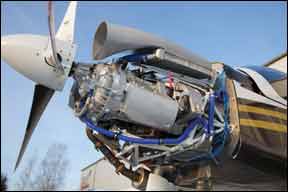
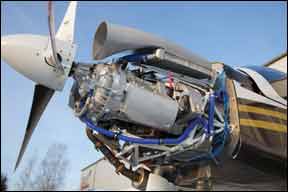
In business, its axiomatic that eight of 10 startups fail within three years. In general aviation, if anyone bothered to track them, the odds are probably a little worse. Nonetheless, when Thielert Aircraft Engines GmbH went belly up in the spring of 2008, it was a surprise to many who had been following the company casually. Diamonds innovative DA42 was selling well, the engines seemed to be performing and with avgas threatened, the trend line appeared to point in only one direction: up. Yet in the summer of 2011, the company remains under the bankruptcy protection of German law. But it also continues to operate, delivering both new engines and parts, albeit at high prices.

Read More »

Paint Shop Survey: Many to Choose From

When aircraft maintenance budgets get tight, paint and interiors are the first things to get put off. This may be part of the reason our latest survey of paint shops turned up fewer top-rated shops than the one we did five years ago. Natural selection is weeding out shops that don’t deliver in quality and service. The good news for anyone with paint so tired it blends in with a canopy cover is that prices have barely moved-perhaps even dropped slightly if corrected for inflation-and there are still several high-skill shops in business around the country (with the seeming exception of the Pacific Northwest). You should be able to find a place to get great paint without crossing multiple time zones.

Read More »

Insurance Valuation: Too Much, or Too Little?

Flying is one of the fastest ways to burn money in this life. Airplanes are expensive and helicopters even more so. For most light airplane owners who fly less than 100 hours each year, owning the airplane actually costs more than operating it. And in recent years, many airplanes are depreciating much faster than they are being physically worn out. Buying the right amount of insurance to match the aircrafts value is trickier than it used to be, but is still the only way to protect an expensive investment.When deciding how much physical damage coverage to buy, there are two considerations, depending upon what happens to the airplane.

Read More »

Letters: September 2011

Re your article on going vacuumless in the June 2011 issue, when I bought my new Columbia 300 in 2002, it came from the factory as a traditional six-pack with a vacuum AI (KI-256). In November 2008, I embarked on an upgrade to the Aspen EFD1000 Pro using Lancaster Avionics in Lancaster, Pennsylvania. (They are awesome.) I chose to install the Mid-Continent Life Saver electric attitude gyro with battery backup as my backup AI. As part of the upgrade, I wanted to remove the vacuum system because it would no longer power any instruments. Initially, we were led to believe that we would be able to remove the vacuum system with local FSDO approval. It turns out this was not possible because the vacuum system is on the type certificate. It had to go through the ACO that controlled the type certificate.

Read More »

Whats It Worth? Appraisal Realities

As a professional aircraft appraiser, I was retained to perform an appraisal on a 1978 Grumman AA5B Tiger not too long ago. I met the owner at his hangar and when he rolled open the hangar door, I wasnt prepared for what I saw. It was one of the saddest airplanes that I have ever seen. It sat in a hangar that had housed it for three years as it collected dust on what had once been a good, fresh paint job. Its partially deflated tires were sitting in an inch of water, possibly from a roof leak. This airplane showed three years of neglect. Fortunately, the sliding canopy was closed so most of the dust had not penetrated the interior. The airplane was about three years out of annual and it had not been flown or even run in those three years. This airplane was not going to appraise for very much money, even though the owner expected that it would.

Read More »

The Mogas Option: Plenty of Engine Choices

While the FAA and the oil industry plod along toward an eventual replacement for 100LL, one alternative persists like a large elephant squatting uncomfortably on the conference room table: mogas. We know more owners, desperate for at least some kind of clarity, are seriously considering it as an option. Moreover, the list of airplanes that can burn mogas is longer than you might imagine and likely to grow. Last year, Lycoming quietly announced that it had approved its 180-HP parallel-valve O-360 series for use with a specific grade of mogas. Does this mean the company is bullish on mogas as an alternative to a 100-octane equivalent? Not really. The company is just responding to market realities. In other parts of the world-Europe and Asia, mainly-mogas is becoming a fuel of choice because avgas and the infrastructure to dispense it isn’t available.

Read More »

Aftermarket Air: Portables a New Option

There’s not a pilot out there who hasnt pined for an AC button to push after just minutes holding short of the runway in the summer heat. But the harsh reality is that aircraft AC systems cost in all the ways we hate: weight, power draw and money. How much? Try 45-90 pounds, several horsepower and five digits before the decimal for the equipment. Now add the install time, which can top 100 hours. Not much has changed with installed systems since we last looked at AC in 2008, except for the option of a “portable” AC unit. Compressing AC refrigerant is either done directly off the engine or via an electrically powered compressor. The engine-driven option is usually used for small aircraft. It works passably on the ground, but doesnt really pack a punch until the engine is turning faster. The compressor must fit somewhere under the cowl, but you don’t need a high-output alternator.

Read More »

First Word: July 2011

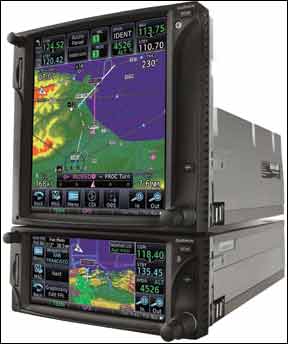
The letters in this months issue illustrate the dilemma Garmin finds itself in. I don’t know if the company sees this from the inside, but its noticeable from where I sit. Specifically, the new GTN series they launched this spring is striking some buyers as not that great, which is something we never heard about the GNS430 and GNS530 when they were introduced. Whats the problem here? I don’t think its all price, because these products cost a little more to install than did their predecessors a decade ago. Adjusted for inflation, theyre close. I think its perceived value, or lack of it. For the money, say some readers, these boxes just don’t do enough more than the current generation of mapcomms do.

Read More »

Flight Schools That Work: Top Service for Top Dollar

If youre looking a feel-good piece about how flight training is on the rebound and were on our way back to viable flight schools running side-by-side with every mom-and-pop FBO, youre reading the wrong article. (Actually, youre probably reading the wrong magazine.) Flight training never had a reputation as a cash cow, and the current economic climate hasnt helped that situation. But there have always been, and still are, flight schools that run in the black. In fact, in just the past few months, we came across a couple not just getting by but expanding despite all the dire numbers of the current economy. We decided this was worth a critical look. Did these folks have some secret formula for success, or were they dumping resources into a temporary bubble that will collapse under its own economic impossibility before the year is out?

Read More »

Letters: July 2011

I recently purchased a GTN650 to replace my GNS480. Turns out the STC requires that I have a second GPS/navcomm in order to fly IFR. So I had to go with GTN750, remove the MX20 and SL30 to make room for the 750 and 480. Nobody at Garmin seems to want the public in on this. My avionics tech found out by reading the STC. This applies to composite airframes only. It doesnt make much sense since I have been flying IFR with a single GNS480. Anyway, I had to open the wallet up to the tune of $6000 more, which I was not budgeted for. The PC simulator that comes with the purchase requires quite a bit of RAM and hard drive space to operate. It requires 5GB RAM and 2GB of free disk space. Seems none of my computers have this so Im out of luck.

Read More »

Prop Replacements: Growing Competition

Coded into the DNA of every aircraft owner is a grim acceptance that engine overhauls are a fact of life. But prop overhauls and replacements tend to be last-minute, kicking-and-screaming add-ons and with costs up and flight hours down, there are probably more substandard-if not dangerous-props in the field than ever. At least a couple of prop shops weve talked to report that the overhaul business is down, suggesting owners are stretching prop TBOs more than they used to. Thats bad. But the good news is that the competition in the new prop market is hotter than ever and getting even hotter, thanks to MT-Propellers aggressive push into both the OEM and STC replacement markets. This has forced the established manufacturers, Hartzell and McCauley, to respond in kind, although those two companies don’t agree on where the market will move in terms of materials choices.

Read More »

Going Vacuumless: Say Gbye to the Pump

From the moment light singles started shipping with no pneumatic (vacuum or pressure) instruments, its been the dream of many an owner to yank out the maintenance-hungry vacuum pumps and replace the pneumatic instruments with electric ones. Doing away with pneumatics makes even more sense after a glass panel upgrade where the only item left is usually a vacuum-driven attitude indicator doing duty as a backup. A dry-vane vacuum pump with over 500 hours in service is of questionable reliability. Many pneumatic instruments last over 1000 hours, but thats the exception rather than the rule. There are also the filters to check and replace.

Read More »