









Industry News

Diamonds Austro Diesel: Performance In Search of Durability

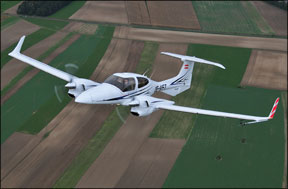
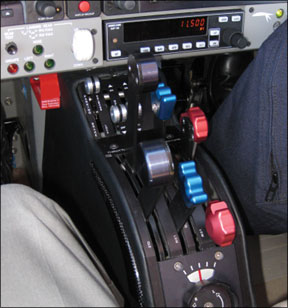
The NG in Diamonds new diesel-powered DA42 NG presumably means “next generation,” but it could just as we’ll stand for never-ending guts, for thats what it took to bring this airplane to life. When, four years ago, Diamond certified the original DA42 with Thielert diesel engines, we considered it a bold move indeed. Following up that ill-starred project with a new model equipped with an engine Diamond certified itself strikes us as off-scale nervy, but thats what the DA42 NG represents. To be accurate, the diesels in the NG werent developed by Diamond, but by Austro, an independent company brought to life by Diamond principle Christian Dries. The new state-of-the-art engine factory is right next door to Diamonds Wiener-Neu-stadt factory located south of Vienna. The Austro engines exist because Dries and Diamond were unhappy with the service history of the original Thielert diesels and even more unhappy with Thielerts slow response in fixing the significant technical shortcomings those engines developed in the field. In record time, Austro certified the new AE300 and is now shipping it. The engine appears to be more efficient, it develops more power, but is also heavier than the original Thielert engines were. The large and unanswerable question is this: Will these engines deliver reasonable reliability and acceptable service history? we’ll know in a year or two; in the meantime, here are our impressions of the Austro-powered DA42 NG.

Read More »

Turbo Wars: TAT vs TCM

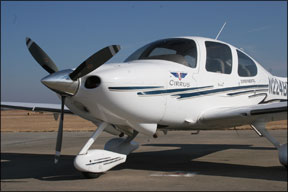
Does the world need another turbocharged Cirrus SR22? Continental thinks so, because at AirVenture Oshkosh it rolled out its long-rumored TSIO-550 demo project for the SR22. We know this project has been an on-again, off-again effort between Cirrus and Continental and now it looks like its on again, at least from TCMs point of view. Currently, Cirruss turbocharged offering-its best seller-is the turbonormalized set-up engineered and provided by Tornado Alley Turbo. The aircraft retains the stock 310-HP IO-550-N but with the addition of two turbochargers and lots of intercooling. Unlike traditional systems from Continental, the Tornado Alley system doesnt ground boost the engine but allows it to maintain sea-level manifold pressure we’ll into the 20s. Technically, the turbonormalized system doesnt have a critical altitude since it boosts to sea-level to the airplanes certificated ceiling of 25,000 feet.

Read More »

Buying Repo Cessnas: A Few Stellar Deals Exist

For many of us, the mention of a repo man may conjure images of Emilio Estevez hunting down a 64 Chevy Malibu with aliens in the trunk. But the sad truth is that repossessions happen on aircraft just the way they do on any other vehicle bought on credit. There’s a common misconception that these aircraft go back to the manufacturer. They don’t. They go to the bank that financed the sale and now has an aircraft owner defaulting on their loan. Thats a sad day for the owner, but, perhaps, an opportunity for you-if you want a light Cessna or a Bell helicopter. Banks (or finance corporations) don’t want to own aircraft. So much so that our sources tell us they will do almost anything to work with the buyer to avoid taking the aircraft. But it does happen (perhaps more so these days) so there are systems in place to try and recoup some of the loss. For most major finance outlets, that means the repod aircraft goes to a dealer who then resells it. It turns out the right to do this is highly prized and closely guarded information among aircraft dealers. We tried to find out where youd be likely to find a repo Diamond or Cirrus and had only limited success-and where we did have success it was as off-the-record information only.

Read More »

First Word: 09/09

Returning home after covering AirVenture in Oshkosh is a little like being released from the intensive care unit. I know why I was there and Im glad I was, but sometimes Im not so sure I want to go back. Thats not a comment on the show itself, but on the intensity of covering it in a world that has become accustomed to a digital river of information which we struggle to fill. These days, there’s not much time to ruminate on the meaning of it all.

Read More »

Letters: 09/09

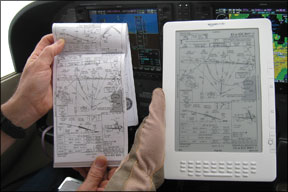
Ive now used the DX (via AirBrief) on a few flights. I find it better than any plate system I have used. Including government plates, Jepp Q service and JeppView on a tablet PC. Page turns are a bit slow and it doesnt have real zoom as you say. I have used both the terminal books and downloaded the airport I was flying to using airbrief.com for the destination airport. The fact that you can get to airbrief.com via the Kindle is great. The single airport PDF reduces the hassle factor significantly.

Read More »

AirTex I Interiors: Yes, They Are DIY

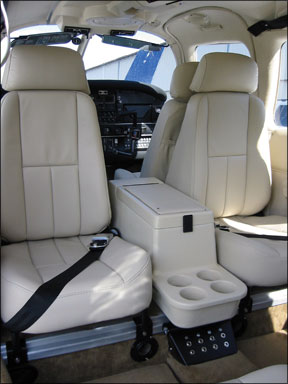
Taken in order of expense, airframe upgrades rank like this: engine overhauls, paint jobs and interiors. Of the three, only interiors yields to the do-it-yourselfer owner whos willing to tackle a job that turns out to be easier than it may appear. For 60 years, AirTex, a Pennsylvania-based company specializing in custom interiors, has mined the vein of owners willing to tackle an interior on their own. Our interior shop customer surveys have consistently revealed owner satisfaction with AirTex products, but very few complaints. Also, some questions: Whats the quality like and can an all-thumbs owner really install what AirTex makes? To find out, we recently trekked to AirTexs Fallsington, Pennsylvania factory to have a look. AirTex is one of a few dozen vendors in the industry who have been at it seemingly forever. The company traces its history back to 1949, when founder Al Stretch migrated from the famed Irvin Air Chute Company to begin manufacturing pre-sewn fabric wing and fuselage envelopes for the post-war light aircraft industry, which was booming. By the mid-1950s, as that business gave way to more metal-covered aircraft, Stretch expanded the business to begin manufacturing custom interiors for the do-it-yourself trade, which turned out to be fairly sizeable.

Read More »

Is BRS Always a Life Saver? Not Exactly

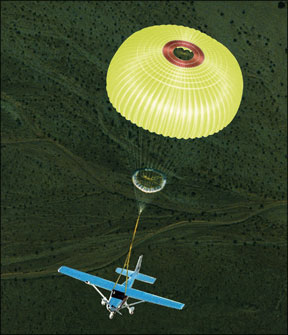
At a Wall Street analysts forum in 2007, the CEO of Ballistic Recovery Systems, Larry Williams, told the audience why he thought the all-plane parachute made sense: “In 2005, there were just over 1600 [accidents] involving general aviation airplanes in this country that resulted in 556 deaths. Now, if you offset that with the fact that were saving 199 people, all of the sudden, parachutes start to make sense.” Except that its not that simple. As of this writing, BRS has claimed to having saved 233 lives, but thats counting every occupant on every successful parachute deployment as a saved life. A quick look at the record shows that death was far from a certainty in many of the parachute deployments. A subtler knot in the logic that BRS has saved 233 people is that having a parachute installed affects the delicate balance of risk versus utility in aircraft. We know from experience and interviews that there are pilots who will take on conditions such as rough weather with the chute that they wouldnt take on otherwise. We can only guess that some of the CFIT accidents in the Cirrus were influenced by the faulty assumption that the pilot will always have enough time to pop the bddn chute before auguring in. But the risk equation is more complex than that. Situations such as single-engine at night over mountains or low-visibility takeoffs are risky only because the consequences of an emergency are high, even though the likelihood of failure is extremely low. Having an ace-in-the-hole to cover that unlikely event will shift the go/no-go call for some pilots. We believe those pilots will get more out of their airplane with a negligible increase in real risk. So BRS may be overstating its positive impact on lifesaving, but also understating its positive impact on aircraft utility.

Read More »

Electronic Tachs: UMA is a Top Value

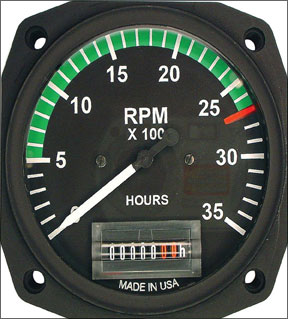
If youre like us, youre flying around in something built during the last century but lusting after some of the panel-mounted goodies available in newer aircraft. While its easy enough to shoehorn in a color moving map and some digital radios, modernizing other areas of your panel isn’t. And thats a shame, since much of the engine and systems instrumentation in older aircraft appears borrowed from a 1947 Buick. But, as usual, the aftermarket has provided in the form of engine monitors, fuel flow instruments and a smattering of tachometers. The tach market is not widely populated, so if you want one, the choices are somewhat limited. Heres a run-down on the pros and cons of this technology, plus a look at the major players in the field. Of course, the microprocessor in digital instruments does little more than count. Conveniently, a mechanical tachometer does the same thing. The big difference between the two involves how they receive a signal: The microprocessor counts electrical impulses sent to it via wiring, while the mechanical tachometers many moving parts count the number of times a cable attached to the engine revolves. The former is lighter, more accurate and less likely to fail, at least as long as the aircrafts electrical system powers the microprocessor. The latter is none of those things.

Read More »

Tempest Dehydrator: Inexpensive, Effective

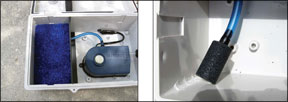
Think of Florida on a warm afternoon in July and youve got a good grasp of what your engine crankcase is like after you shut down after a flight. Throw in a little acid rain to season the heat and humidity to complete the picture. In short, the inside of an engine can be the perfect Petri dish for corrosion. Engine dehydrators or preservers are designed to address this by either pumping dry air into the engine, or sucking the humid miasma out of the crankcase and replacing it with moisture-free air. The idea has enough credence for three companies to have introduced dehydrator products. The latest comes from Tempest/Aero group, which adds a dehydrator to its well-regarded line of dry vacuum pumps and oil filters. The AA1000 Engine Preservation Systems retails for $235.Like the other engine preservers, the Tempest dehydrator pumps dry air into the engine after first passing it through a silica gel desiccant. The device consists of a small plastic enclosure about the size of small fishing tackle box-it may actually be a tackle box, by the looks of it-divided into two compartments. One compartment serves as a cell to contain the desiccant, which consists of about a pound of tiny blue beads. You just pour them in the box, making sure that the filtered pickup tube is near the bottom of the desiccant. The other two thirds of the box houses a small, continuous duty low-volume air pump powered by line voltage. A clear plastic tube exits the pump to be inserted into the crankcase oil filler.

Read More »

First Word: 07/09

As this issue ships off to the printer, Im just back from London, Ontario where I test flew Diamonds new Lycoming-powered L360. It went just as I expected it would-the airplane flew well, performed as the company said it would and I landed it without breaking it. I had flown the proof-of-concept version of this airplane in Austria four years ago when Diamond was deciding whether to proceed with diesels or the gasoline engines, or both. The company did what the market told them to: They dropped the Lycoming version and steamed full ahead with the diesel version, then powered by the Thielert 1.7 Centurion engines. Given that the Thielert engines turned out to be a maintenance nightmare, did Diamond jump the gun on diesels and make the wrong decision? Heres why I think they did not. Although Diamond has inarguably proved that there’s market interest in diesel engines, what it has not yet proved is whether diesels are up to the task. But that process had to start somewhere or otherwise, as Dick Rutan once colorfully said, we would still be traveling cross country peering at the hindquarters of oxen. Despite the withering setback that the Thielert fiasco represents, Diamond is still way out in front of everyone else and it has more meaningful diesel experience than any airplane manufacturer on the planet.

Read More »

Letters: 07/09

Congratulations on a great article on the 210. Thoroughly enjoyed it. However, one comment caught my eye on page 27 “Owners report…annuals that run around $2500 to $3000.” Sorry, I don’t buy that. In 2003, when I was looking for an aircraft, I purchased a used 1982 TR182. I would rather have had a T210 but, being picky about my maintenance, I was not sure that I could afford to maintain the aircraft properly. I settled happily on the TR182, which has been a great airplane. Since 2003, my annuals have been: These are the out-the-door costs and, by the way, the 2004 and 2008 annuals were owner assists-not Cessna service centers, but reputable mechanics. I believe that what you are showing is the basic shop charge for the annual inspection. I think that this could be very misleading. I suggest that you show total costs for the annual and include the shop basic annual charge if you like. That would give a much more realistic cost of ownership to prospective buyers. If I were to believe those annual numbers, maybe I should have purchased a T210.

Read More »

The Other Diesels: Austros Competition

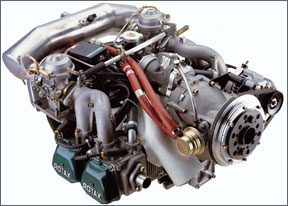
If economic recovery requires the restoration of confidence, we have a suggestion: Just bottle up the bounding confidence that the developers of aerodiesels have that Jet-A engines are the future and distribute it to the general population. Although the aerodiesel market has, at best, stumbled along looking for serious traction, the unswaying conviction of those in the diesel industry seems to be that Jet-A piston engines are an inevitability. According to our count, there are six active projects in the aerodiesel arena: Austro, Centurion (formerly Thielert), DeltaHawk, SMA, Gemini and Zoche. (Remember them?) Heres an update on each.What we found most interesting about the current state of the aerodiesel market is that its four to two in favor of purpose-built aircraft engines rather than engines adapted from the auto segment. The automotive crossovers are Austro and Centurion, both of which are adapted from widely successful Mercedes Benz automotive diesels. SMA, DeltaHawk, Gemini and Zoche are all clean-sheet designs developed specifically for aircraft. Thus far, the only remotely successful aerodiesel is the Thielert (now Centurion) 1.7 and 2.0 liter diesel series which Diamond enabled by adopting it for the DA42 Twin Star and the DA40 TDI.

Read More »