









Maintenance

Rain-Repellent Cleaners: All Kleer, LP Are Tops

Single-engine airplanes don’t have windshield wipers and neither do a lot of twins. While it’s true that prop and airblast blows the water off, that process can use a little help and that’s where windshield cleaners and polishes come in. There are literally many dozens if not hundreds of these products, some intended for glass, some for plastic and some both. To keep this inquiry under control, we’re testing only those cleaners that claim some degree of rain repellency, on the theory that if you’re going to clean your windshield, you might as we’ll do it with something that makes it easier to see through when it’s raining.

Read More »

American Champion: State of the Art Classics

For as bad as the aviation boom-bust cycle is for companies that make airplanes, it’s just as bad for the people who buy them. The euphoria that goes with pocketing the keys to a brand new airplane has to be tempered by the reality that the company that built it maybe teetering toward bankruptcy. Is there a better business plan, one that envisions modest production and flexible size and that can survive the test of the worst economic downturns? There are at least a couple of examples that suggest this can work. The family-owned Maule Air is one, shipping 30 or 40 airplanes a year to Cessna’s 500, but lately a lot less.

Read More »

Letters: November 2011

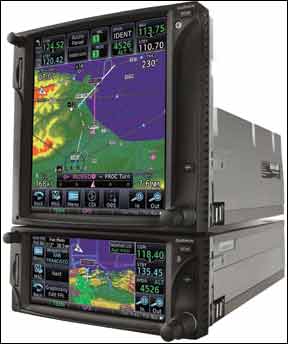
I watched with great interest your video on the aera 796. Good looking piece of tech for the airplane, but I have a question. Will the unit function as a display-only for charts and plates if for some reason it looses its GPS reception or does it have a display-only function for looking at charts and plates?

Read More »

Owner Survey: Factory Engines

With the two engine factories fighting field overhaul shops for a piece of an ever-shrinking engine pie, it’s no surprise that the factories are pushing their rebuilt and overhauled engines. They find enough buyers for these services such that rebuild work now constitutes a significant revenue stream for both Lycoming and Continental. Anyone shopping for an overhaul usually gives the factory options at least a cursory look. So how are they doing? To find out, we asked our readers to tell us about their experiences with both Lycoming and Continental factory engines of various kinds.

Read More »

Battery Chargers: VDC in a Walk

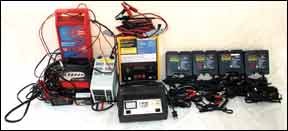
For many years battery chargers were simple beasts; a heavy transformer to drop the line voltage and a rectifier to change AC to DC made up the bulk of components. Some added a relay to turn on the charger when the voltage fell. Also, some chargers served as battery boosters with a temporary hit of 50 amps or so to nudge a discharged battery into a start. These chargers did a lousy job in terms of battery life and fully charging the battery to its potential (pun intended). Both the RV and boating industries were probably the big drivers in the development of sophisticated, computer-chip-controlled, multi-stage chargers, especially for deep cycle batteries.

Read More »

Letters: October 2011

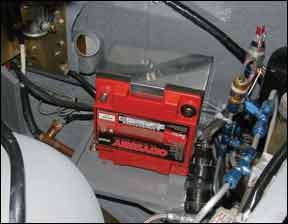
I read with interest and enjoyed the article on aircraft batteries in the August, 2011 issue. There was brief mention of the Odyssey battery, as applied to homebuilders. I have Odyssey sealed batteries installed in two different aircraft, a Cessna 180 and a Cessna 185. These are both firewall-mounted, eliminating 10 feet of heavy-gauge wire. The balance impact is minimal, as this battery, in the box, weighs 14 pounds compared to the Gill that was removed, at 37 pounds. These batteries are installed in accordance with a field approval, which is increasingly more difficult to obtain. This has been a win-win deal for me, however.

Read More »

Letters: September 2011

Re your article on going vacuumless in the June 2011 issue, when I bought my new Columbia 300 in 2002, it came from the factory as a traditional six-pack with a vacuum AI (KI-256). In November 2008, I embarked on an upgrade to the Aspen EFD1000 Pro using Lancaster Avionics in Lancaster, Pennsylvania. (They are awesome.) I chose to install the Mid-Continent Life Saver electric attitude gyro with battery backup as my backup AI. As part of the upgrade, I wanted to remove the vacuum system because it would no longer power any instruments. Initially, we were led to believe that we would be able to remove the vacuum system with local FSDO approval. It turns out this was not possible because the vacuum system is on the type certificate. It had to go through the ACO that controlled the type certificate.

Read More »

Whats It Worth? Appraisal Realities

As a professional aircraft appraiser, I was retained to perform an appraisal on a 1978 Grumman AA5B Tiger not too long ago. I met the owner at his hangar and when he rolled open the hangar door, I wasnt prepared for what I saw. It was one of the saddest airplanes that I have ever seen. It sat in a hangar that had housed it for three years as it collected dust on what had once been a good, fresh paint job. Its partially deflated tires were sitting in an inch of water, possibly from a roof leak. This airplane showed three years of neglect. Fortunately, the sliding canopy was closed so most of the dust had not penetrated the interior. The airplane was about three years out of annual and it had not been flown or even run in those three years. This airplane was not going to appraise for very much money, even though the owner expected that it would.

Read More »

The Mogas Option: Plenty of Engine Choices

While the FAA and the oil industry plod along toward an eventual replacement for 100LL, one alternative persists like a large elephant squatting uncomfortably on the conference room table: mogas. We know more owners, desperate for at least some kind of clarity, are seriously considering it as an option. Moreover, the list of airplanes that can burn mogas is longer than you might imagine and likely to grow. Last year, Lycoming quietly announced that it had approved its 180-HP parallel-valve O-360 series for use with a specific grade of mogas. Does this mean the company is bullish on mogas as an alternative to a 100-octane equivalent? Not really. The company is just responding to market realities. In other parts of the world-Europe and Asia, mainly-mogas is becoming a fuel of choice because avgas and the infrastructure to dispense it isn’t available.

Read More »

More Tiedowns: Abes In a Walk

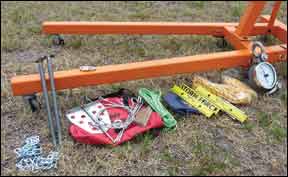
Just as we thought we had put portable tiedown tests snugly to bed, along come two companies who said..sorry, but you forgot us. Following our review of tiedown performance during last Aprils tornado at Sun n Fun, were looking at two products that claim to be the best. (But only one really is.) We bought a set of Storm Force tiedowns and a company called Abes Aviation sent us a sample kit of its product, one of the most highly engineered products weve seen to date. Into this mix, we made up a set of steel rod anchors of the sort we saw used in the JAARs and Diamond Aircraft booths to see how they would fare.

Read More »

Letters: July 2011

I recently purchased a GTN650 to replace my GNS480. Turns out the STC requires that I have a second GPS/navcomm in order to fly IFR. So I had to go with GTN750, remove the MX20 and SL30 to make room for the 750 and 480. Nobody at Garmin seems to want the public in on this. My avionics tech found out by reading the STC. This applies to composite airframes only. It doesnt make much sense since I have been flying IFR with a single GNS480. Anyway, I had to open the wallet up to the tune of $6000 more, which I was not budgeted for. The PC simulator that comes with the purchase requires quite a bit of RAM and hard drive space to operate. It requires 5GB RAM and 2GB of free disk space. Seems none of my computers have this so Im out of luck.

Read More »

Replacement Plastic: Aftermarket Saves Big

Like bargain wine and crotchety magazine editors, plastic gets touchy with age. Sunlight is the biggest enemy, but even tucked in a climatecontroller hanger, the compounds that give plastic its flexibility outgas, leaving the remaining material prone to cracking or shattering from a stress it would have sloughed off 10 years prior. Everything aviation costs roughly an order of magnitude higher than an analogous non-aviation part, and plastic interior pieces are no different. The small redeeming point with interior plastic is that parts for the majority of GA aircraft can still be had, and that you can save a bit by doing the installation yourself, if youre so inclined.

Read More »